

Essential Guide to Portual Shuttles:
Navigate Your Journey with Confidence and Style
In the land of the Alentejo, the 'Ancestral Itch' meets the philosophy of Slow Travel. Use these connections to move at the rhythm of the landscape, not the clock.
Visit Portugal - Intro
Portugal offers travellers a captivating mix of history, culture, landscapes, and cuisine along Europe’s Atlantic edge.
From the atmospheric streets and viewpoints of Lisbon to the riverside charm of Porto and the sun-washed beaches of the Algarve, the country blends centuries-old traditions with a relaxed modern lifestyle.
Visitors can explore medieval towns, hilltop castles, and UNESCO-listed monuments, enjoy world-famous seafood and regional wines, and experience the soulful sounds of fado drifting through historic neighbourhoods.
Compact, welcoming, and rich in character, Portugal rewards both leisurely exploration and deeper cultural discovery.
Portugal - explore shuttles, airport transfers, private drivers, sailing trips, tours & sightseeing - Featured partners:

The Road Butler, Douro Valley

Coimbra Airport Shuttle

Mystic Travels, Porto

Taxi Sintra

Taxi Gal - Sintra, Rio-de-Mouro, Algueirão

Monte Gordo Transfers, Eastern Algarve
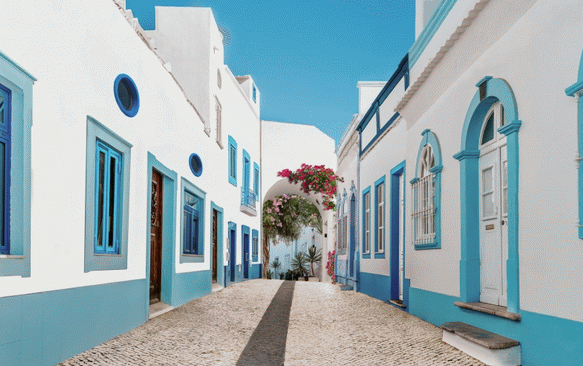
Fatia Transfers, Tavira

Silnido - Praia da Ilha de Tavira

Algarserra Transfers, Faro
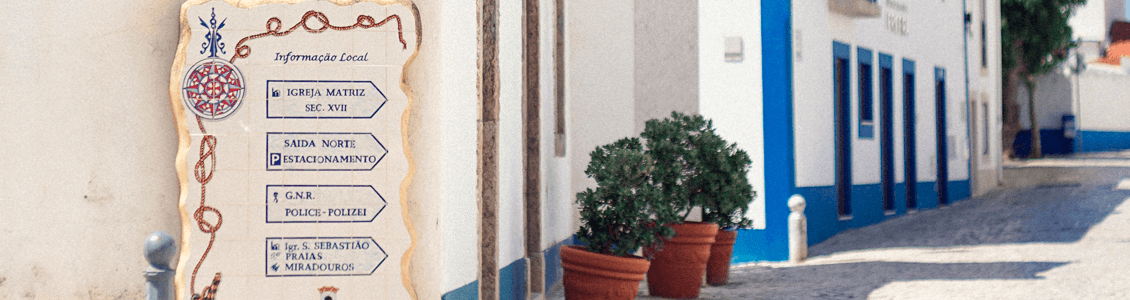
Faro Shuttle Bus
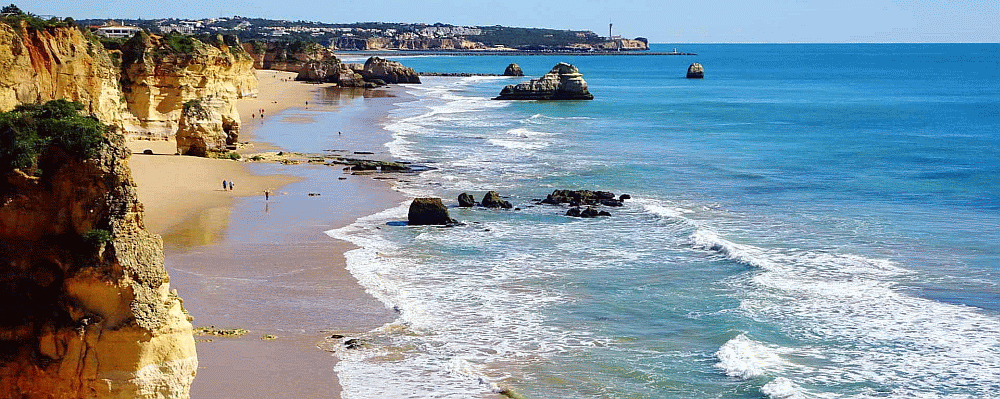
Perfect Algarve Transfers
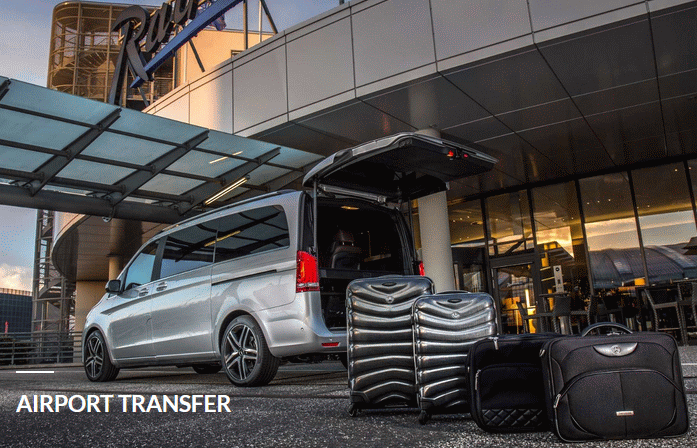
Xclusiv4U Transfers - Albufeira, Algarve
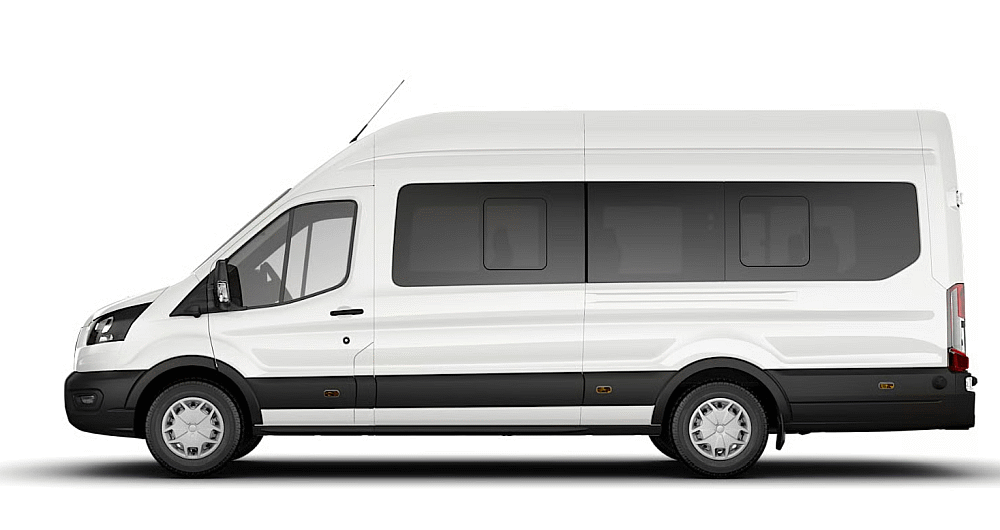
Aveiro Transfers
Getting Around Portugal
Transport, Trains, Buses, and Practical Travel Tips
Portugal is compact, easy to navigate, and well connected by modern transport networks.
Travellers can move comfortably between historic cities, Atlantic coastlines, wine regions, and rural villages using a combination of trains, buses, taxis, and rental cars.
Distances are relatively short, making it possible to explore much of the country — from Lisbon and Porto to the Algarve and the Douro Valley — within a single trip.
This guide explains how transport works in Portugal, including trains, buses, taxis, car hire, domestic flights, and travel times between major destinations.
Transport Options in Portugal
Trains in Portugal
Trains are one of the easiest and most comfortable ways to travel between major cities.
Operated by Comboios de Portugal (CP), the national rail network links most of the country.
Modern Alfa Pendular high-speed trains
Comfortable Intercidades services between major cities
Regional trains serving smaller towns
Typical cost:
€20–40 for long-distance routes
Popular routes include Lisbon–Porto, Lisbon–Coimbra, and Porto–Braga. Trains are fast, reliable, and avoid motorway traffic.
Buses
Buses connect many towns not served by rail and provide frequent intercity services.
Major operators include:
FlixBus
Typical cost:
€10–30 depending on distance
Buses are often the easiest way to reach smaller destinations such as interior towns, coastal villages, and parts of the Algarve.
Metro Systems
Portugal’s two largest cities both have efficient metro systems.
Lisbon Metro
Clean and easy to use
Connects the airport with the city centre
Links major districts and train stations
Porto Metro
Light-rail style network
Connects the airport, city centre, and surrounding suburbs
Also reaches coastal areas such as Matosinhos
Metro networks make getting around both cities simple and affordable.
Taxis and Ride-Share
Taxis are widely available and reasonably priced.
Typical cost:
City journeys: €5–12
Airport transfers: €15–30
Ride-sharing apps such as Uber and Bolt operate in most urban areas and are often cheaper than taxis.
Rental Cars
Renting a car can be useful for exploring rural areas and scenic regions.
A car is particularly helpful for visiting:
The Douro Valley wine region
Interior villages and castles
Parts of the Algarve coastline
Typical rental cost:
€30–70 per day
Portugal’s motorways are modern and well maintained, though many include electronic toll systems.
Domestic Flights
Because Portugal is relatively small, domestic flights are rarely necessary on the mainland.
Flights are mainly used to reach the islands:
Madeira
Flights depart from Lisbon and Porto and take around 1.5–2.5 hours.
Getting Around Portugal’s Main Cities
Lisbon
Portugal’s capital is built on hills but is surprisingly easy to explore.
Metro, buses, and trams cover most districts
Historic centre neighbourhoods are walkable
Famous tram routes climb through older districts
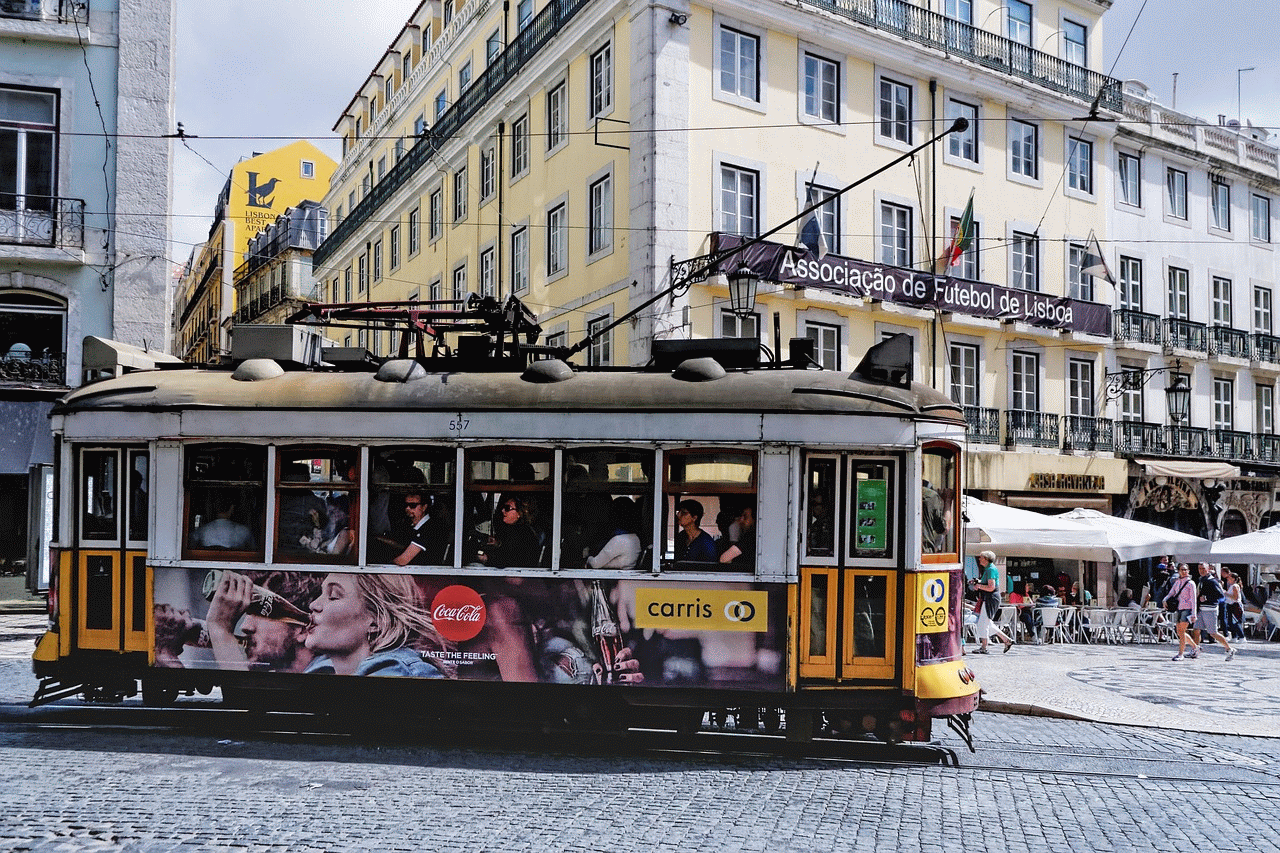
The iconic yellow trams of the city are operated by Lisbon Tramway.
Airport → city centre:
20–30 minutes by metro or taxi.
Porto
Porto’s historic centre sits along the Douro River and is compact.
Walkable old town
Metro connects the airport and suburbs
Funicular and tram services along the river
The city is also the gateway to the famous Douro wine region.
Coimbra
A historic university town in central Portugal.
Compact and walkable centre
Taxis and local buses available
Major stop on the Lisbon–Porto rail line
The city is home to the renowned University of Coimbra, one of Europe’s oldest universities.
Popular Routes: Travel Times & Costs
Lisbon → Porto
Train: 2h 40m – 3h | €25–40
Bus: ~3.5 hours | €10–25
Car: ~3 hours
Lisbon → Coimbra
Train: ~2 hours | €20–30
Bus: ~2.5 hours
Porto → Douro Valley
Train: 2–3 hours to Peso da Régua
River cruise options also available
The Douro railway journey is considered one of Europe’s most scenic.
Lisbon → Algarve
Train: ~3–3.5 hours to Faro
Bus: ~3–4 hours
Car: ~2.5 hours
The main regional hub is Faro.
Exploring Portugal’s Islands
Portugal also includes two autonomous Atlantic archipelagos.
Madeira
Flights from Lisbon: ~1 hour 45 minutes
Known for dramatic mountains, coastal scenery, and walking trails
Main city: Funchal.
Azores
Flights from Lisbon: ~2.5 hours
Nine volcanic islands with crater lakes, hiking trails, and marine wildlife
Main entry point: Ponta Delgada on São Miguel Island.
Travel between islands is by regional flights or ferries.
Top Places to Visit in Portugal
Lisbon – historic districts, viewpoints, food culture
Porto – riverside charm and port wine cellars
Coimbra – historic university and cultural heritage
Douro Valley – vineyards and river scenery
Algarve – beaches, cliffs, and seaside towns
Madeira – mountains and subtropical landscapes
Azores – volcanic islands and nature
With an efficient rail network, good highways, affordable buses, and short travel distances, Portugal is one of Europe’s easiest countries to explore.
Whether travelling between historic cities, coastal regions, or island landscapes, transport is reliable and planning a few key routes in advance makes getting around straightforward and enjoyable.
Note: Prices shown are indicative and reflect typical travel costs in Portugal as at early 2026.
Popular Destinations, Tours and Shuttle Services - Portugal
-
![Lisboa Tours, Portugal]()
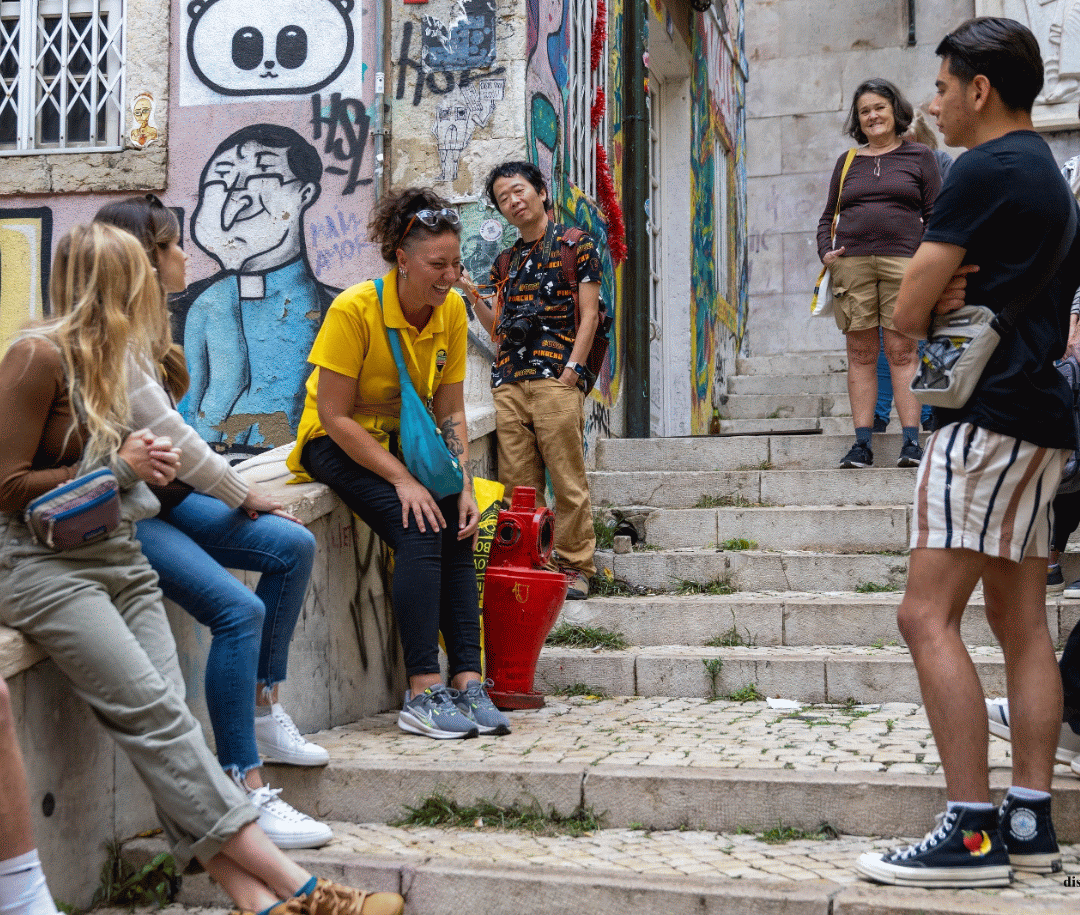
Discover Lisbon
-
![Algarve Moments]()
Experiences in Algarve
-
![Oldtour Portugal]()
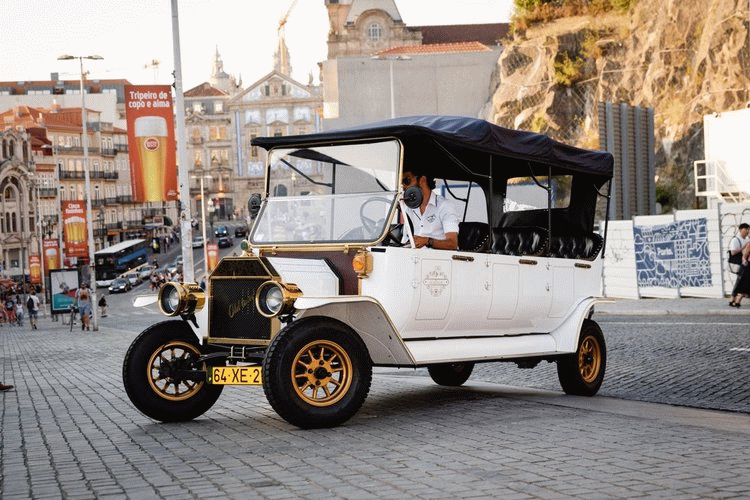
Discover the city of Porto - in electric vintage cars
-
![Go Travel Everywhere Portugal]()
Tours & Transfers Portugal
-
![Algarve Discovery]()
Explore the Algarve with local guides
-
![LAVAsteps Madalena - Pico - Açores]()
Island Discovery, Azores
-
![Bom Dia Boat Trips, Lagos, Portugal]()
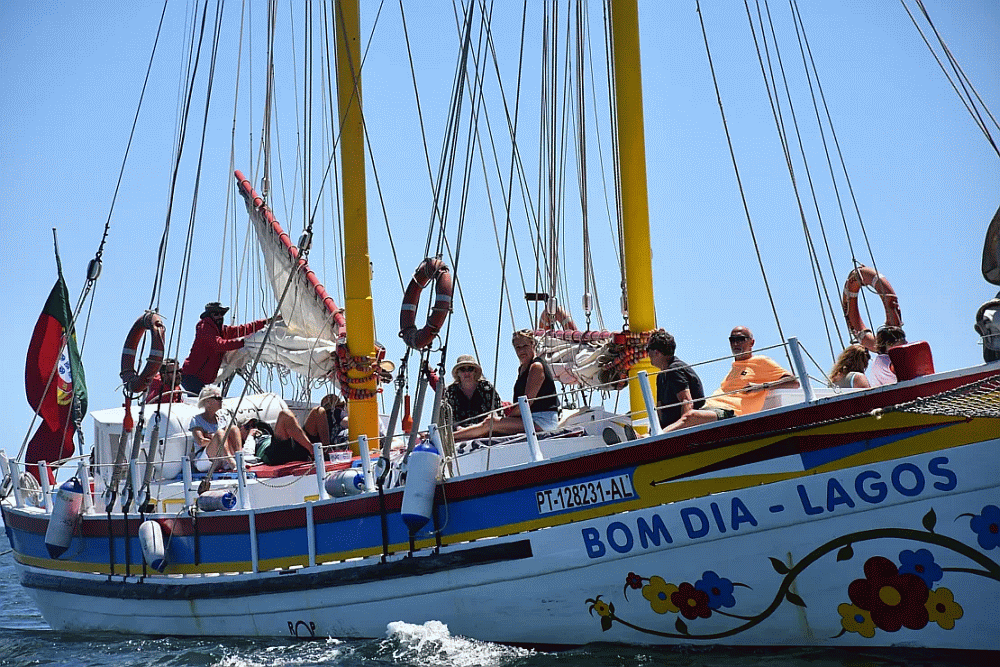
Sailing advventure in the heart of the Algarve




Lisboa
The Sound of Saudade
Some words resist translation because they hold more feeling than language can easily carry. In Portugal, one such word is saudade — a quiet, deeply emotional sense of longing for something absent. It can be the memory of a person, a place, a moment in time, or even something that may never return.
Saudade is not simply sadness, nor nostalgia alone. It is a mixture of love, loss, memory, and tenderness, held gently together.
This emotion finds its most powerful expression in Fado, Portugal’s haunting traditional music.
Sung in dimly lit taverns and small music houses, especially in the historic districts of Lisbon, Fado carries stories of longing, fate, love, and the sea.
The music is spare and intimate, typically accompanied by the distinctive sound of the Portuguese guitar, allowing the voice to carry the emotion at its heart.
No singer embodied the spirit of Fado more completely than Amália Rodrigues.
Often called the “Queen of Fado,” her voice brought the music — and the feeling of saudade — to audiences around the world.
Through her performances, a deeply Portuguese emotion became something universally understood.
In many ways, saudade reflects the history and character of Portugal itself: a country shaped by voyages across oceans, departures from home, and the quiet hope of return.
Whether heard in a Fado melody or spoken softly in conversation, saudade remains one of the most beautiful and evocative expressions in the Portuguese language.
O Som da Saudade
Algumas palavras resistem à tradução porque carregam mais sentimento do que a linguagem consegue transmitir facilmente.
Em Portugal, uma dessas palavras é saudade — um sentimento profundo e silencioso de nostalgia ou de anseio por algo ausente.
Pode ser a lembrança de uma pessoa, de um lugar, de um momento no tempo, ou até de algo que talvez nunca volte.
Saudade não é simplesmente tristeza, nem apenas nostalgia.
É uma mistura de amor, perda, memória e ternura, delicadamente entrelaçadas.
Essa emoção encontra uma das suas expressões mais poderosas no Fado, a música tradicional e melancólica de Portugal.
Cantado em tabernas intimistas e casas de música, especialmente nos bairros históricos de Lisbon, o Fado traz histórias de saudade, destino, amor e do mar.
A música é simples e íntima, geralmente acompanhada pelo som característico da guitarra portuguesa, permitindo que a voz transmita toda a emoção que está no seu centro.
Nenhuma cantora encarnou o espírito do Fado de forma tão completa quanto Amália Rodrigues.
Frequentemente chamada de “Rainha do Fado”, a sua voz levou esta música — e o sentimento de saudade — a públicos em todo o mundo.
Através das suas interpretações, uma emoção profundamente portuguesa tornou-se algo universalmente compreendido.
De muitas maneiras, a saudade reflete a própria história e o caráter de Portugal: um país moldado por viagens oceânicas, despedidas e pela esperança tranquila de um regresso.
Quer seja ouvida numa melodia de Fado ou pronunciada suavemente numa conversa, a saudade continua a ser uma das expressões mais belas e evocativas da língua portuguesa.

Explore the Azores with ShuttlesA2B
The Great Escape: Neo-Nomadism and the Biological Mandate to Wander
For decades, the "Social Contract" of the West was built on a foundation of permanence: the 40-hour work week, the 30-year mortgage, and the stationary family unit. Yet, across the globe, a growing diaspora is tearing up this contract. This isn't merely a trend of "digital nomadism"; it is a resurgence of Neo-Tribalism—a return to an ancient way of being, powered by the DRD4-7R "Wanderlust Gene."
1. The Genetic Spark: Why We Can’t Sit Still
At the heart of this movement lies a biological differentiator. The DRD4-7R gene variant is linked to dopamine receptors that crave novelty and tolerate higher levels of risk. Historically, this gene was prevalent in migratory populations. Today, it manifests as a physical restlessness—an "itch" that makes the 9-to-5 cubicle feel like a sensory deprivation chamber. For those with this genetic marker, travel isn't a vacation; it’s a mechanical necessity for mental equilibrium.
2. The Ancestry of Dissent: From the 60s to Goa
The modern "dropout" culture traces its lineage back to the 1960s Hippy Movement. This era challenged the materialist post-war dream, favoring communal living and expanded consciousness.
The Goa Legacy: As the hippies traveled the "Overland Trail," they hit the beaches of Goa, India. Here, the acoustic folk of the 60s met the early synthesizers of the 80s, birthing Goa Trance.
Technomadism: This fusion of high-tech sound and low-impact living created the "Technomad"—the traveler who carries their world in a backpack and their community in a rhythm.
3. The Architecture of the "Doof": Communitas and Liminality
To the outsider, a "doof" or a trance festival looks like a party. To the participant, it is an exploration of Liminality—the state of being "betwixt and between" societal roles.
Communitas: Coined by anthropologist Victor Turner, this describes the intense bond formed when people step out of their social hierarchies (CEO vs. Waiter) and exist as equals.
Temporary Autonomous Zones (TAZ): These gatherings are "islands" in time. Within a TAZ, the rules of the mortgage and the marriage certificate are suspended in favor of radical self-expression and immediate connection.
4. Regional Manifestations: A Global Map of the Itch
The Australian Bush Doof & The NZ House Trucker
In the Southern Hemisphere, the subculture is deeply tied to the land.
Australia: The "Bush Doof" is a reclamation of the wilderness. It is neo-tribalism at its most raw, where the heat and dust are part of the ritual.
New Zealand: In enclaves like Golden Bay, the "NZ Doof" spirit is embodied by the house-trucker culture. These are mobile cathedrals of wood and brass, proving that "home" is a state of mind, not a piece of real estate.
The Combi Cities of Brazil and Latin America
In South America, particularly Brazil, the movement takes a mechanical form. The "Nomadic City" is often a fleet of VW Combis. These travelers don’t just visit a place; they create a temporary urban center wherever they park, sharing resources, kitchens, and stories. It is a rebellion against the soaring cost of South American urban living.
The Israeli and South African Trance Scenes
These regions use the trance subculture as a form of collective healing.
Israel: Following intense compulsory military service, many young Israelis head to the desert or India. The "trance dance" is a processing tool for the psyche.
South Africa: From the Karoo to the coast, the scene here is a melting pot of cultures finding common ground through the "stomp."
The Portugal Sanctuary
Portugal has emerged as the European heart of this culture. With laws favoring personal freedom and a landscape that welcomes "Slow Travel," it has become the ultimate destination for those looking to drop out of the Euro-stress cycle and into a sustainable, communal rhythm.
5. Dropping Out: The New Success
Choosing a van over a villa or a backpack over a boardroom is no longer seen as "failing" by those within the movement. It is a strategic pivot toward Autonomy.
The Mortgage Trap: By rejecting high-interest debt, neo-nomads gain the most valuable currency: Time.
Relationship Evolution: Traditional marriage is often replaced by "liquid" networks of deep, meaningful connections that aren't bound by a single zip code.