
Essential Guide to Sicily - Shuttles & Sightseeing
Navigate Your Journey with Confidence and Style
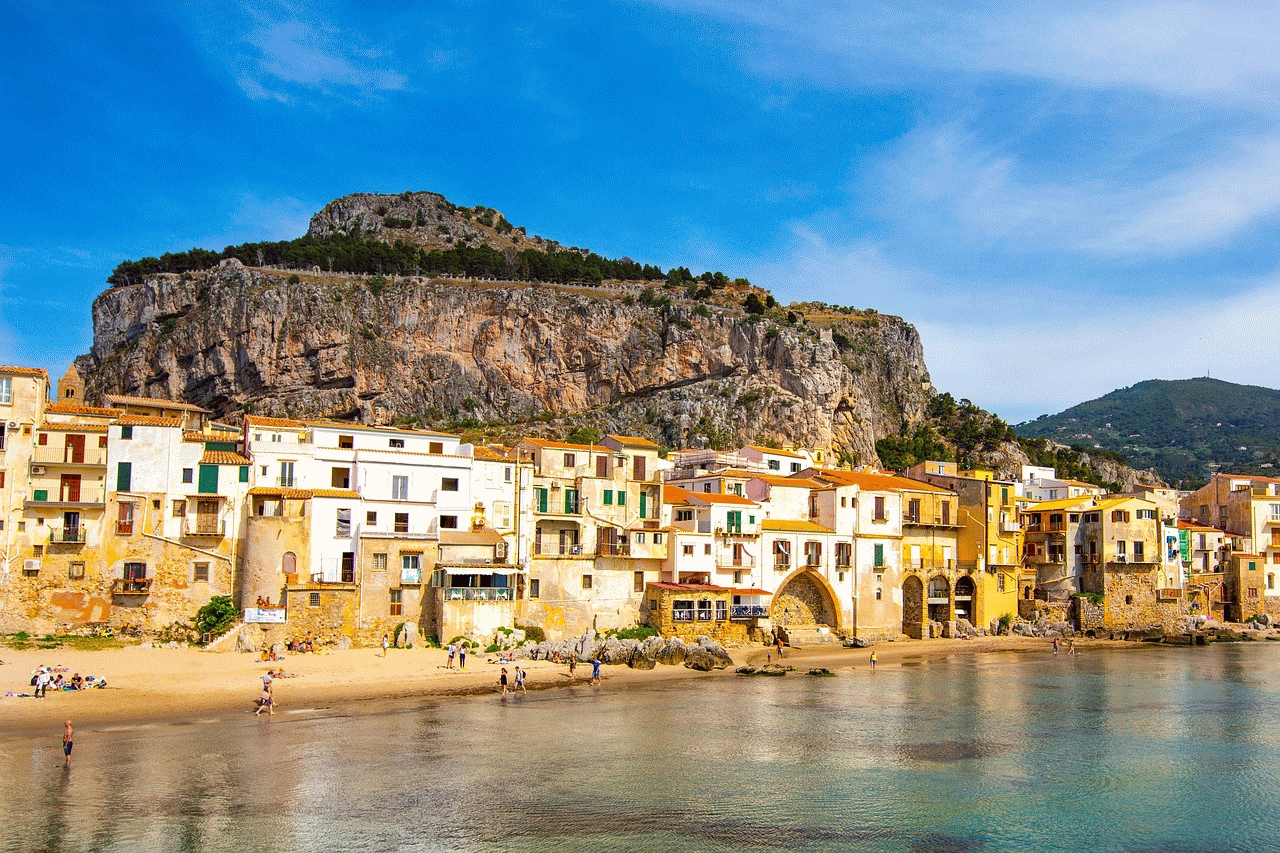
Cefalù
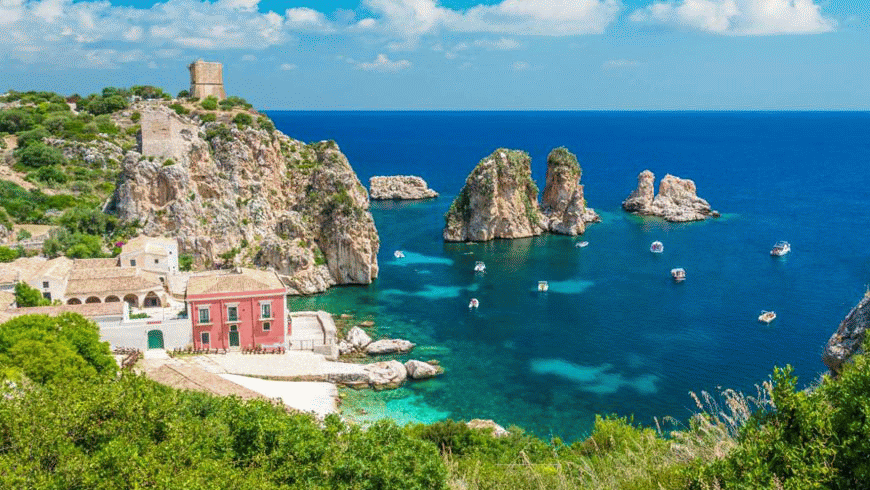
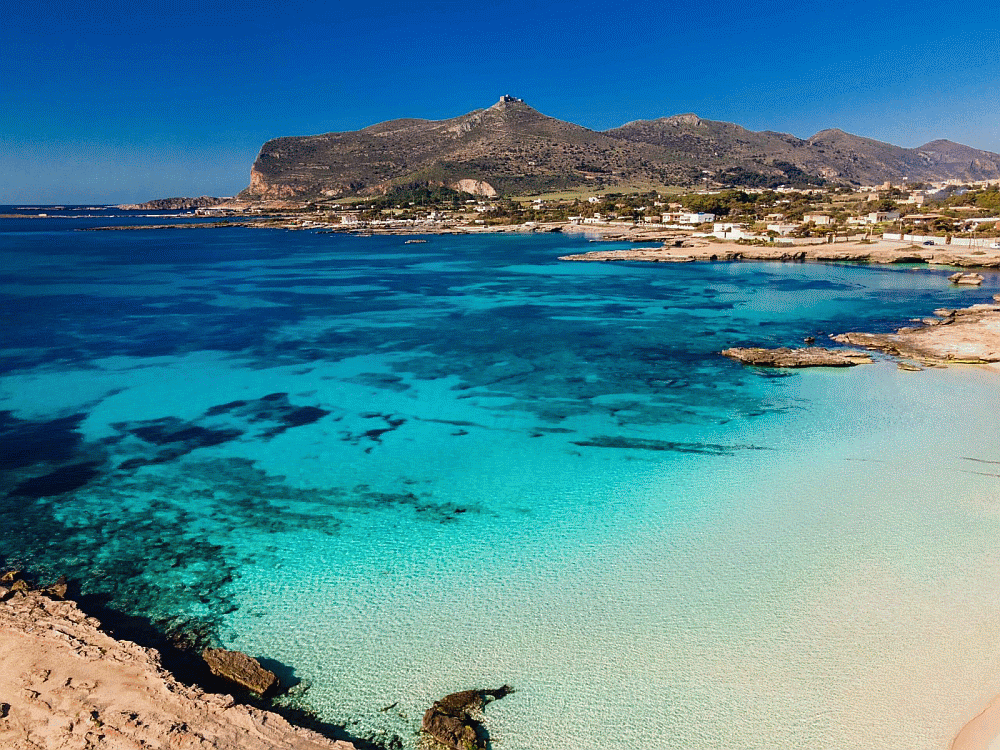
Welcome to Sicily, where fire and sea have shaped a land of fierce beauty, layered history, and timeless rhythm. Swim in turquoise coves, stand beneath the smoking slopes of Mount Etna, and wake to the scent of citrus and fresh espresso drifting through a sunlit piazza.
Every corner of the island tells its own story — shaped by Greeks, Romans, Arabs, and Normans — inviting you to explore, savour, and feel the pulse of the Mediterranean. More than a destination, Sicily is an experience of passion and authenticity: bold flavours, warm hospitality, and a powerful sense of place that lingers long after you depart.
Benvenuti in Sicilia, dove fuoco e mare hanno plasmato una terra di bellezza intensa, storia stratificata e ritmo senza tempo. Nuotate in calette turchesi, sostate ai piedi dell’Etna fumante e svegliatevi con il profumo degli agrumi e dell’espresso in una piazza illuminata dal sole.
Ogni angolo dell’isola racconta la propria storia — segnata da Greci, Romani, Arabi e Normanni — invitandovi a esplorare, assaporare e sentire il battito del Mediterraneo. Più che una destinazione, la Sicilia è un’esperienza di passione e autenticità: sapori decisi, ospitalità calorosa e un profondo senso di appartenenza che vi accompagna a lungo, anche dopo la partenza.
Sicily - Sicilia — explore shuttles, airport transfers, private drivers, boat trips, tours & sightseeing - Featured partners:
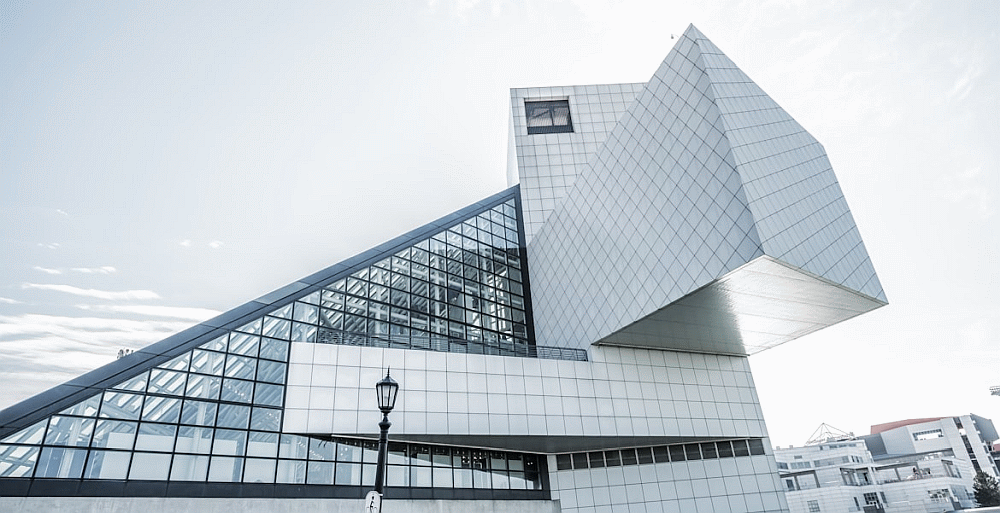
Transfer Airport Palermo
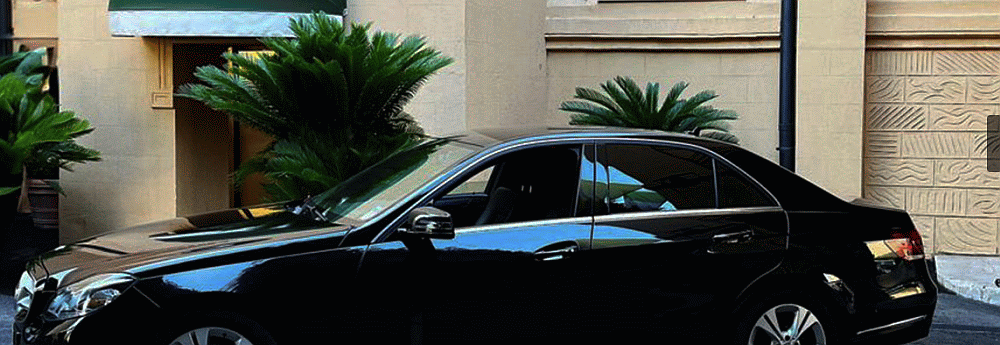
Taxi Palermo Airport
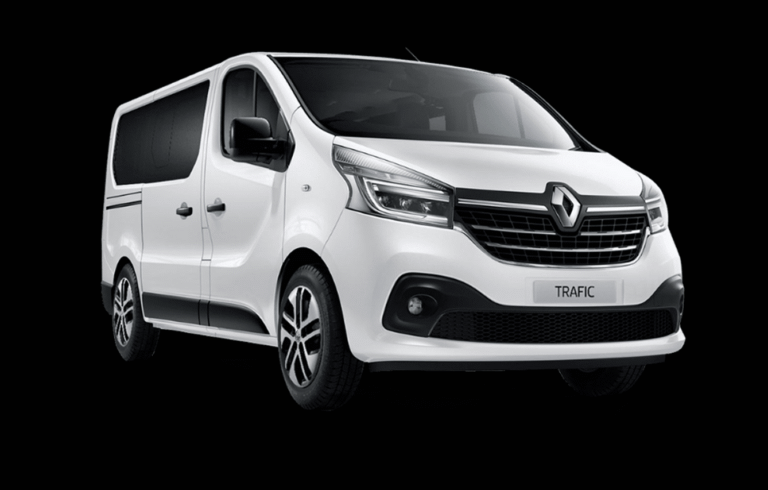
Sicily Holiday Transfer
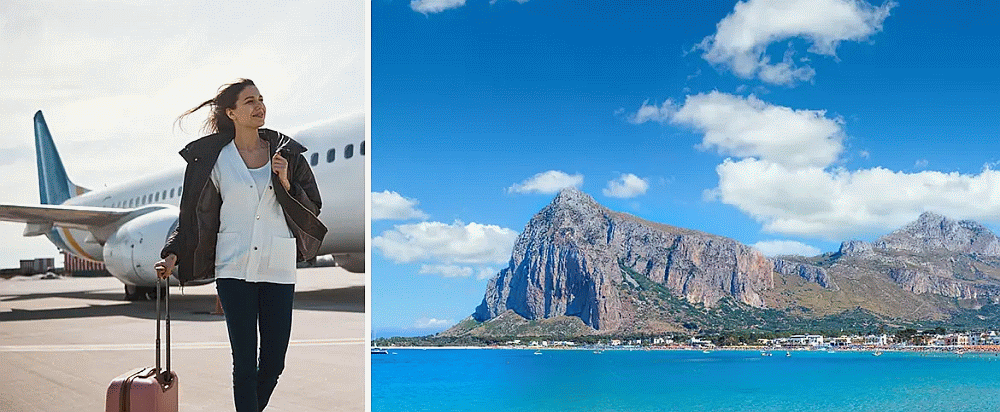
Sorretino Transfer
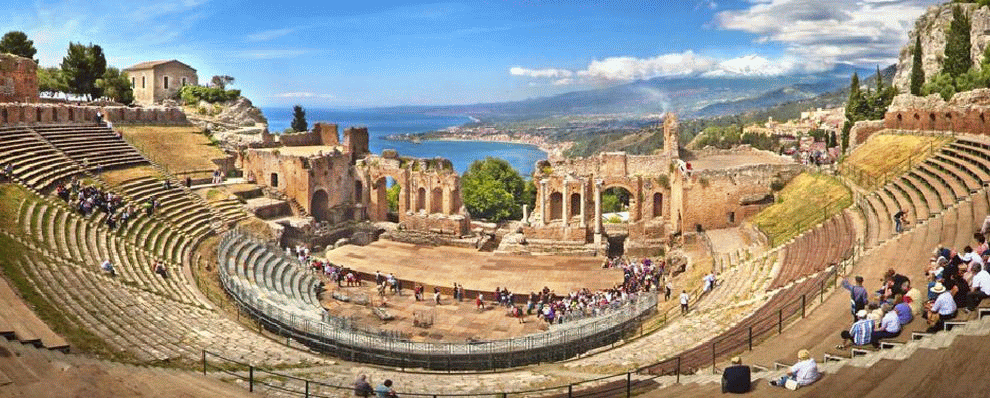
Catania Airport Transfer
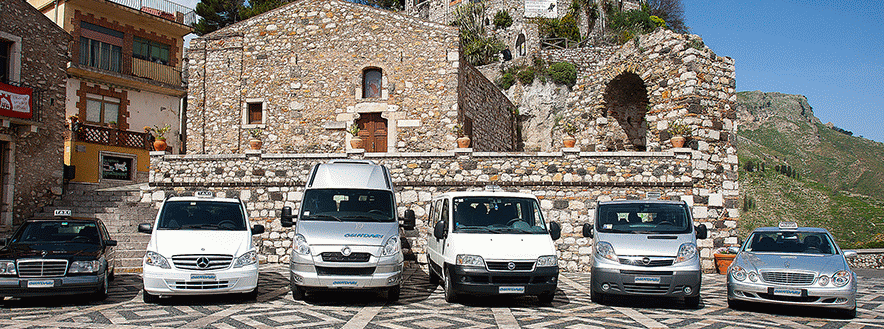
Cundari Noleggio
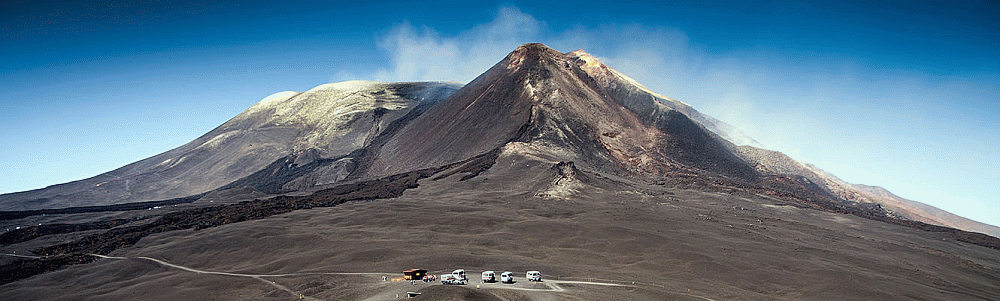
Exploring Sicily’s Mount Etna Volcano

Transfer Taormina
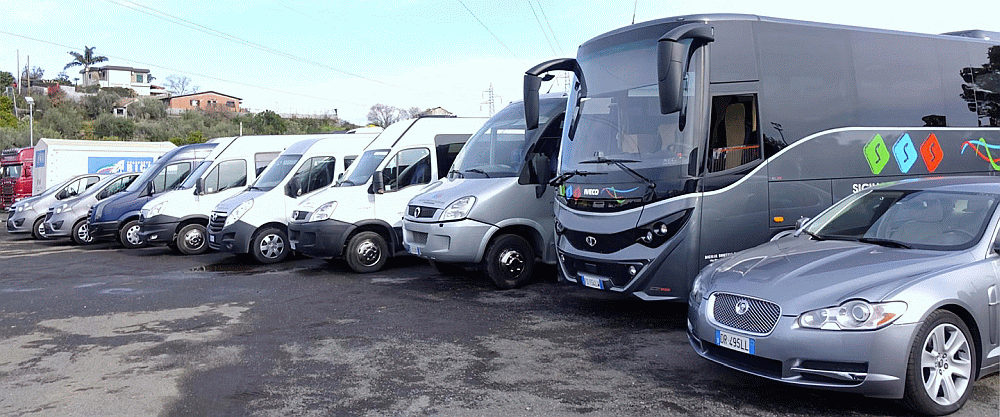
Sicilia Shuttle Service
New Travel Services - Sicily Excursions
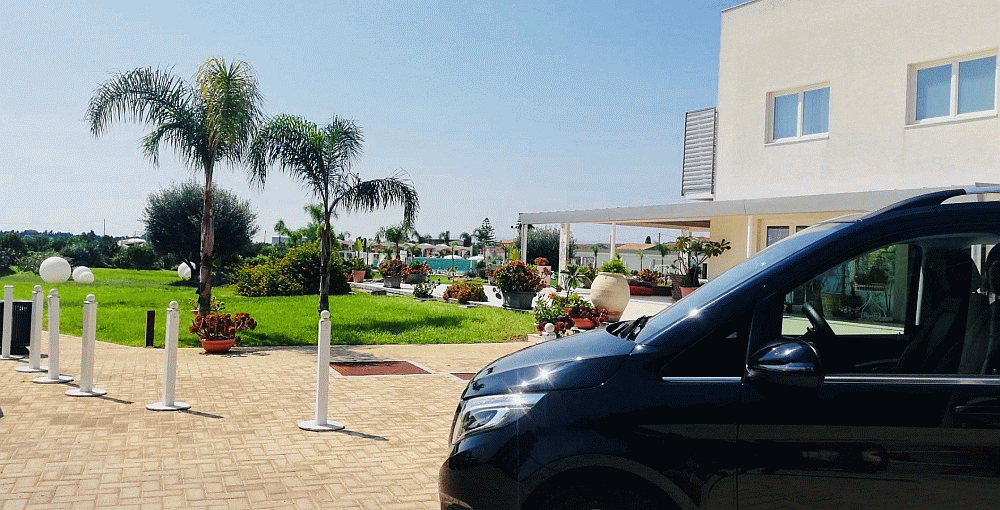
Nuova Supergarage - to and from Catania Airport
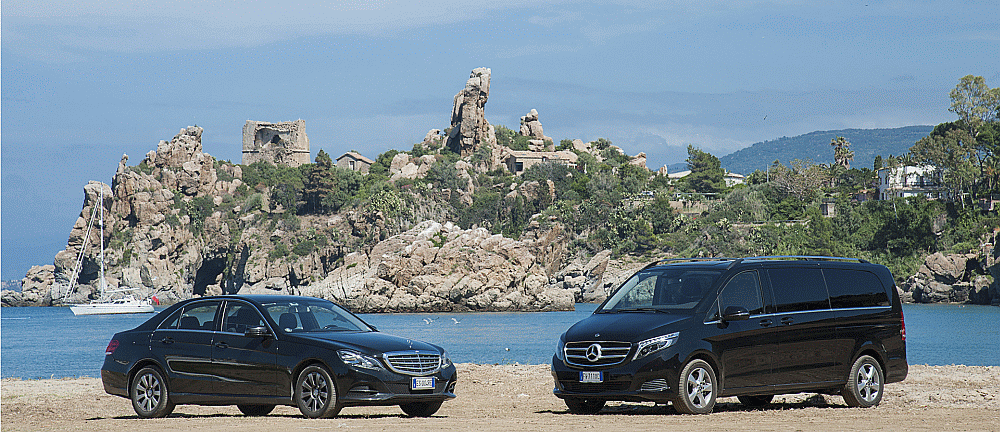
Cefalù <> Palermo airport

Taxi Cefalù

Sicily Transfer Tour
Getting Around Sicily (Sicilia)
Transport, Shuttles, and Practical Travel Tips
Sicily (Sicilia) is Italy’s largest island — layered with Greek temples, Norman cathedrals, Baroque towns, volcanic landscapes, and some of the Mediterranean’s most dramatic coastlines.
Distances are manageable, but terrain matters. Mountain roads, winding coastal routes, and summer traffic can affect travel times. With the right mix of trains, buses, private transfers, and occasional flights, getting around Sicily is straightforward.
This guide explains how transport works across Sicily — including Palermo, Catania, Taormina, Ortigia (Siracusa), Agrigento, Cefalù, Trapani, Mount Etna, and especially Erice.
Transport Options in Sicily
Trains in Sicily
Sicily’s rail network connects major coastal cities.
• Reliable along the north and east coasts
• Slower in the interior
• Operated by Trenitalia
• Comfortable regional services
Typical cost:
€8–20 depending on distance
Best routes by train:
• Palermo ↔ Cefalù
• Palermo ↔ Messina
• Catania ↔ Taormina
• Catania ↔ Siracusa
Note: Western Sicily (Trapani area) and inland connections are slower and less frequent.
Buses
Buses are essential for reaching smaller towns and hilltop villages.
• Extensive regional network
• Often the only option to reach historic centres
• Operated by companies such as AST and Interbus
Typical cost:
€5–15 depending on distance
Buses are particularly useful for:
• Palermo ↔ Agrigento
• Catania ↔ Mount Etna (seasonal services)
• Trapani ↔ Erice
Shuttles & Private Transfers
Shared shuttles and private transfers are popular for:
• Airport transfers
• Etna excursions
• Hill towns like Erice
• Direct intercity routes without connections
Typical cost:
€40–120 depending on route
Private drivers are ideal for:
• Day trips combining multiple sites
• Rural archaeological areas
• Travellers with limited time
Domestic Flights
Flights are rarely necessary within Sicily, but airports matter for arrival and departure.
Main airports:
• Palermo Airport
• Catania Airport
• Trapani Airport
Most visitors fly into Palermo or Catania and travel overland from there.
Getting Around Sicily’s Main Cities
Palermo
• Airport rail link to city centre (~50 minutes)
• Local buses and taxis
• Historic centre is walkable
Palermo is often the starting point for western Sicily, including Cefalù, Trapani, and Agrigento.
Palermo Airport → City Centre:
45–60 minutes | €6 (train) or €35–45 (taxi)
Catania
• Busier, more urban feel
• Primary gateway to Mount Etna
• Rail connections north to Taormina and south to Siracusa
Catania Airport → City Centre:
15–25 minutes | €4 (bus) or €20–30 (taxi)
Siracusa & Ortigia
Siracusa is well connected by train from Catania.
Ortigia — the historic island heart — is compact and entirely walkable.
Catania → Siracusa
• Train: ~1–1.5 hours | €8–12
Popular Routes: Travel Times & Costs
Palermo → Cefalù
• Train: 50–70 minutes | €8–12
• Car: ~1 hour
Cefalù is one of Sicily’s easiest and most rewarding coastal towns to visit.
Palermo → Agrigento
• Train: ~2–2.5 hours | €12–16
• Bus: ~2 hours
Agrigento is the gateway to the Valley of the Temples.
Catania → Taormina
• Train: ~1 hour | €8–12
• Car: ~50 minutes
Taormina’s hilltop theatre and coastal views make it one of Sicily’s most visited towns.
Catania → Mount Etna
• Guided tour: 6–8 hours
• Bus to Rifugio Sapienza: ~2 hours (seasonal)
Etna excursions are best arranged via organised tours or private drivers.
Palermo → Trapani
• Bus: ~1.5 hours | €10–15
• Train: ~3 hours (slower route)
Trapani is a base for Erice and the Egadi Islands.
Special Focus: Visiting Erice
Erice is one of Sicily’s most atmospheric hill towns — perched 750 metres above Trapani with sweeping views across the coast and salt flats.
Getting to Erice requires a change in elevation — and planning.
From Trapani:
Cable Car (Funivia di Erice)
• ~10 minutes
• ~€10 return
• Scenic and the easiest option
Bus
• ~30–40 minutes
• €3–5
Car
• 30 minutes via winding mountain road
Why Erice matters:
• Medieval stone streets
• Norman castle
• Panoramic coastal views
• Fewer crowds than Taormina
Staying overnight in Erice offers a completely different atmosphere once day-trippers leave. Transport becomes limited in the evening, so plan your descent carefully.
Eastern Sicily Highlights
Taormina
• Accessible by train (station below town)
• Bus or taxi up to historic centre
• Walkable once inside
Ortigia
• Ideal for slow travel
• Everything reachable on foot
• Connected by bridge to mainland Siracusa
Mount Etna
• Europe’s most active volcano
• Best accessed via guided tours
• Weather can change rapidly at altitude
Western Sicily Highlights
Trapani
• Base for Erice
• Ferry access to the Egadi Islands
• Compact historic centre
Palermo
• Bustling markets
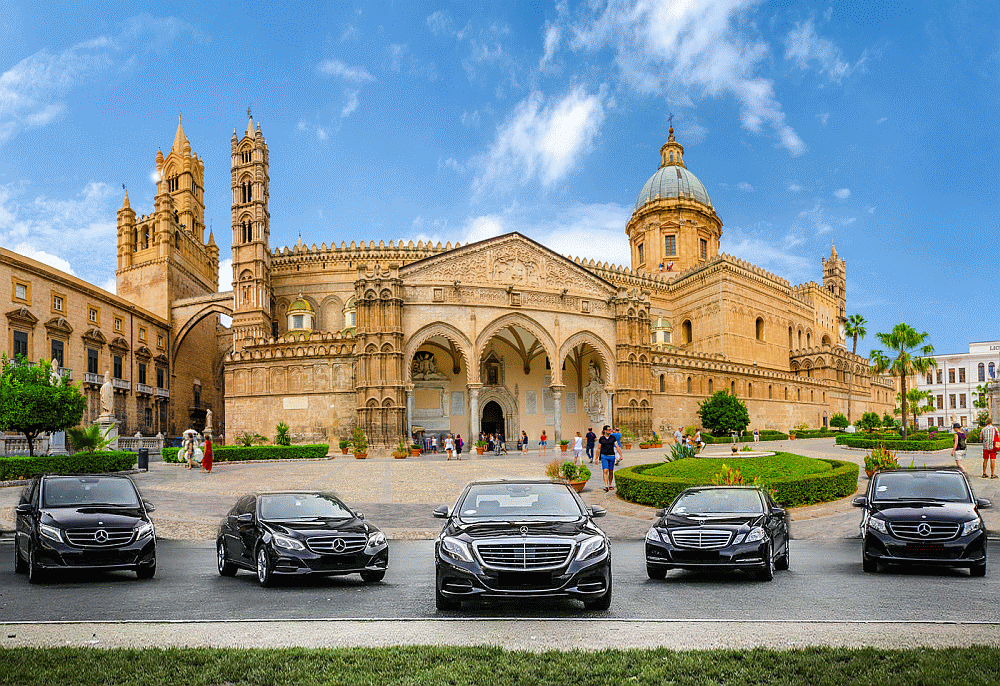
• Arab-Norman architecture
• Transport hub for the west
Is Renting a Car Necessary?
Not always — but it helps.
You can manage without a car if:
• Staying along the Palermo–Cefalù–Messina–Catania rail corridor
• Visiting Taormina and Siracusa
A car is strongly recommended for:
• Erice and western Sicily flexibility
• Rural Agrigento surroundings
• Interior mountain towns
• Coastal exploration at your own pace
Driving requires confidence — roads can be narrow, and historic centres often have ZTL (restricted traffic zones).
Top Places to Visit in Sicily
• Palermo – culture, markets, layered history
• Cefalù – relaxed coastal beauty
• Agrigento – ancient Greek temples
• Taormina – theatre and sea views
• Ortigia – Baroque streets and sea
• Mount Etna – volcanic landscapes
• Trapani – salt flats and island ferries
• Erice – medieval hilltop retreat
Final Practical Notes
• Summer (June–September) increases travel times
• Train services are reliable but not high-speed
• Sunday schedules are reduced
• Book Etna tours in advance during peak season
• Allow flexibility when combining hill towns and public transport
Sicily rewards travellers who slow down.
Distances are reasonable, routes are established, and combining trains, buses, private transfers, and occasional car rental makes exploring the island both practical and memorable.
N.B. Prices shown are indicative and reflect typical costs in Sicily as at February 2026.
Popular Destinations, Tours and Shuttle Services - Sicily
-
![Majolica Travel]()
Tailor-made Sicily
-
![La riserva dello Zingaro, Sicily, Italy]()
Escursione Ris. Zingaro
-
![Sicily Airports Transfer and Tour]()
premiere chauffeur Sicilian hire company
-
![Sicilisland Transfer Trapani]()
Private excursions San Vito lo Capo, Favignana, Marsala
-
![Liberty Lines Sicily]()
Sicily to Egadi, Aeolian, Pantelleria, Pelagie and Ustica islands
-
![Sicily Private Driver]()
based in Taormina and Catania

Sicily in Ancient Times – And the Living Legacy Visitors Can Experience in 2026
Sicily has always been more than just Italy’s largest island. Sitting at the crossroads of Europe and North Africa, it has been claimed, shaped, and reshaped by successive civilisations. For travellers in 2026, Sicily is not simply a beach destination — it is one of the richest open-air history museums in the Mediterranean.
From Greek temples that rival Athens to Roman mosaics more intricate than many in mainland Italy, Sicily’s ancient past remains remarkably visible — and remarkably accessible.
The Greek Age: Sicily as Magna Graecia
Beginning in the 8th century BCE, Greek settlers arrived from mainland Greece and founded powerful city-states along Sicily’s coast. They called the region part of Magna Graecia — Greater Greece.
Cities such as:
Syracuse
Agrigento
Selinunte
Gela
became wealthy and influential, sometimes even rivaling cities in mainland Greece.
The Valley of the Temples – Agrigento
The most dramatic surviving reminder of this era is the Valley of the Temples.
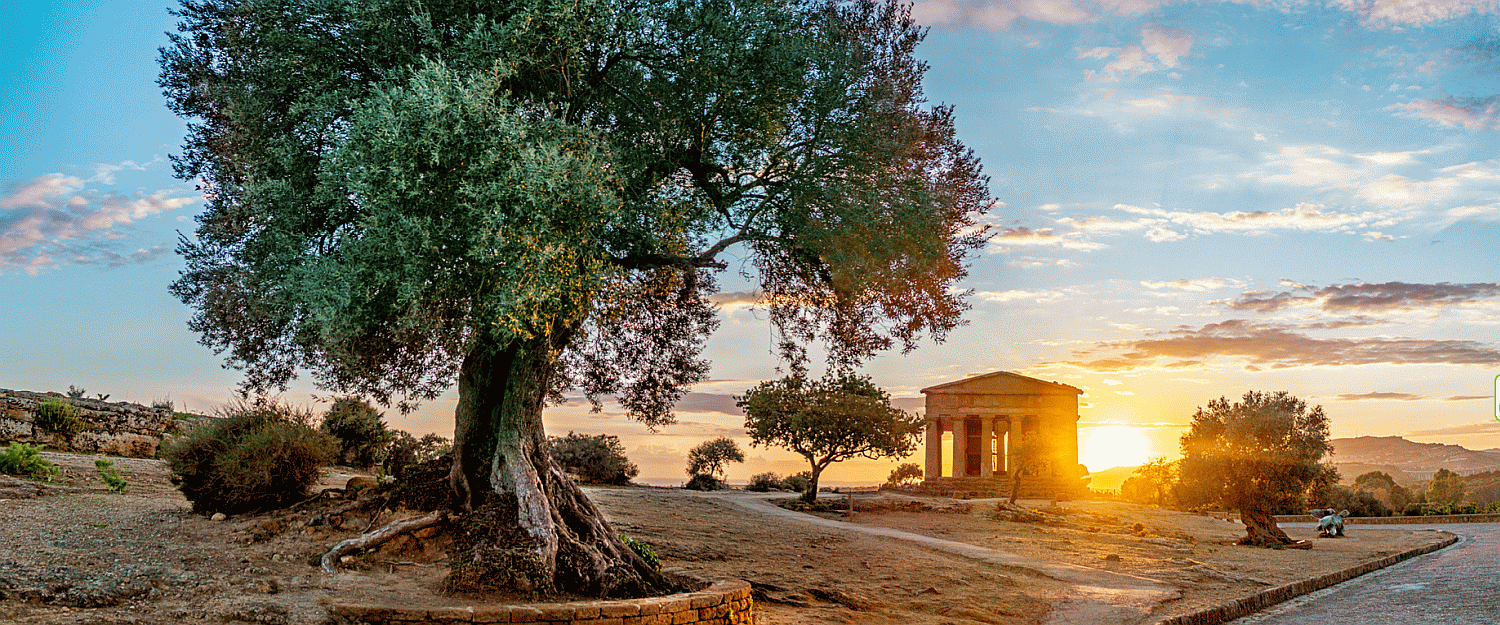
Here, massive Doric temples dedicated to Greek gods still stand against the Sicilian sky. The Temple of Concordia, in particular, is one of the best-preserved Greek temples anywhere in the world.
In 2026, visitors can:
Walk freely among the temples at sunset
Join archaeological tours explaining ancient rituals and city life
Attend seasonal cultural events staged among the ruins
Syracuse and Greek Theatre
In Syracuse, the Greek Theatre of Syracuse remains one of the largest ancient theatres ever built.
What makes it extraordinary in 2026? It is still used.
Each year, classical Greek dramas are performed in the original amphitheatre — a rare chance to watch Aeschylus or Sophocles where ancient audiences once sat.
Carthaginians and Conflict
Sicily’s wealth made it a battleground. The Carthaginians, based in North Africa, fought fiercely with Greek cities for control of the island.
Remnants of this era survive at sites like Mozia, a small island settlement once controlled by Carthage. Archaeological finds here reveal defensive walls, harbours, and Phoenician artefacts.
In 2026, travellers can explore Mozia by boat from western Sicily, combining archaeology with lagoon scenery.
Roman Sicily: The Empire’s Breadbasket
After the Punic Wars, Sicily became Rome’s first overseas province. It was critical to the Roman Empire as a grain supplier — feeding the growing population of Rome itself.
The Roman legacy remains strikingly visible.
Villa Romana del Casale
Near Piazza Armerina lies the spectacular Villa Romana del Casale.
This 4th-century Roman villa contains some of the most detailed and colourful floor mosaics ever discovered. Scenes depict:
Hunting expeditions
Mythological tales
Daily Roman life
The famous “bikini girls” mosaic — centuries before modern swimwear
In 2026, elevated walkways allow visitors to view the mosaics without damaging them, and interpretation centres provide detailed historical context.
Indigenous Sicily: Before the Empires
Before Greeks and Romans arrived, Sicily was home to indigenous peoples such as the Sicels, Elymians, and Sicanians.
At Segesta, visitors can see a mysterious unfinished Greek temple set against dramatic hills — possibly built in cooperation with or under the influence of local Elymian inhabitants.
The nearby theatre, perched high above the valley, offers one of Sicily’s most breathtaking views — blending natural landscape with ancient architecture.
Mount Etna: The Eternal Presence
No discussion of ancient Sicily is complete without Mount Etna.
Europe’s most active volcano shaped mythology and history alike. The Greeks believed it was the forge of Hephaestus, god of fire. Romans associated it with Vulcan.
In 2026, visitors can:
Take guided hikes across lava fields
Ride cable cars partway up the volcano
Explore ancient lava flows that influenced settlement patterns
Etna is a reminder that Sicily’s history has always been shaped by both human ambition and geological force.
How Ancient Sicily Shapes the Modern Experience
What makes Sicily unique in 2026 is not just the preservation of ruins — it is how seamlessly the ancient and modern coexist.
You can:
Eat dinner in a piazza built on Greek foundations
Attend a festival in a Roman amphitheatre
Stay in a hotel overlooking ancient city walls
Walk through baroque streets that sit atop classical grids
Cities such as Palermo and Catania layer ancient Greek, Roman, Norman, Arab, and Spanish influences into one continuous story.
Why Sicily in 2026 Is Ideal for History Lovers
Modern infrastructure makes Sicily’s ancient heritage easier to explore than ever:
Improved regional rail connections
Guided archaeological tours in multiple languages
Restoration projects funded by European heritage initiatives
Digital interpretation apps at major sites
Unlike some Mediterranean destinations where ruins are fragmented or overly commercialised, Sicily still feels authentic and immersive.
Final Thoughts
Sicily in ancient times was powerful, contested, and culturally brilliant.
In 2026, its legacy remains tangible. You do not merely look at Sicily’s history — you walk through it.
From the temples of Agrigento to the theatre of Syracuse, from Roman mosaics to volcanic mythology, Sicily offers one of the most complete ancient landscapes in Europe.
For travellers seeking depth, narrative, and atmosphere — Sicily delivers not just ruins, but continuity.
ShuttlesA2B - explore Italy