
Essential Guide to Colombia Shuttles, Transfers, and Tours:
Navigate Your Journey with Confidence and Style
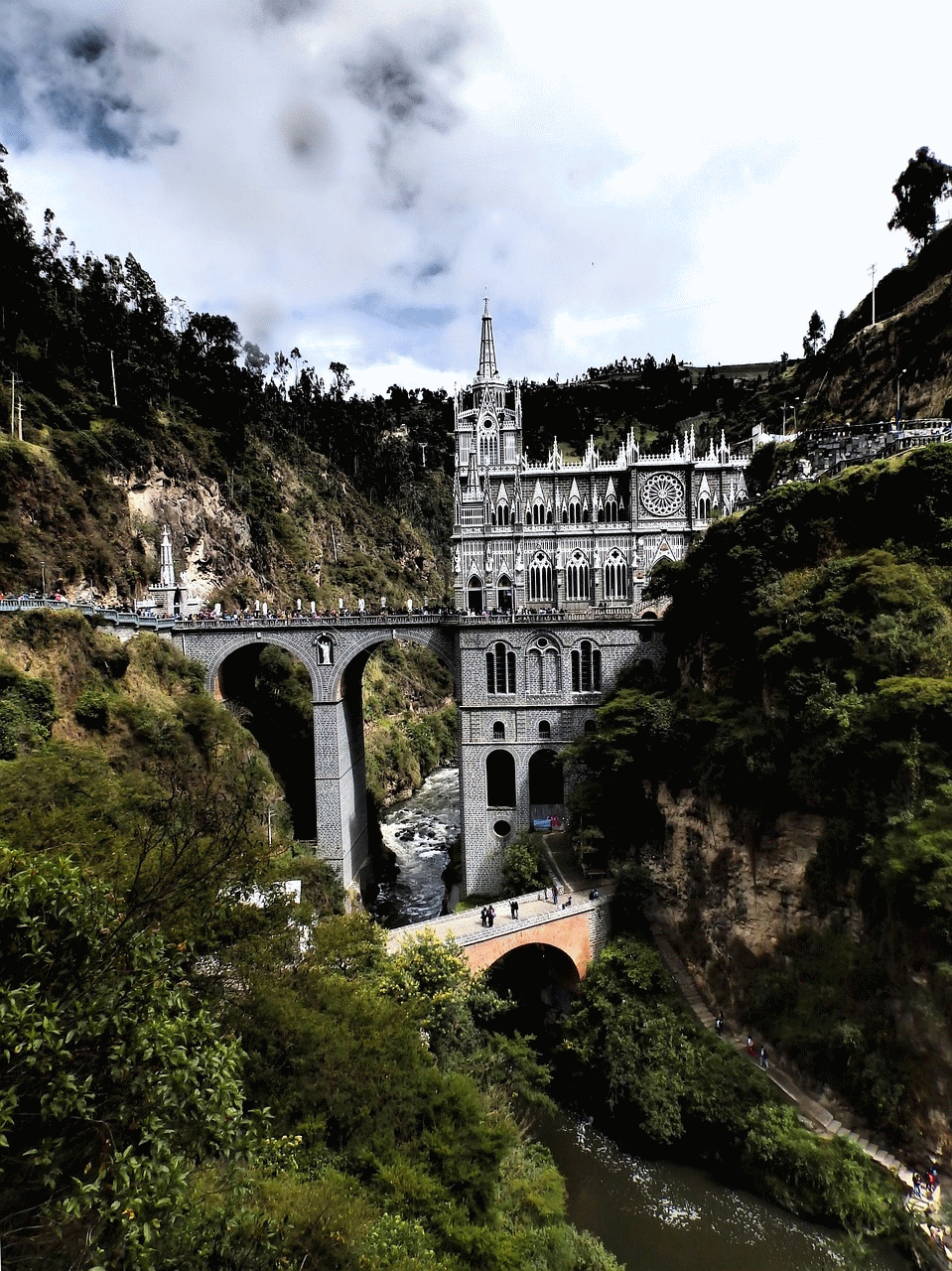
Santuario de Las Lajas, Ipiales, Colombia
Visit Colombia
Colombia is a country of striking contrasts, where Caribbean beaches, Andean peaks, Amazon rainforest, and lively urban centers all meet in one vibrant destination.
Its cultural richness is felt everywhere, from the colonial charm of Cartagena to the creative energy of Medellín and the cosmopolitan rhythm of Bogotá.
Travelers are drawn to Colombia not only for its landscapes but also for its warmth, hospitality, and diverse traditions.
Whether you’re wandering through coffee plantations in the Andean hills, exploring the lush Amazon, or relaxing on the white‑sand shores of San Andrés, the country offers experiences that stay with you.
Colombia invites you to discover a place where color, music, and life flourish in every corner.
Colombia — explore shuttles, airport transfers, private drivers, tours & sightseeing - Featured partners:

Nocturna Transfer Aeropuerto - national coverage

Your Express | Tu Expreso - Cali, Bogotá and Medellín

PiloTrans - Bogotá-Colombia

Serviexpress - Puerta a puerta entre Barranquilla, Santa Marta, Cartagena etc.

Transportes Ejecutivos
Sooncar - airport transfers anywhere in Colombia
Bogota Driver Guide Service

Luxury Van Bogotá
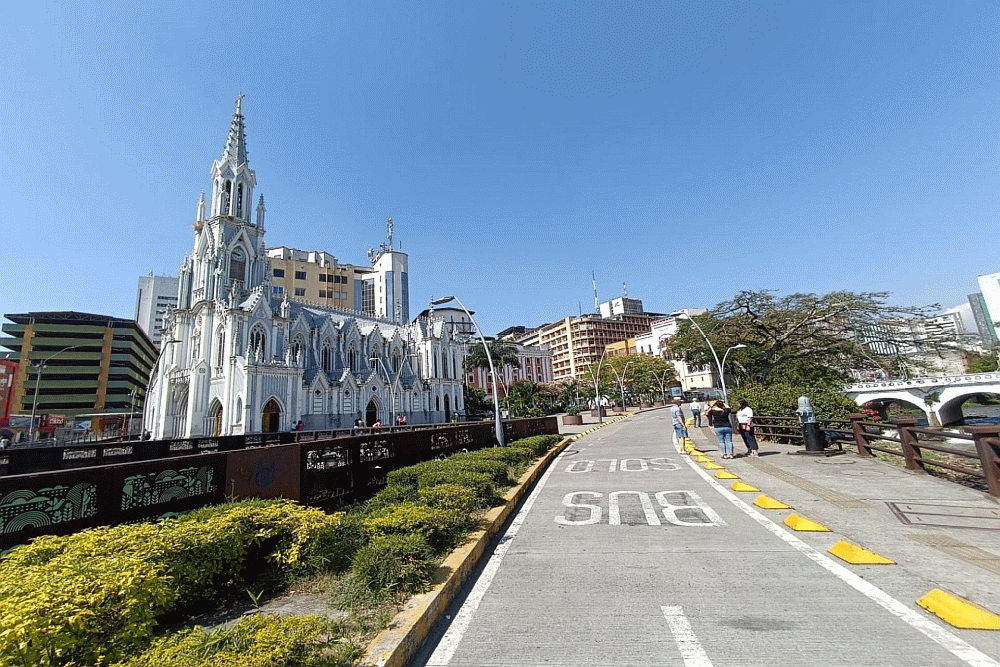
Transportes Cali
Popayan Tours

Taxis Aeroexpress - Pasto
Getting around Colombia
Colombia is mountainous, diverse, and built around regions rather than one long spine. Once you accept that, moving around becomes much easier.
You’ll combine domestic flights with long‑distance buses, use airport transfers in major cities, and rely on private drivers where timing, safety, or terrain matters. Transport in Colombia is generally reliable, but geography makes travel slower than it looks on the map.
How transport works in Colombia
Distances aren’t huge, but mountains, valleys, and weather stretch travel times. The system is designed around that.
You’ll mostly use:
Flights for crossing regions (Bogotá–Medellín–Cartagena–Cali)
Long‑distance buses for value and coverage
Airport transfers for safe, direct arrivals
Private drivers in coffee towns, rural areas, and Caribbean coast villages
Boats in the Amazon, Chocó, and island regions
Ride‑hailing apps in major cities
Basic Spanish helps. Useful words: pasaje (ticket), terminal, directo, con escala.
Airport transfers in Colombia
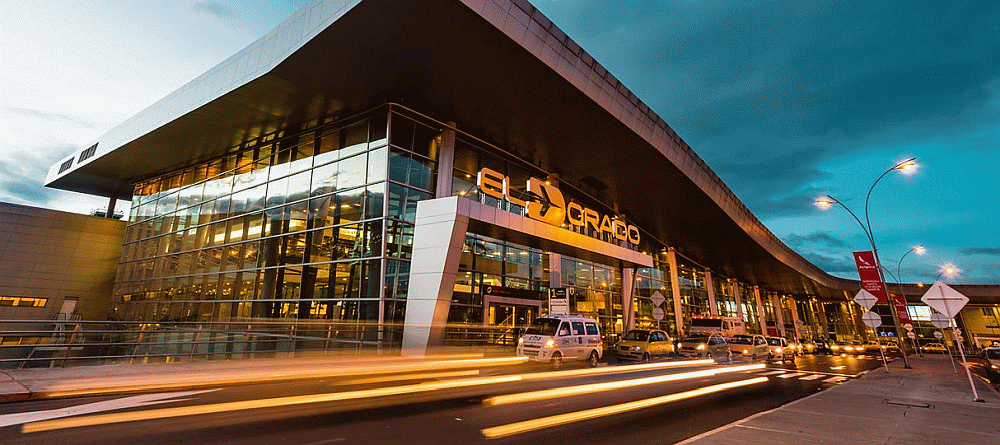
Bogotá Airport (BOG) → City
El Dorado is close to the city but traffic is real.
BOG → Bogotá city
Ride‑hailing apps (Uber, DiDi, Cabify) 25–60 min depending on traffic
Private airport transfers 25–60 min
Official taxis Regulated; use the authorised counter
Avoid unregistered taxis outside arrivals.
Medellín Airport (MDE) → City
José María Córdova Airport sits in the mountains.
MDE → Medellín (El Poblado / Laureles)
Shared airport shuttles 45–60 min
Private transfers 40–60 min
Official taxis Fixed pricing
The road is winding; private transfers are worth it after long flights.
Cartagena Airport (CTG) → City
Quick and simple.
Taxi or ride‑hailing 10–20 min
Private transfers Good for late‑night arrivals
Buses in Colombia
Buses are the backbone of intercity travel. They’re comfortable, frequent, and connect almost everywhere.
Common seat types:
Sencillo – standard
Semi‑cama – partial recline
Cama – wide, near‑flat seats on premium routes
Typical routes:
Bogotá → Medellín 7–10 hours
Bogotá → Cali 10–12 hours
Medellín → Cartagena 12–14 hours
Santa Marta → Cartagena 4–5 hours
Overnight buses work well if you choose semi‑cama or cama.
Domestic flights
Flights save major time across regions.
Typical flight times:
Bogotá → Medellín: 45 min
Bogotá → Cartagena: 1.5 hours
Medellín → Santa Marta: 1.5 hours
Cali → Bogotá: 1 hour
Budget fares are common; baggage limits are strict.
Taxis, ride‑hailing & private drivers
Urban taxis are regulated but vary by city. Ride‑hailing apps (Uber, DiDi, Cabify, InDriver) are widely used and remove negotiation stress.
Private drivers suit:
Airport transfers
Coffee region towns
Caribbean coast villages
Remote accommodation
Multi‑stop day trips
Confirm precio fijo in advance.
Regional transport
Coffee Region (Salento, Filandia, Manizales, Pereira)
Fly into Pereira or Armenia
Use jeeps (Willys) for local hops
Private drivers for coffee farms and viewpoints
Caribbean Coast (Cartagena, Santa Marta, Palomino)
Buses and shuttles connect major towns
Private drivers for Tayrona, Minca, and remote beaches
Medellín & Antioquia
Metro + cable cars in the city
Buses and private drivers for Guatapé, Jardín, Santa Fe de Antioquia
Amazon (Leticia)
Boats connect villages
Tours and private transport are essential outside town
Boats & ferries
Used mainly in:
Amazonas (Leticia–Tabatinga–Santa Rosa)
Chocó (Nuquí, Bahía Solano)
San Andrés & Providencia (inter‑island ferries)
Weather affects schedules; allow buffer days.
Cross‑country planning
Colombia rewards flexibility rather than rushing. Match the terrain with the right transport, expect longer travel days in the mountains, and the country opens up smoothly, one region at a time.
Popular Destinations, Tours and Shuttle Services - Colombia, South America
-
![Medellín de Cerca]()
Medellín Up Close – Medellín de Cerca
-
![Aerotransfer (Medellín)]()
Rionegro Airport, Medellín
-
![citysightseeing.com.co]()
hop on hop off - Cartagena
-
![amazingtravelcartagena.com]()
Discover Santa Marta
-
![Bogotá Experience Tours]()
Tours en Bogotá
-
![Hansa Tours]()
Bogotá day and multi-day tours
-
![Parque Arqueológico San Agustín]()
Tour Parque Arqueológico San Agustín
-
![truecolombiatravel.com]()
Colombia - custom-designed trips



Top Places to Visit in Colombia
Cartagena
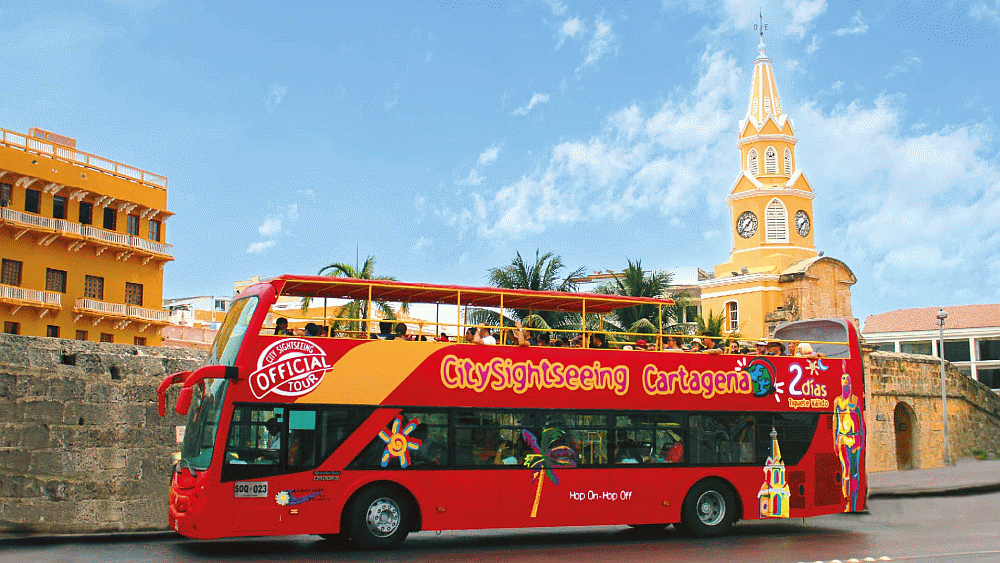
Colombia’s most iconic coastal city. The walled Old Town is filled with cobblestone streets, colourful balconies, and lively plazas. It’s perfect for slow wandering, café stops, and sunset walks along the historic walls. Day trips to nearby beaches and islands are easy to arrange.
Tayrona National Park
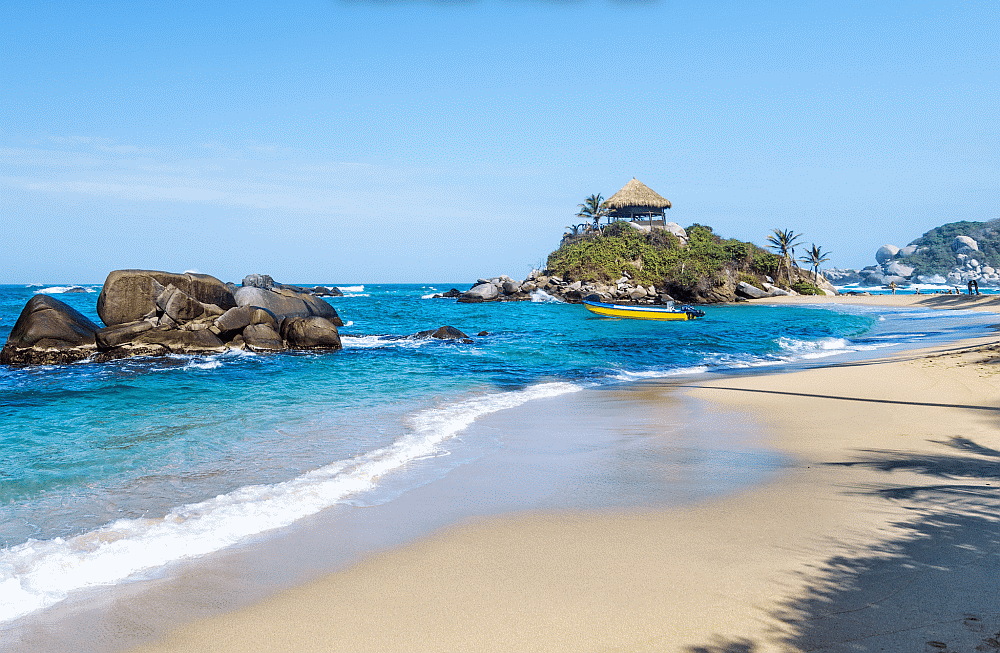
A spectacular stretch of Caribbean coastline where jungle trails lead to white‑sand coves. Travellers hike through tropical forest to reach beaches like Cabo San Juan. Best visited with a pre‑booked park entry and an early start to avoid heat and crowds.
Medellín
A modern, energetic city set in a mountain valley. Known for its cable‑car views, creative neighbourhoods, and mild climate, Medellín is a great base for exploring nearby towns. The city blends innovation with a strong cultural scene.
Guatapé
A colourful lakeside town famous for its bright zócalos and the climbable El Peñón rock. The views from the top stretch across a maze of islands and water channels. Easily visited on a day trip from Medellín with a private driver or tour.
Salento
A charming coffee‑region town surrounded by rolling hills and family‑run fincas. It’s the gateway to the Cocora Valley and a great place to learn about Colombia’s coffee traditions. Local jeeps (Willys) make exploring the area simple.
Cocora Valley
Home to Colombia’s towering wax palms. The hiking loop passes through cloud forest, open valleys, and sweeping viewpoints. A must‑do for nature lovers and photographers. Weather shifts quickly, so bring layers.
Bogotá
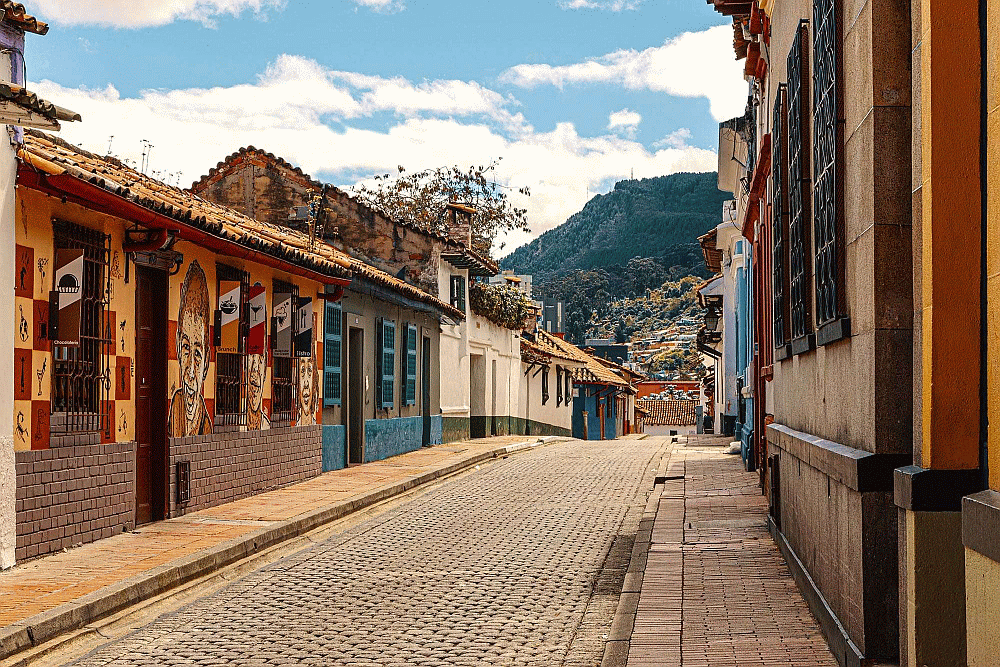
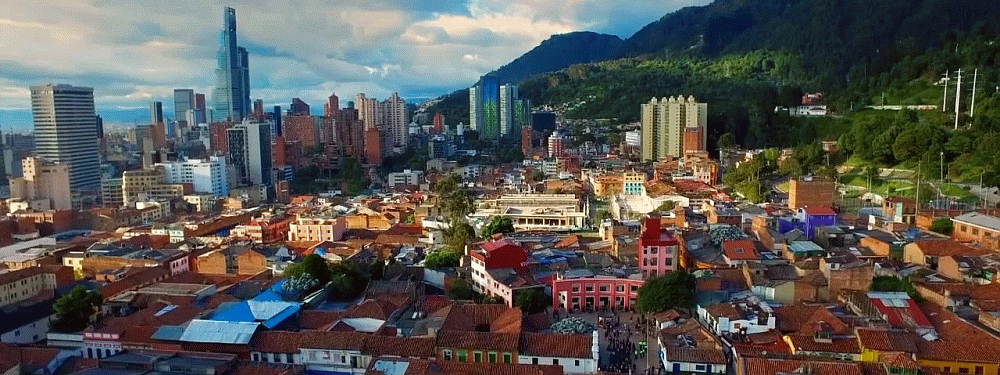
The country’s high‑altitude capital, known for its museums, street art, and historic La Candelaria district. Monserrate offers panoramic views over the city. Bogotá is also a major transport hub for reaching other regions.
San Agustín Archaeological Park
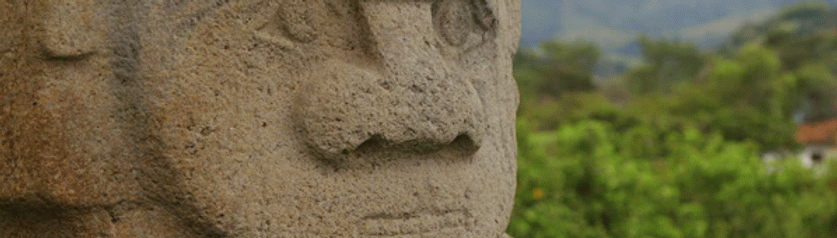
One of Colombia’s most important archaeological sites. Visitors can explore ancient stone statues, burial mounds, and ceremonial sites set among green hills. A peaceful, atmospheric destination that reveals the depth of Colombia’s pre‑Hispanic history.
The Lost City (Ciudad Perdida)
A multi‑day jungle trek through the Sierra Nevada mountains to reach an ancient archaeological site older than Machu Picchu. Expect river crossings, steep climbs, and rustic camps. Guided tours are mandatory and depart from Santa Marta.
Providencia and San Andrés
Two Caribbean islands known for turquoise water, coral reefs, and relaxed island culture. Providencia is quieter and more traditional, while San Andrés offers more infrastructure. Ideal for diving, snorkelling, and slow days by the sea.
Tierradentro Archaeological Park:
Colombia’s Ancient Underground Burial Chambers
Hidden high in the mountains of southwestern Colombia, Tierradentro Archaeological Park is one of the most mysterious and remarkable archaeological sites in the Americas.
Surrounded by steep green valleys and cloud-covered Andean ridges, the park protects a vast complex of underground burial chambers known as hypogea — enormous ceremonial tombs carved directly into volcanic rock more than a thousand years ago.
The hypogea of Tierradentro were created between roughly the 6th and 10th centuries AD by a pre-Hispanic culture that lived in the mountains of present-day Cauca.
Although little is known about the people themselves — they left no written language — the scale and sophistication of the tombs suggest a highly organised society with complex spiritual beliefs and strong social hierarchy.
The word “hypogeum” comes from Greek and means “underground chamber.” At Tierradentro, these chambers were not simple graves.
They were elaborate ceremonial spaces accessed by deep spiral or straight stairways descending several metres underground. Some chambers are enormous, reaching up to 12 metres wide and supported by carved central columns.
Inside the tombs, the walls are decorated with striking geometric and symbolic paintings in black, red, and white. Many designs resemble textiles, woven patterns, snakes, masks, or stylised human forms.
Archaeologists believe the decorations mirrored the interiors of houses used by the living above ground, symbolising a continuation between life and death — the dead entering another version of the earthly world.
Most historians believe these hypogea were collective secondary burial chambers for elite families or important leaders. Bodies may initially have been buried elsewhere before bones were later transferred into the ceremonial tombs.
This suggests ancestor worship and ritual remembrance played an important role in Tierradentro society.
The architecture itself is extraordinary. Workers carved the chambers into volcanic tuff using stone tools, shaping columns, niches, stairs, and smooth curved ceilings underground.
The precision required indicates both engineering skill and careful planning. Some tombs contain multiple chambers radiating from a central space, almost like subterranean temples.
The park also contains monumental stone statues depicting human and animal figures. These sculptures, similar in style to those found at nearby San Agustín, hint at broader cultural traditions across the northern Andes during the pre-Columbian era.
By the time Spanish colonisers arrived in the region, the original builders of the hypogea had long disappeared. The tombs gradually became hidden beneath vegetation and earth.
Many were looted during the 18th and 19th centuries before scientific archaeological work began in the 20th century.
Today, Tierradentro is recognised as a UNESCO World Heritage Site because of its unique funerary architecture and cultural significance.
More than 160 known hypogea survive across several hilltops including Alto de Segovia, Alto del Duende, Alto de San Andrés, and Alto del Aguacate.
Visitors often describe Tierradentro as haunting, peaceful, and deeply atmospheric. Unlike many famous archaeological sites, it remains relatively remote and uncrowded.
Reaching the tombs usually involves hiking through mountain farmland and misty ridgelines before descending into the silent painted chambers beneath the earth.
For travellers interested in ancient civilisations, ritual landscapes, and lesser-known archaeological wonders, Tierradentro offers one of the most fascinating glimpses into the spiritual world of pre-Columbian South America.
excerpt from Pilgrimage to Peru 1979
Suzi and I explored the Museo at San Andres. They have an interesting collection of funeral pots found in the caves with some well-preserved designs on them. I copied one into this book.
Upstairs, were some ethological artifacts of the way of life of the Indian people here; A huge wooden machine, with wooden cogs, for squeezing the juice of sugar cane; drums & clothes.
Suzi was given some coco leaves to chew, and some white powdery rock to mix in with her salivary gunk. The guide was very alert & keen to point out everything to us.
After the museum we began a 1½ hr climb to El Aguacate, the site of numerous caves on top of a high ridge, overlooking the valley of San Andres, and on the other side, Inza. We both enjoyed the climb. The air was so clean & fresh, yet not cold.
The most important cave had a little roof structure over it. I went down armed with flashlight & candle & sat for a few minutes, observing some interesting designs of humanoids and/or insects.
One creature had hands with 3 fingers, 4 toed feet and a tail, with a human? face. There were also diamond patterns & snake designs.
Suzi & I carried on along the ridge, past numerous caves. We were guided down a smaller ridge by a little boy whose house was just down the hill. He ran down the hill as if he could fly. We walked for a few more hours, past some hillsides & crops. Arrived back at our home about 5:30 pm.

Las Lajas, Ipiales, Nariño, Colombia
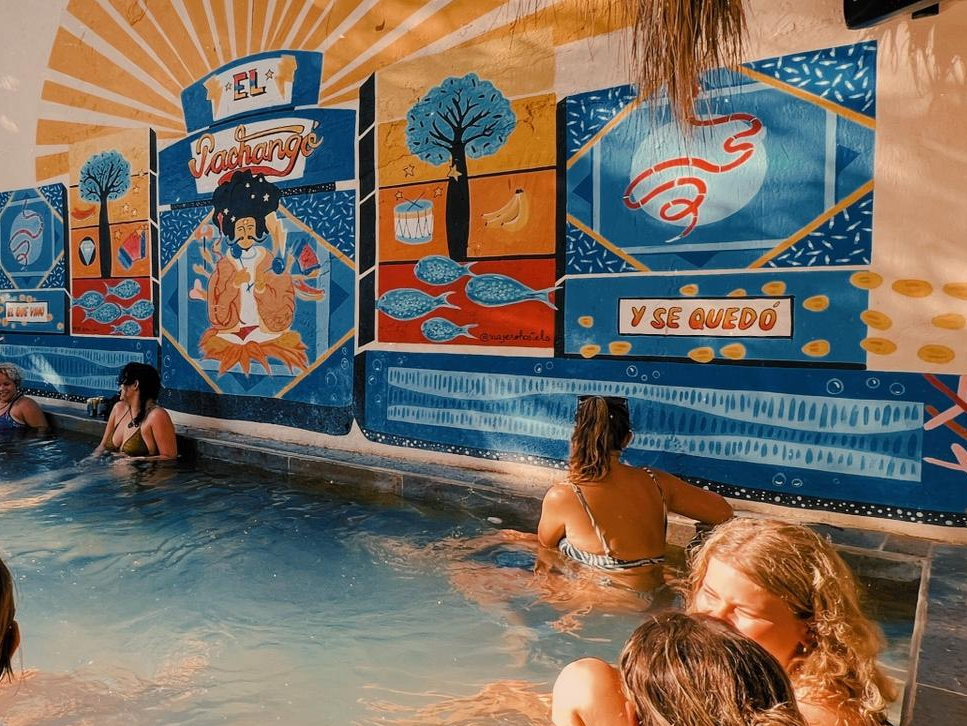
Viajero Getsemani, Viajero Cartagena Hostels, Cartegena, Colombia