

Essential Guide to Ethiopia - Shuttles, Transfers and Tours:
Navigate Your Journey with Confidence and Style
Ethiopia - Intro - Land of Origins
Ethiopia is one of Africa’s most ancient and culturally rich nations — a country of dramatic landscapes, deep-rooted traditions, and extraordinary history.
Often called the “Cradle of Humanity,” Ethiopia is where the 3.2-million-year-old fossil Lucy was discovered in the Afar region, offering some of the earliest evidence of human ancestry.
Unlike most African nations, Ethiopia was never formally colonised, preserving a unique cultural identity expressed through its own script (Ge’ez), calendar, and time system.
Geographically diverse, Ethiopia ranges from the soaring peaks of the Simien Mountains to the otherworldly Danakil Depression — one of the hottest places on Earth.
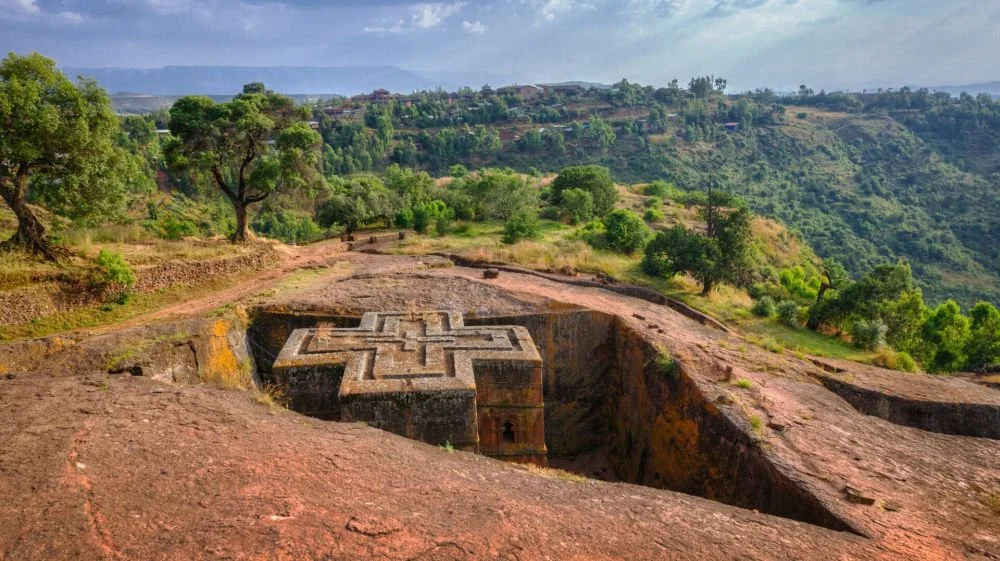
The country’s highlands dominate much of the landscape, dotted with ancient monasteries and rock-hewn churches such as those of Lalibela.
Ethiopia is also the birthplace of coffee, and traditional coffee ceremonies remain central to daily life.
Its cuisine — especially injera served with richly spiced stews — reflects centuries of cultural and trade influences.
From the imperial legacy of Axum to the vibrant streets of Addis Ababa, Ethiopia offers travellers a powerful blend of history, spirituality, music, and resilience.
Ancient yet alive with energy, Ethiopia is a destination unlike anywhere else in Africa.
Ethiopia — explore shuttles, airport transfers, private drivers, tours & sightseeing - Featured partners:

Ethiopian Driver Melkamu Melese

Habesha Wonder Tours - make your Ethiopian travel dreams come true

YeGuzo private taxi Addis Ababa

Magic Ethiopia Tours - Coffee Tours

My Ethiopia Travel

Addis Ababa - professional chauffeur-driven services

Eco-Travel Ethiopia

Walk in Ethiopia
Getting around Ethiopia
Ethiopia is vast, elevated, and shaped by mountains rather than motorways.
Once you understand that geography dictates pace, moving around becomes manageable.
You’ll combine domestic flights with long-distance buses, use 4WD vehicles in remote regions, and rely on private drivers where roads are rough or navigation is complex.
Transport is improving, especially between major cities, but timing flexibility is essential.
How transport works in Ethiopia
Distances can look modest on a map, yet winding highland roads and variable surfaces make journeys longer than expected.
You’ll mostly use:
Domestic flights for major north–south routes
Long-distance buses for budget intercity travel
Minibuses for shorter regional hops
Private drivers / 4WD vehicles for historic routes and remote areas
Boats on Lake Tana
Cross-border buses to Kenya and Sudan (limited and slower)
Amharic is widely spoken. A few useful words: tiketi (ticket), terminal, wede (to), betam (very), alchilim (I don’t understand).
Airport transfers in Ethiopia
Addis Ababa Bole International Airport (ADD) → City
Addis Ababa Bole International Airport serves as the main international gateway and hub for domestic flights.
ADD → Addis Ababa city
Official airport taxis
15–30 min (traffic dependent)
ETB 600–1,200 depending on distance
Hotel transfers
Many mid-range and high-end hotels offer collection
Ride-hailing apps (limited but growing)
Use official taxis arranged at the airport desk. Agree on a fixed fare in advance.
Addis traffic can be heavy at peak hours.
Domestic flights in Ethiopia
Given the terrain, flying often makes sense.
Ethiopian Airlines operates an extensive domestic network, linking major historic and regional centres.
Common flight times:
Addis Ababa → Lalibela: ~1 hour
Addis Ababa → Gondar: ~1 hour
Addis Ababa → Axum: ~1.5 hours
Addis Ababa → Bahir Dar: ~1 hour
Addis Ababa → Arba Minch: ~1 hour
Flights are efficient and dramatically reduce travel time compared with road journeys that can take 8–14 hours.
Baggage limits are enforced but generally reasonable.
Buses in Ethiopia
Buses are widely used and inexpensive, though comfort levels vary.
Two main types:
Government-run “Sky Bus”–style coaches (more reliable schedules)
Private long-distance buses (varying standards)
Common bus routes:
Addis Ababa → Bahir Dar
10–12 hours | ETB 800–1,200
Addis Ababa → Gondar
12–14 hours | ETB 900–1,400
Addis Ababa → Hawassa
5–6 hours | ETB 400–700
Addis Ababa → Mekelle
12+ hours (road conditions dependent)
Early departures are normal (often 5–6am). Roads through the highlands are scenic but winding.
Overnight buses exist but are less comfortable than in some South American countries.
The Historic North: Lalibela, Gondar & Axum
Often called Ethiopia’s “Historic Route,” this region is best reached by combining flights with road transfers.
Lalibela
Lalibela is famous for its rock-hewn churches.
Getting there:
Flight from Addis Ababa (~1 hour)
Airport → town transfer: 30–45 min
Road travel from Addis can take 12+ hours and may require a 4WD in rainy seasons.
Local transport:
Walking within town
Private guides and drivers for outlying monasteries
Altitude is significant; pace yourself.
Gondar
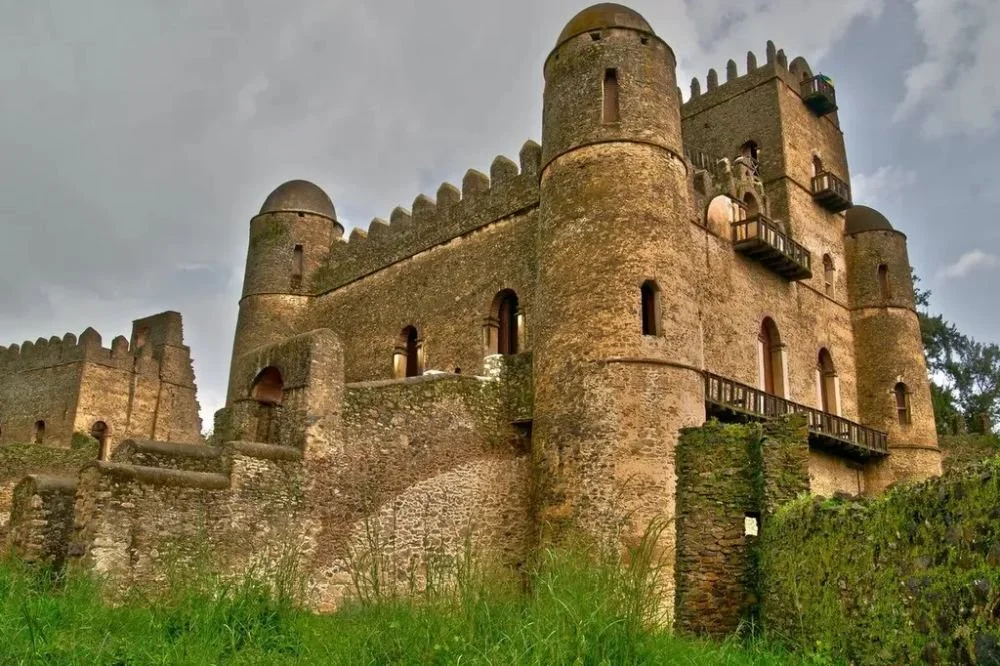
Gondar is known for its castle complex.
Access:
Flight from Addis (~1 hour)
Bus from Bahir Dar (~3–4 hours)
Local taxis are inexpensive; negotiate before departure.
Axum
Axum lies further north and is best reached by flight due to distance and road variability.
Allow buffer time if travelling overland.
Lake Tana & Bahir Dar
Bahir Dar sits on the southern shore of Lake Tana.
Access:
Flight from Addis (~1 hour)
Bus: 10–12 hours
Lake transport:
Boat trips to island monasteries
Private boats for flexible schedules
Boats are generally arranged through hotels or local tour operators.
Southern Ethiopia & the Omo Valley
The south is culturally rich but logistically slower.
Key access point:
Arba Minch
Flight from Addis (~1 hour)
Bus: 7–9 hours
Beyond Arba Minch, particularly into the Omo Valley:
4WD vehicles recommended
Private drivers essential for remote villages
Roads can be rough and dusty
Distances are shorter than they appear; allow time.
Trains
Ethiopia has a modern electric railway between Addis Ababa and Djibouti, primarily for freight and limited passenger use.
Within Addis Ababa:
Light rail operates on two lines
Inexpensive but often crowded
For most travellers, flights and road transport remain more practical.
Taxis & private drivers
In cities:
Blue-and-white taxis (shared)
Yellow taxis (private hire)
Fares negotiable; confirm before departure
Private drivers are ideal for:
Multi-day Historic Route trips
Omo Valley travel
Flexible photography stops
Remote lodges
Fuel availability can affect schedules in rural regions.
Cross-border transport
Land crossings are possible but slower and more variable.
Common overland routes:
Addis Ababa → Nairobi (via Moyale)
Gondar → Sudan border
Notes:
Carry printed documents
Check current visa requirements
Border processing can take several hours
Political and regional conditions can change; check locally before committing.
Practical realities
Roads in highland regions are winding and beautiful but slow
Altitude affects both vehicles and travellers
Early departures are standard
Schedules are indicative rather than guaranteed
Ethiopia rewards patience and planning. Match your transport to terrain, allow extra time in the mountains, and combine flights with carefully chosen road journeys. When you travel at the country’s pace rather than against it, Ethiopia unfolds steadily — plateau by plateau, church by church, market by market.
N.B. Prices shown are indicative and reflect typical costs in Ethiopia as at March 2026.
Popular Destinations, Ethiopia tours and transport: Featured Plus
-
![myethiopiatravel.com Omo Valley, Ethiopia]()
discover tribes of Omo Valley
-
![Mursi and Surma - Tribes of Omo Valley in Southwestern Ethiopia - zelalemtourethio.com]()
Mursi and Surma - tribes of Omo Valley in Southwestern Ethiopia
-
![On The Go Ethiopia Tours]()
discover Lalibela - the largest monolithic church in the world
-
![Lalibela - dreamlandethiopiatour.com]()
Lalibela, with Dreamland Ethiopia Tours
-
![Blue Sapphire Ethiopia Tours]()
discover Ethiopia's wonders
-
![amanethiopiatours.com somaliland Visit Somaliland: Exploring a Hidden Gem]()
visit Somaliland: exploring a hidden gem



The Legend of Kaldi and the Dancing Goats
According to Ethiopian folklore, a young goatherd named Kaldi noticed something unusual about his flock.
After eating bright red berries from a certain tree, his goats became energetic — even frisky — and refused to sleep at night.
Curious, Kaldi tried the berries himself and felt a similar burst of vitality. He took the berries to a nearby monastery, where a monk reportedly disapproved and threw them into the fire. As the beans roasted, however, an enticing aroma filled the air. The monks raked the beans from the embers, ground them, mixed them with hot water, and discovered a drink that helped them stay awake during long hours of evening prayer.
That tree was Coffea arabica — and the rest, as legend tells it, is history.
Legend vs. History
While the Kaldi story is charming, it likely emerged centuries after coffee was already being consumed. There are no written records of Kaldi from the period when coffee was first used. Most historians believe coffee was being consumed in Ethiopia by at least the 9th–11th centuries, possibly earlier.
What is historically supported is that coffee originated in the highlands of Ethiopia, particularly in the region of Kaffa — which may even be the source of the word “coffee.”
From Ethiopia, coffee spread across the Red Sea to Yemen, where it was cultivated and traded widely through the port of Mocha. By the 15th century, it was firmly embedded in Islamic religious and social life. From there, coffee moved into the Ottoman Empire and eventually to Europe.
Ethiopia: The Birthplace of Arabica
Today, Ethiopia remains the genetic homeland of Coffea arabica. Unlike many coffee-producing countries that rely on cultivated varietals, Ethiopia still has vast areas of wild coffee forests, particularly in the southwest.
Ethiopian coffees are renowned for:
Floral aromatics (jasmine, bergamot)
Bright citrus acidity
Tea-like body
Complex fruit notes (blueberry, stone fruit)
Regions such as Yirgacheffe, Sidama, and Harrar are globally respected among specialty coffee roasters — including many you’d be familiar with through third-wave cafés.
The Ethiopian Coffee Ceremony: A Living Tradition
More than just an export crop, coffee in Ethiopia is a deeply embedded cultural ritual.
The traditional Ethiopian coffee ceremony is an elaborate, communal process that can take over an hour. Green beans are:
Washed
Roasted over charcoal in front of guests
Ground by hand
Brewed in a clay pot called a jebena
The coffee is served in small cups, often in three rounds — each with its own name and symbolic meaning.
The ceremony represents:
Hospitality
Community
Respect
Spiritual grounding
It is common for coffee to be prepared several times a day in homes across Ethiopia. In this sense, Ethiopia doesn’t just grow coffee — it lives coffee.
From Forest to Third Wave
In the modern era, Ethiopian coffee has become central to the global specialty movement. Many roasters highlight:
Single-origin Ethiopian lots
Natural (dry-processed) coffees from regions like Harrar
Washed coffees from Yirgacheffe
Natural processing — where the cherry dries around the bean — often produces the distinctive blueberry and wine-like notes that helped ignite specialty coffee enthusiasm in the 2000s.
For coffee professionals, Ethiopia represents both origin and innovation. It is where the genetic diversity of Arabica still thrives, offering resilience and flavour variation critical to coffee’s future.
Why the Legend Still Matters
The story of Kaldi and his energetic goats endures not because it is historically verifiable, but because it captures something essential about coffee:
Discovery through curiosity
Transformation through fire (roasting)
Community through shared experience
Wakefulness as both physical and spiritual
In Ethiopia today, coffee is not simply a commodity or morning stimulant. It is identity, economy, ritual, and history woven together.
Whether or not a goatherd truly watched his flock dance under a Kaffa moon, Ethiopia remains the undisputed birthplace of coffee — and its cultural heart still beats strongest there.


Mado Hotel, Addis Ababa

ShuttlesA2B - Kenya