

Essential Guide to Thailand Shuttles: Navigate Your Journey with Confidence and Style
On This Page
Visit Thailand
Thailand is one of Southeast Asia’s most rewarding destinations, where golden temples, vibrant markets, tropical islands, and rich culinary traditions come together in an easy-to-explore country.
From the energy of Bangkok to the mountains of Chiang Mai and the beaches of Phuket and Krabi, Thailand offers a mix of culture, nature, and warm hospitality that makes travel both exciting and comfortable.
Thailand — explore shuttles, airport transfers, private drivers, tours & sightseeing - Featured partners:
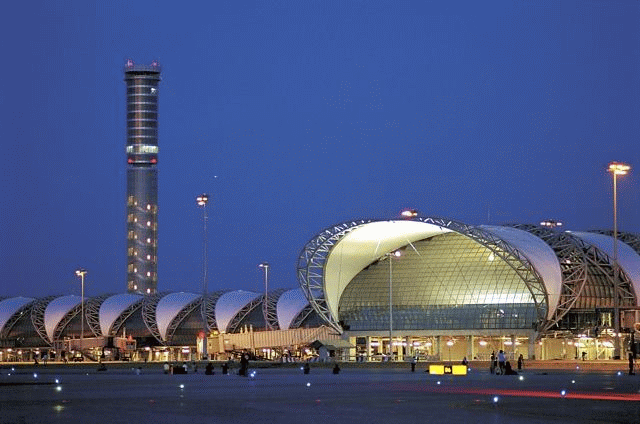
Bangkok Shuttle

Bell Travel Service

Mr Sam Taxi Phuket
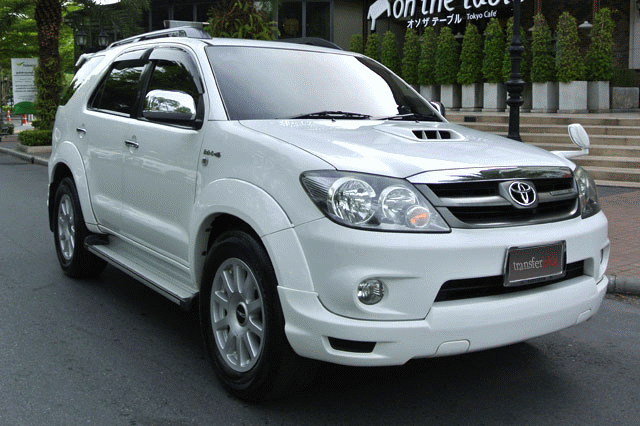
TransferBkk

Bangkok Airport Limo
Roon Reuang Coach
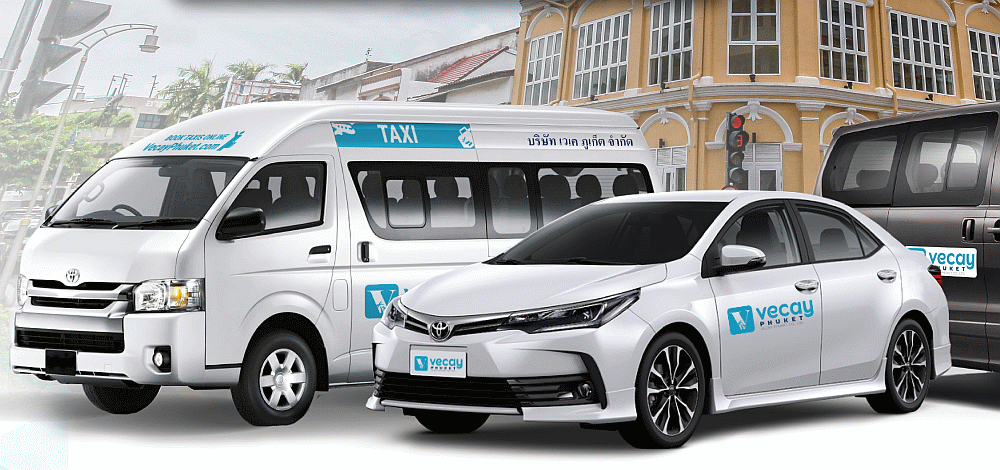
Vecay Phuket
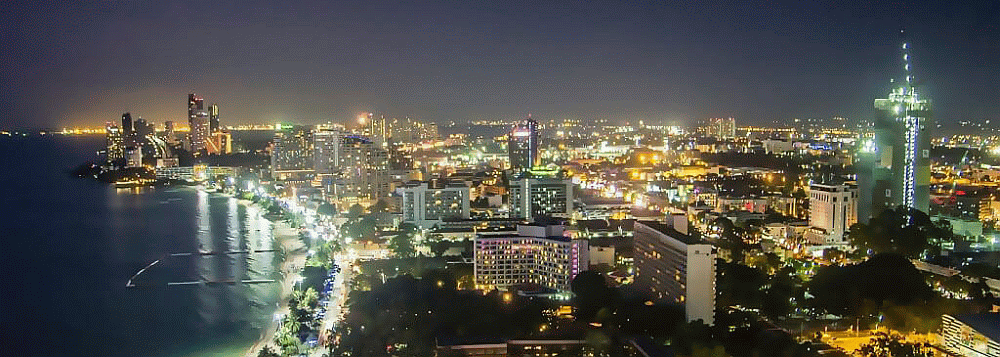
Pattaya Transfer

Pong Taxi Service - Pattaya

Pattaya 4 Leisure - Taxi Transfers

I Love Pattaya - Tour & Transport Service
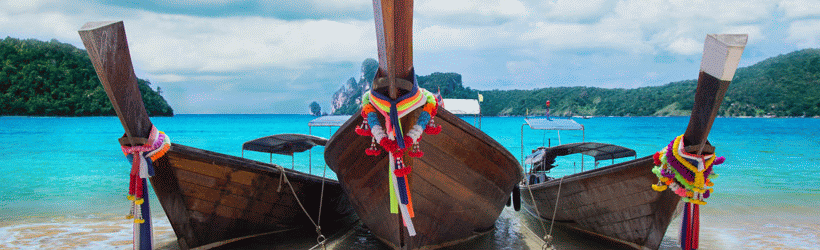
Phuket Shuttle

Glassflower Private Transportation, Pattaya
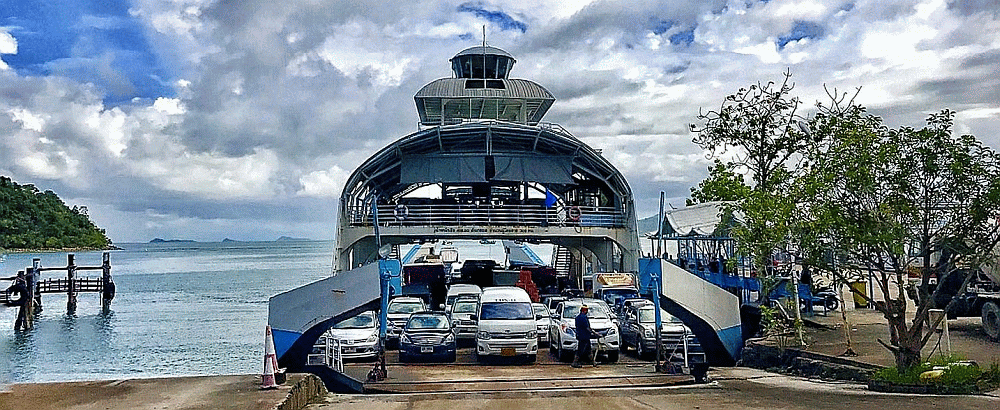
Taxi Koh Chang Asia
Getting Around Thailand:
Trains, Buses, Ferries, Taxis & Private Drivers
Thailand is large, diverse, and generally easy to move around once you understand how the transport system works.
From Bangkok’s sprawling metropolis to the mountains of the north and the islands of the south, your transport choices will shape your experience more than you might expect.
This guide explains how to get around Thailand — by train, bus, ferry, taxi, private driver, or domestic flight — with realistic travel times, costs, and practical context.
Transport in Thailand at a Glance
Most people combine several transport options during a trip:
Trains for major north–south routes
Long-distance buses for intercity travel
Ferries and speedboats for island travel
Taxis and tuk-tuks for cities and short hops
Private drivers or shared transfers for convenience
Flights to save time on longer distances
Where you are — Bangkok, the northern mountains, or the southern islands — makes a real difference.
Trains in Thailand (Long-Distance & Sleeper Trains)
Thailand’s rail network connects many major destinations and is one of the most comfortable ways to travel long distances.
What you’ll usually find:
Day trains with assigned seating
Overnight sleeper trains with berths
Air-conditioned carriages on most long routes
Popular routes:
Bangkok → Chiang Mai: ~11–13 hours (overnight sleeper)
Bangkok → Ayutthaya: ~1–1.5 hours
Bangkok → Surat Thani: ~9–12 hours (gateway to the islands)
Typical costs:
Bangkok → Chiang Mai sleeper: US$25–60 depending on class
Overnight trains are popular because they save both travel time and a hotel night.
Buses in Thailand (Long-Distance & Tourist Coaches)
Buses reach almost everywhere in Thailand and are often the most economical option for intercity travel.
What you’ll usually find:
Modern air-conditioned coaches
Frequent departures between major cities
Government and private bus operators
Typical travel times:
Bangkok → Chiang Mai: ~10–12 hours
Bangkok → Krabi: ~11–13 hours
Chiang Mai → Chiang Rai: ~3–4 hours
Typical costs:
US$10–35 depending on distance and class
For many routes, buses compete closely with trains in both price and travel time.
Ferries & Boats (Island Transport)
Southern Thailand’s islands are connected by a busy network of ferries and speedboats.
Common routes include:
Phuket → Koh Phi Phi: ~1–2 hours
Koh Samui → Koh Phangan: ~30–60 minutes
Koh Samui → Koh Tao: ~2 hours
What to expect:
Large ferries with indoor and outdoor seating
High-speed boats for shorter crossings
Weather-dependent schedules during monsoon seasons
Many tickets are sold as combined bus + ferry or train + ferry packages from mainland cities.
Domestic Flights (Fast Long-Distance Travel)
Flights are the quickest way to travel between distant parts of Thailand, particularly between Bangkok and the north or the southern islands.
Common routes:
Bangkok → Chiang Mai: ~1 hour
Bangkok → Phuket: ~1.5 hours
Bangkok → Krabi: ~1.5 hours
Typical costs:
US$30–100 depending on season and booking time
Low-cost airlines operate many routes, making flying surprisingly affordable.
Private Drivers in Thailand (Flexible & Comfortable)
Private drivers are widely available and can be good value for couples or small groups.
They’re especially useful for:
Bangkok → Pattaya or Hua Hin transfers
Chiang Mai day trips to temples and mountain villages
Airport transfers and early departures
Typical costs:
Chiang Mai day trip: US$60–120 per vehicle
Bangkok → Hua Hin transfer: US$80–150
Locally you may see these services described as private transfers or car with driver.
Taxis & Tuk-Tuks in Thailand (Cities & Short Distances)
Taxis and tuk-tuks are common in most Thai cities.
What to know:
Bangkok taxis are usually metered
Tuk-tuk fares should be agreed before starting the trip
Ride-hailing apps operate in major cities
Rough prices:
Short taxi rides in Bangkok: US$2–8 depending on traffic
Airport → central Bangkok: US$10–20 plus tolls
Traffic can be heavy in Bangkok, so allow extra time when crossing the city.
Getting to the Thai Islands
Reaching the islands often involves combining different transport types.
Typical routes include:
Flight or train to Surat Thani → ferry to Koh Samui or Koh Phangan
Flight to Phuket → ferry to Koh Phi Phi
Bus or flight to Krabi → boats to nearby islands
Travel packages that combine bus, train, and ferry tickets are widely available and can simplify logistics.
Seasonal Travel (Monsoon & Ferry Conditions)
Weather affects transport in southern Thailand more than many travellers expect.
Two main monsoon patterns affect different coasts:
Andaman coast (Phuket, Krabi): heavier rains roughly May–October
Gulf islands (Koh Samui, Koh Phangan): wetter around October–December
Practical tips:
Ferry schedules may change during rough seas
Flights are often the most reliable option during storms
Allow flexibility when island hopping
Safety & Practical Notes
Book trains and flights early during peak travel seasons
Keep valuables with you on buses and trains
Traffic can slow road journeys significantly
Ferry schedules depend on weather conditions
Thailand rewards travellers who move at a comfortable pace.
Getting around Thailand isn’t difficult — it’s flexible.
Combine trains, buses, ferries, flights, taxis, and private drivers, and you can reach everything from Bangkok and Chiang Mai to Phuket, Krabi, and the islands of the Andaman Sea and the Gulf of Thailand.
Plan loosely, move thoughtfully, and let the journey be part of the experience.
Prices shown are approximate and current in Thailand as of March 2026.
Popular Destinations, Tours and Shuttle Services - Thailand - Featured Plus
-
![Phantip Travel Thailand]()
Koh Samui to Krabi direct
-
![Aurora Sea Tour & Travel, Thailand]()
Visit Phuket & Krabi
-
![Discover Thailand]()
Bangkok, Ayutthaya, Kanchanaburi and more
-
![bangkokvanguards]()
experience Bangkok
-
![Smile Samui Tour, Koh Samui, Thailand]()
Private Transfer from Samui Airport
-
![Hug Me on Tour]()
Chiang Rai 3 Temples
-
![DriveMeTo]()
ground transportation and airport transfers throughout Thailand
-
![Royal Vacation, headquartered in Bangkok, royalvacationdmc.com]()
Thailand tour operator


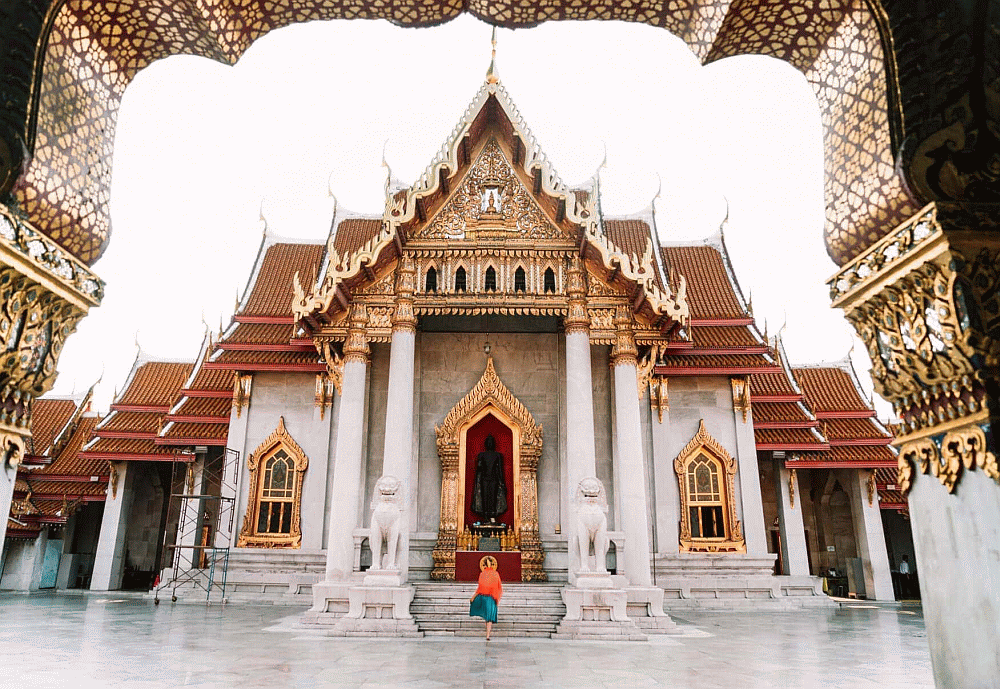
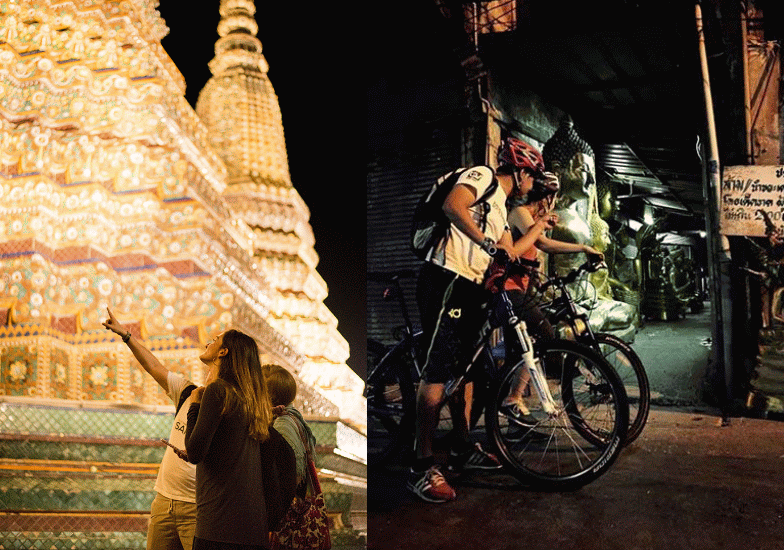

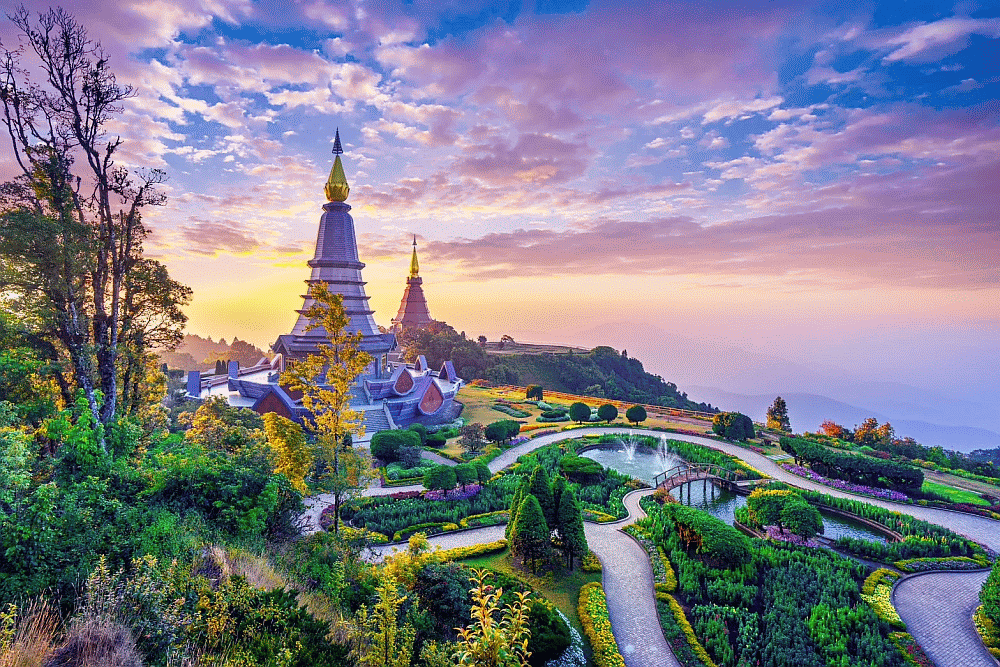


Top Destinations and Attractions in Thailand
Bangkok: Grand Palace, Wat Pho, Chatuchak Market
Chiang Mai: Doi Suthep Temple, Elephant Nature Park, Night Bazaar
Phuket: Patong Beach, Big Buddha, Phi Phi Islands
Ayutthaya: Historical Park, Wat Mahathat, Ayutthaya Floating Market
Krabi: Railay Beach, Ao Nang, Emerald Pool
Pattaya: Sanctuary of Truth, Walking Street, Coral Island
Sukhothai: Sukhothai Historical Park, Wat Sri Chum
Pai: Pai Canyon, Tha Pai Hot Springs, Pai Walking Street
Hua Hin: Hua Hin Beach, Cicada Market, Khao Takiab
Koh Samui: Ang Thong National Marine Park, Big Buddha Temple, Lamai Beach
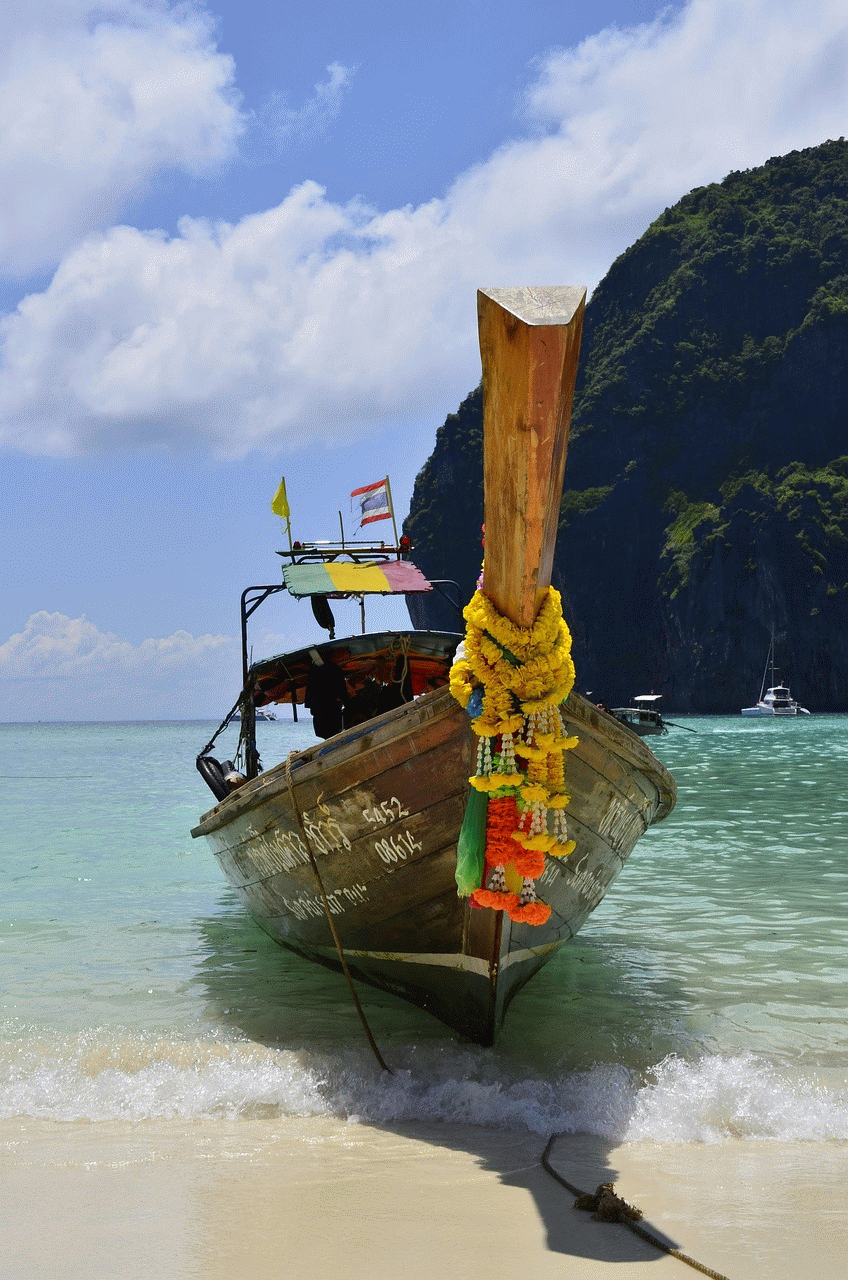
Temples, Trains & Tides:
How Movement Shapes Thai Life
In Thailand, movement has never been separate from meaning.
Long before modern highways and airports, people moved according to rivers, seasons, belief systems, and trade winds.
Even today, how you get around the country mirrors how Thai society itself is organised — fluid, adaptive, and deeply shaped by geography and faith.
Rivers came first. The Chao Phraya basin gave rise to Thailand’s earliest kingdoms, and water remains a guiding force in daily life.
Bangkok, once called the “Venice of the East,” grew around canals that still function as transport routes, markets, and neighbourhood boundaries.
Long-tail boats, river ferries, and canal taxis are not novelties — they’re part of a living system where movement follows the water rather than cutting across it.
Temples anchor space and direction. Wats are rarely placed at random; they sit at spiritual and physical centres of towns, shaping road layouts and daily travel patterns.
Morning alms routes, pilgrimage journeys, and festival processions still influence how people move through cities and villages.
Travel here often bends gently around sacred places, reinforcing the idea that movement should coexist with stillness.
Railways stitched the kingdom together. Thailand’s train lines, laid in the late 19th and early 20th centuries, were instruments of unity as much as transport.
They connected royal centres, farming regions, and border towns, binding the country into a shared rhythm.
Today, trains remain one of the most atmospheric ways to travel — slow enough to watch landscapes unfold, social enough to feel the country changing carriage by carriage.
Roads followed people, not the other way around.
Unlike rigid grid systems, many Thai roads evolved organically, responding to villages, markets, and terrain.
Minibuses, songthaews, tuk-tuks, taxis, and private drivers thrive in this environment because flexibility matters more than strict schedules.
Transport adapts to daily life — school runs, temple days, market mornings — rather than forcing life to adapt to transport.
The sea shapes the south. Along Thailand’s long coastline and island chains, movement depends on tides, weather, and local knowledge.
Ferries and speedboats link islands like Koh Samui, Koh Tao, Koh Phi Phi, and Koh Lanta, while fishing boats double as transport lifelines.
Island travel teaches patience and timing — departures shift with conditions, and journeys are shaped as much by nature as by timetables.
Festivals temporarily rewrite the map. During Songkran, Loy Krathong, and regional celebrations, cities and towns transform. Roads close, boats become ceremonial, and travel patterns slow or detour entirely. Movement becomes collective rather than individual — less about efficiency, more about participation. Understanding this rhythm is key to navigating Thailand smoothly.
Modern Thailand still moves this way. Flights, highways, and high-speed connections now span the country, but they sit atop older layers rather than replacing them. You can cross Thailand quickly — but the country reveals itself best when movement is intentional, not rushed.
Getting around Thailand isn’t just about reaching destinations. It’s about tuning into how the country breathes, flows, and connects. Choose your routes with care, and transport becomes more than logistics — it becomes a lens into Thai life itself.
วัด รถไฟ และกระแสน้ำ: การเดินทางที่หล่อหลอมวิถีชีวิตของไทย
ในประเทศไทย การเดินทางไม่เคยแยกออกจากความหมาย ตั้งแต่ก่อนมีถนนสมัยใหม่หรือสนามบิน ผู้คนเคลื่อนย้ายตามสายน้ำ ฤดูกาล ความเชื่อ และลมการค้า จนถึงทุกวันนี้ วิธีการเดินทางยังคงสะท้อนโครงสร้างของสังคมไทย — ลื่นไหล ยืดหยุ่น และถูกกำหนดโดยภูมิประเทศและศรัทธาอย่างลึกซึ้ง
แม่น้ำมาก่อนเสมอ ลุ่มน้ำเจ้าพระยาเป็นแหล่งกำเนิดของอาณาจักรไทยยุคแรก และสายน้ำยังคงเป็นแกนกลางของชีวิตประจำวัน กรุงเทพฯ ซึ่งเคยถูกขนานนามว่า “เวนิสแห่งตะวันออก” เติบโตขึ้นรอบเครือข่ายคลองที่ยังทำหน้าที่เป็นเส้นทางสัญจร ตลาด และขอบเขตของชุมชน เรือหางยาว เรือข้ามฟาก และเรือโดยสารในคลองไม่ใช่ของแปลกสำหรับนักท่องเที่ยว แต่เป็นส่วนหนึ่งของระบบชีวิตที่การเดินทางไหลไปตามน้ำ แทนที่จะตัดผ่านมัน
วัดเป็นศูนย์กลางของพื้นที่และทิศทาง วัดในไทยแทบไม่เคยตั้งอยู่แบบไร้ที่มา แต่ถูกวางไว้เป็นศูนย์กลางทั้งทางจิตวิญญาณและทางกายภาพของชุมชน เส้นทางใส่บาตรยามเช้า การแสวงบุญ และขบวนแห่ในเทศกาล ยังคงกำหนดรูปแบบการเคลื่อนไหวของผู้คนในเมืองและหมู่บ้าน การเดินทางมักโค้งอ้อมอย่างนุ่มนวลรอบสถานที่ศักดิ์สิทธิ์ ตอกย้ำแนวคิดว่าการเคลื่อนไหวควรอยู่ร่วมกับความสงบนิ่ง
ทางรถไฟเชื่อมอาณาจักรเข้าด้วยกัน ระบบรถไฟของไทยที่สร้างขึ้นในช่วงปลายศตวรรษที่ 19 และต้นศตวรรษที่ 20 เป็นทั้งเครื่องมือด้านการคมนาคมและการรวมศูนย์อำนาจ เชื่อมเมืองหลวง แหล่งเกษตรกรรม และเมืองชายแดนเข้าไว้ในจังหวะเดียวกัน ปัจจุบัน รถไฟยังคงเป็นหนึ่งในวิธีเดินทางที่มีเสน่ห์ที่สุด ช้าเพียงพอให้มองเห็นภูมิประเทศเปลี่ยนผ่าน และเปิดโอกาสให้รับรู้ความแตกต่างของผู้คนจากตู้หนึ่งสู่อีกตู้หนึ่ง
ถนนเกิดตามผู้คน ไม่ใช่ผู้คนตามถนน แตกต่างจากผังเมืองแบบตาราง ถนนในไทยจำนวนมากพัฒนาอย่างเป็นธรรมชาติ ตามหมู่บ้าน ตลาด และสภาพภูมิประเทศ รถสองแถว รถตุ๊กตุ๊ก รถแท็กซี่ รถตู้ และคนขับรถส่วนตัวจึงเติบโตได้ดีในระบบที่ให้ความสำคัญกับความยืดหยุ่นมากกว่าตารางเวลาที่ตายตัว การคมนาคมปรับตัวตามชีวิตประจำวัน — วันเรียน วันพระ วันตลาด — มากกว่าบังคับให้ชีวิตต้องปรับตามระบบขนส่ง
ทะเลกำหนดจังหวะของภาคใต้ ตลอดแนวชายฝั่งและหมู่เกาะของไทย การเดินทางขึ้นอยู่กับน้ำขึ้นน้ำลง สภาพอากาศ และความรู้ท้องถิ่น เรือเฟอร์รี่และเรือเร็วเชื่อมเกาะต่าง ๆ เช่น เกาะสมุย เกาะเต่า เกาะพีพี และเกาะลันตา ขณะที่เรือประมงจำนวนมากทำหน้าที่เป็นเส้นเลือดคมนาคมของชุมชน การเดินทางบนเกาะสอนให้เข้าใจเรื่องเวลาและความอดทน ตารางเดินเรือปรับเปลี่ยนตามธรรมชาติ และเส้นทางถูกกำหนดโดยทะเลพอ ๆ กับนาฬิกา
เทศกาลเปลี่ยนแผนที่ชั่วคราว ในช่วงสงกรานต์ ลอยกระทง และงานประเพณีท้องถิ่น เมืองและหมู่บ้านจะเปลี่ยนโฉม ถนนปิด เรือกลายเป็นส่วนหนึ่งของพิธีกรรม และจังหวะการเดินทางช้าลงหรือเปลี่ยนเส้นทาง การเคลื่อนไหวกลายเป็นเรื่องของส่วนรวมมากกว่าปัจเจก ไม่ใช่เรื่องของความรวดเร็ว แต่เป็นการมีส่วนร่วม การเข้าใจจังหวะนี้ช่วยให้การเดินทางในไทยราบรื่นยิ่งขึ้น
ประเทศไทยยุคใหม่ยังคงเคลื่อนที่ในลักษณะนี้ แม้จะมีเที่ยวบิน ทางหลวง และการเชื่อมต่อที่รวดเร็วขึ้น แต่ทั้งหมดถูกวางทับบนชั้นประวัติศาสตร์เดิม มากกว่าที่จะเข้ามาแทนที่ คุณสามารถข้ามประเทศได้อย่างรวดเร็ว แต่ประเทศไทยจะเผยตัวตนได้ดีที่สุดเมื่อการเดินทางเป็นไปอย่างตั้งใจ ไม่เร่งรีบ
การเดินทางในประเทศไทยไม่ใช่แค่การไปถึงจุดหมาย แต่คือการรับรู้จังหวะการหายใจ การไหล และการเชื่อมโยงของประเทศ เลือกเส้นทางอย่างใส่ใจ แล้วการคมนาคมจะกลายเป็นมากกว่าลอจิสติกส์ — มันจะกลายเป็นหน้าต่างสู่ชีวิตแบบไทยเอง

ShuttlesA2B - Explore Cambodia
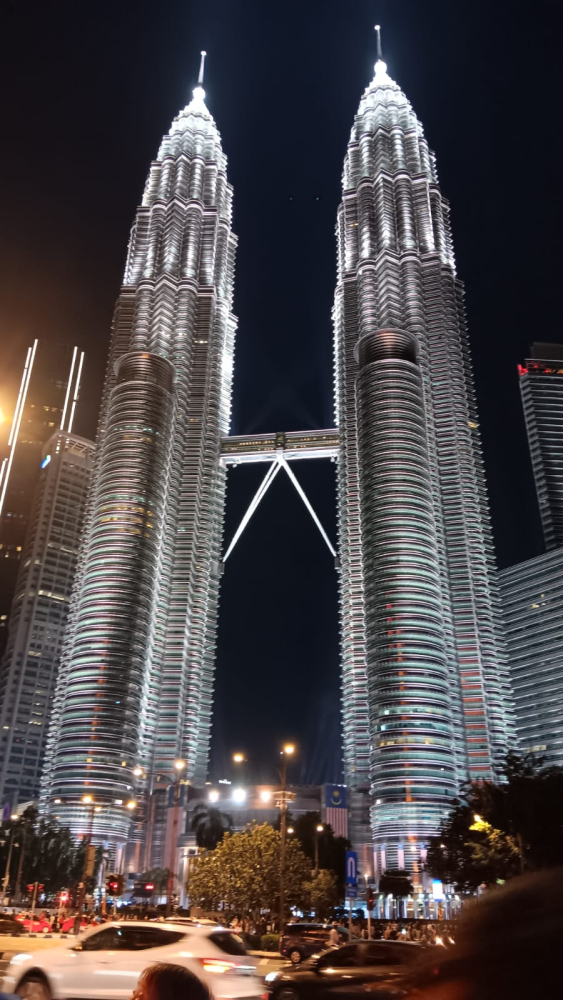
ShuttlesA2B - Malaysia