
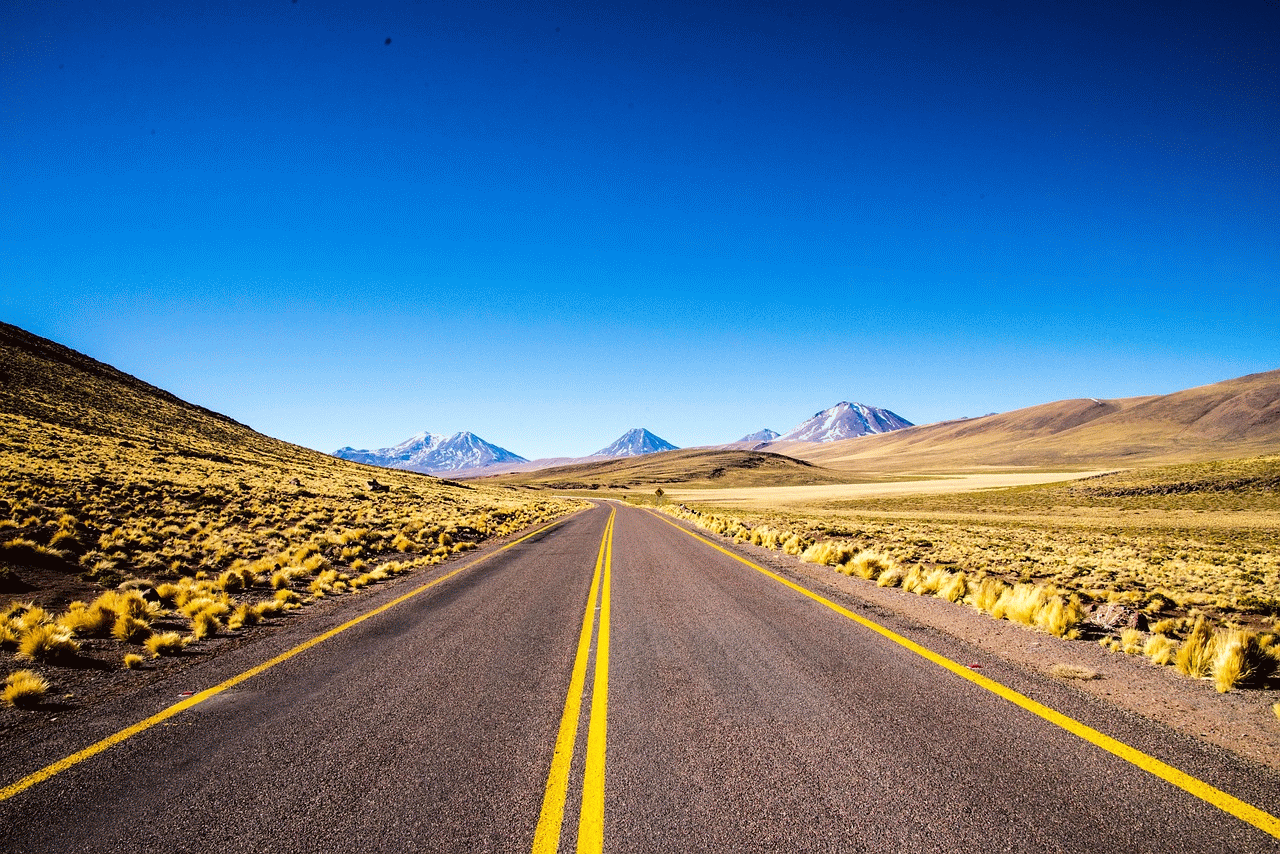
Essential Guide to Chile Shuttles, Transfers, and Tours:
Navigate Your Journey with Confidence and Style
Chile— explore shuttles, airport transfers, private drivers, tours & sightseeing - Featured partners:

Transvip Chile - airport transfers, Santiago, Antofagasta, Calama y Valparaíso – Viña del Mar
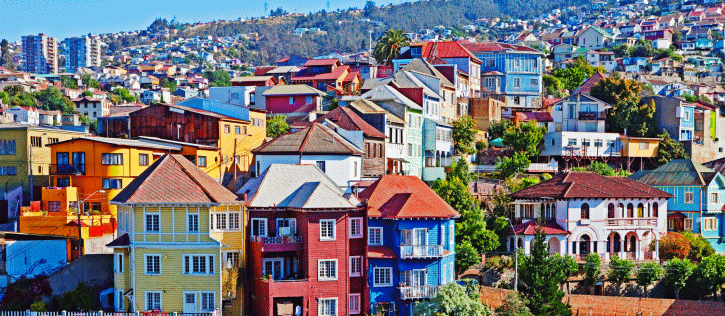
Santiago Chile Travel - transfer from Valparaiso to Santiago (or vice versa)
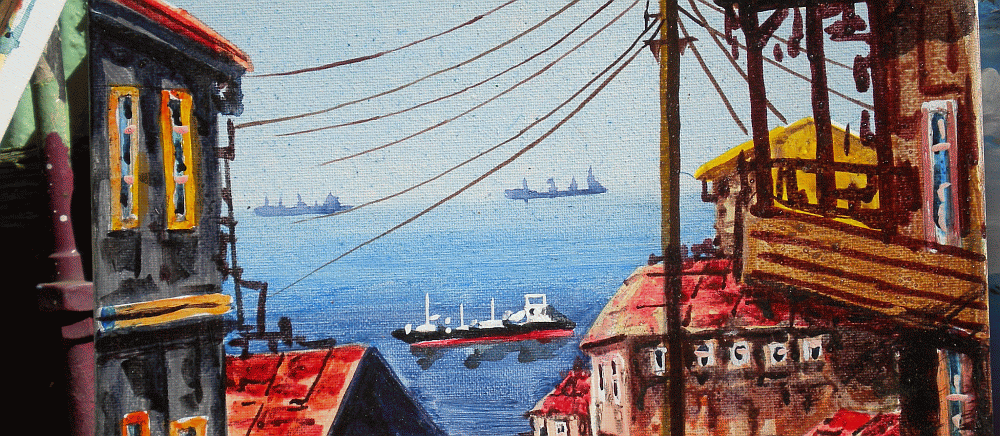
myvalparaiso.cl - pre- or post-cruise tour services, Valparaíso & Casablanca wine valley

Aero Directo - traslados al aeropuerto / airport transfers

VIP Transfer - traslados - Aeropuerto de Santiago
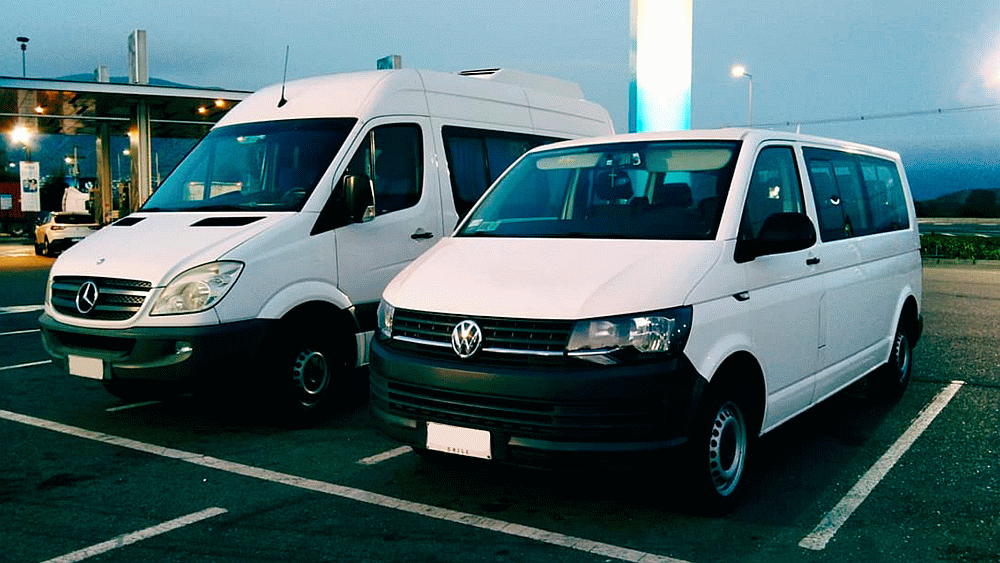
You Trip - Santiago, Viña del Mar, Reñaca, Valparaíso, Quilpué and Concón
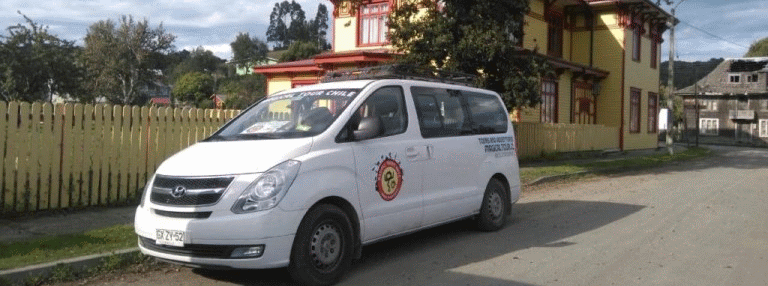
Magical Tours Chile - Atacama Desert, Altiplano, Patagonia
Getting around Chile
Chile is long, narrow, and built for distance. Once you accept that, moving around becomes straightforward.
You’ll combine flights with buses, use shuttles where roads stretch on, and rely on private drivers when timing or terrain matters. Transport in Chile is generally reliable, especially along the central corridor.
How transport works in Chile
Distances are real here — hundreds, sometimes thousands of kilometres. The system is designed around that.
You’ll mostly use:
Flights for long north–south routes
Long-distance buses for comfort and value
Shuttles & airport transfers for direct routes
Private drivers in wine regions and remote areas
Boats & ferries in the south
Cross-border buses to Argentina
Basic Spanish helps. A few words you’ll hear often: boleto (ticket), terminal, directo, con escala.
Airport transfers in Chile
Santiago Airport (SCL) → City / Valparaíso / Viña del Mar
Santiago’s airport is efficient and easy to navigate.
SCL → Santiago city
Airport shuttles / shared transfers
30–45 min
CLP $8,000–12,000
Private airport transfers
30–45 min
CLP $25,000–40,000
Official taxis
Similar pricing to private transfers
Use authorised counters or pre-booked transfers. Avoid informal taxis.
SCL → Valparaíso / Viña del Mar
Private drivers / transfers
1.5–2 hours
CLP $120,000–180,000 per vehicle
Bus (from Santiago terminal)
2 hours
CLP $7,000–10,000
Requires a separate airport–city transfer
After a long flight, a direct airport transfer to the coast is the simplest option.
Buses in Chile
Buses are the backbone of long-distance transport. They’re comfortable, frequent, and dependable.
Common seat types:
Semi-cama – partial recline
Cama – near-flat
Salón cama – widest seats, limited routes
Common bus routes
Santiago → Valparaíso / Viña del Mar
~2 hours | CLP $7,000–10,000
Santiago → Puerto Montt
12–14 hours | CLP $35,000–60,000
Calama → San Pedro de Atacama
1.5 hours | CLP $5,000–8,000
Punta Arenas → Puerto Natales
~3 hours | CLP $10,000–15,000
Overnight buses work well if you choose cama seats.
Trains
Train travel exists on a limited basis.
Santiago → Chillán
4–5 hours
Beyond this route, buses offer broader coverage.
The Atacama Desert & San Pedro de Atacama
Getting there
Flight Santiago → Calama (CJC): ~2 hours
Calama → San Pedro shuttle
1–1.5 hours
CLP $12,000–20,000
Local transport
Shared shuttles for geysers, salt flats, lagoons
Private drivers for stargazing and flexible schedules
Altitude and cold are real factors at night. Dress accordingly.
Patagonia & Torres del Paine
Transport here is slower and more seasonal.
Access
Fly Santiago → Punta Arenas or Puerto Natales
Punta Arenas → Puerto Natales bus
~3 hours | CLP $10,000–15,000
Torres del Paine
Shuttles from Puerto Natales
1.5–2 hours
CLP $15,000–25,000 return
Private drivers for trailheads and hotels
Book early in peak season (Nov–Mar).
Volcanoes, lakes & wine regions
Lake District (Puerto Varas, Frutillar)
Fly to Puerto Montt
Bus or private transfer: 30–45 min
Wine regions (Maipo, Casablanca, Colchagua)
Best reached with private drivers
1–2 hours from Santiago
Chile enforces drink-driving laws strictly
Boats & ferries
Southern Chile relies on ferries.
Routes may combine bus + boat + bus
Weather affects schedules
These journeys are slow but scenic — allow buffer days.
Flights within Chile
Flights save time across long distances.
Santiago → Calama: ~2 hours
Santiago → Puerto Montt: ~1.5 hours
Santiago → Punta Arenas: ~3.5 hours
Budget fares are common; baggage limits are tight.
Taxis & private drivers
Urban taxis are regulated but vary
Rideshare apps operate in major cities
Private drivers suit:
Airport transfers
Wine regions
Remote accommodation
Border crossings
Confirm precio fijo in advance.
Cross-border transport to Argentina
Popular and generally well managed.
Common routes
Puerto Natales → El Calafate: 5–6 hours
Santiago → Mendoza: 7–10 hours (weather dependent)
Lake District → Bariloche
Notes:
Carry printed documents
Fresh food may be confiscated
Snow can close Andean passes in winter
Buses handle formalities, but delays are normal.
Chile rewards planning rather than rushing. Match the distance with the right kind of transport, allow time where geography demands it, and the country opens up smoothly, one long stretch at a time.
N.B. Prices shown are indicative and reflect typical costs in Chile as at February 2026.
Popular Destinations, Tours and Shuttle Services - Chile
-
![Colchagua Wine Tours]()
Colchagua Valley wine tours in Chile
-
![Transfer Santiago]()
Airport Transfer - Vineyards / Snow / Tours
-
![Transfer Chile]()
Transfer desde y hacia el aeropuerto
-
![Venus South Transport]()
Transporte al Aeropuerto El Tepual
-
![Turismo Quitralpi]()
Tours: Puerto Montt y Chiloe
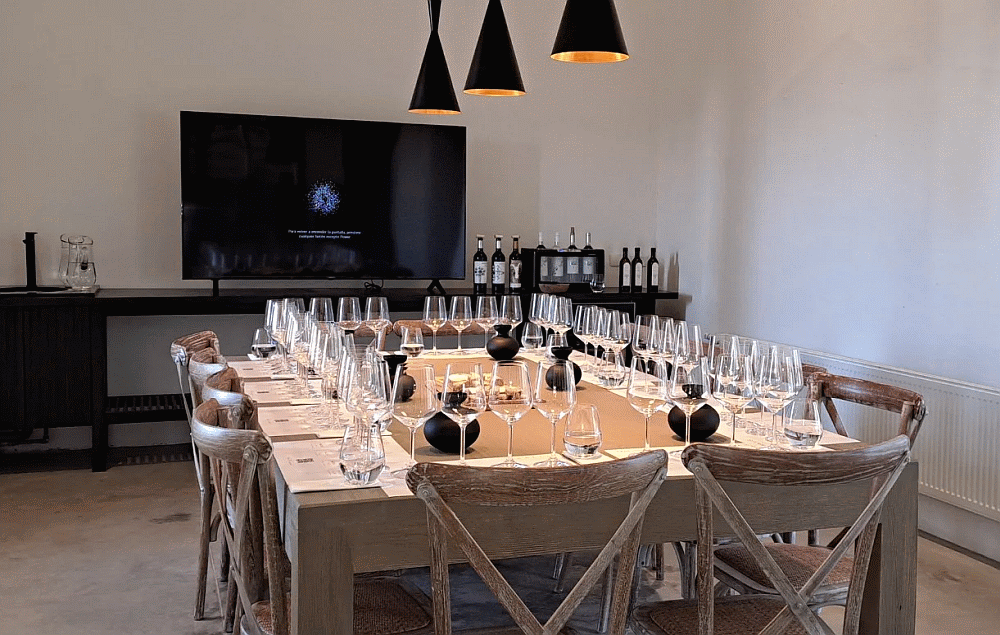
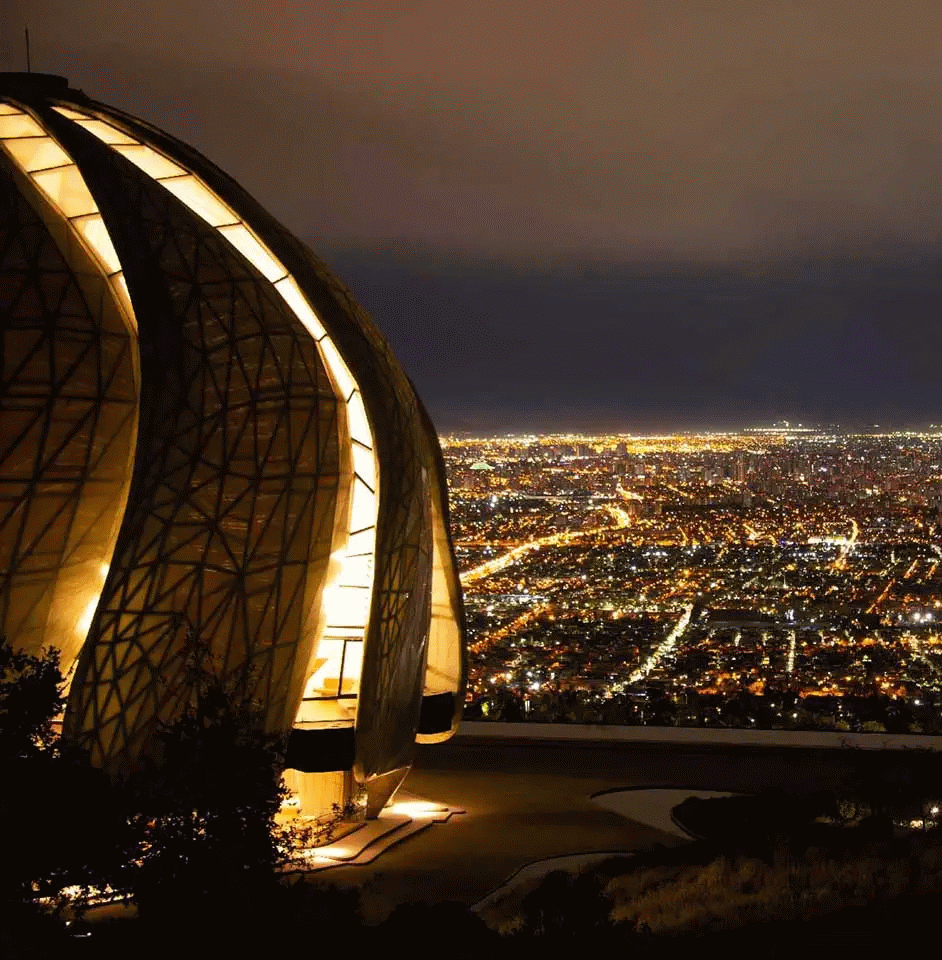


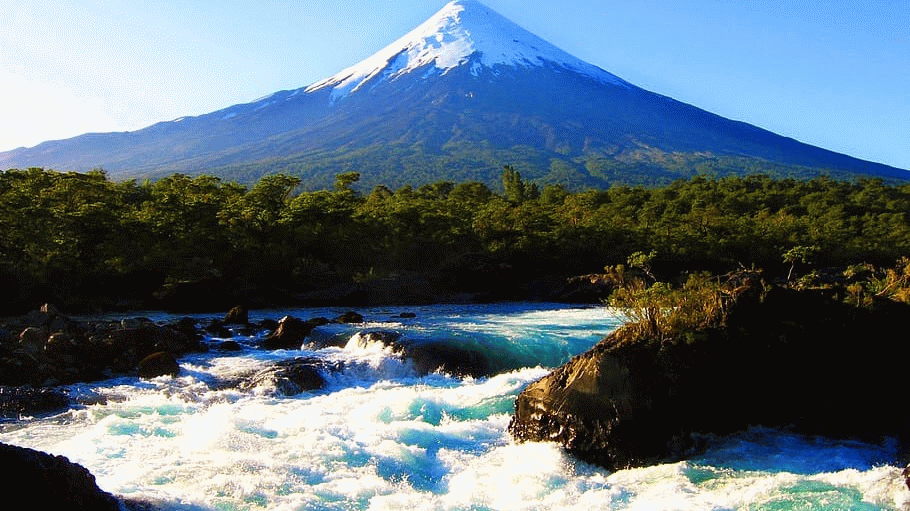
What draws people to Chile?
People are drawn to Chile for its breathtaking contrasts and sense of adventure that stretches across more than 4,000 kilometres of wild beauty.
From the otherworldly landscapes of the Atacama Desert in the north to the glaciers and granite towers of Patagonia in the south, Chile offers experiences that feel both remote and rewarding.
Travellers come for its world-class wines, vibrant cities like Santiago and Valparaíso, and the chance to stand at the edge of the world in Tierra del Fuego or even continue on to Antarctica.
What truly captivates visitors, though, is Chile’s mix of natural wonder, safety, and warmth—an irresistible invitation to explore.
Spanish -
¿Qué atrae a la gente a Chile?
La gente se siente atraída por Chile debido a sus impresionantes contrastes y su espíritu aventurero que se extiende a lo largo de más de 4,000 kilómetros de belleza salvaje.
Desde los paisajes de otro mundo del Desierto de Atacama en el norte hasta los glaciares y las torres de granito de la Patagonia en el sur, Chile ofrece experiencias tan remotas como gratificantes.
Los viajeros llegan por sus vinos de clase mundial, sus ciudades vibrantes como Santiago y Valparaíso, y la posibilidad de llegar hasta el fin del mundo en Tierra del Fuego o incluso continuar hacia la Antártida.
Pero lo que realmente cautiva a los visitantes es la combinación de maravillas naturales, seguridad y calidez humana que hace de Chile una invitación irresistible a explorar.

Bohemian Valparaíso:
Chile’s City of Poets, Painters, and Beautiful Chaos
Valparaíso doesn’t try to impress you. It doesn’t polish its edges or smooth out its contradictions. Instead, it leans into them — colour splashed over crumbling façades, laundry lines strung between houses, music drifting up steep staircases at dusk. This is Chile’s most bohemian city, and it has been that way for generations.
Perched on a tangle of hills above the Pacific, Valparaíso is less a place you visit than one you wander into.
A City Built for Outsiders
Bohemian culture took root early in Valparaíso. As a major Pacific port in the 19th and early 20th centuries, the city drew sailors, merchants, artists, political exiles, and dreamers from Europe, Asia, and the Americas. When the Panama Canal diverted global shipping routes away, Valparaíso lost economic importance — but what remained was space. Cheap rents, abandoned mansions, and freedom from convention gave artists room to experiment.
That legacy still defines the city. Valparaíso attracts people who don’t quite fit elsewhere: poets, muralists, musicians, filmmakers, backpackers who stayed longer than planned, and locals who value expression over order.
The Hills Are the Canvas
Bohemian Valparaíso lives on its cerros — the steep hills climbing up from the port. Cerro Alegre and Cerro Concepción are the most famous, but the spirit runs deeper in places like Cerro Bellavista, Cerro Polanco, and Cerro Barón.
Street art isn’t decoration here; it’s dialogue. Walls tell political stories, personal confessions, jokes, protests, and poems. Murals change constantly — painted over, added to, reinterpreted. It’s a living gallery where imperfection is part of the point.
You don’t “see” Valparaíso from a bus window. You walk it. You get lost. You climb stairs that feel endless, then stop for empanadas or cheap wine with a view that makes the effort worth it.
Poetry in Everyday Life
Chile takes its poets seriously, and Valparaíso is the spiritual home of that tradition. Pablo Neruda’s house, La Sebastiana, sits improbably on a hill, angled toward the sea like a ship. But poetry here isn’t confined to museums.
You’ll find verses scrawled on doors, pasted onto lampposts, painted into murals. Bars host informal readings. Conversations drift toward politics, memory, and meaning late into the night. There’s an underlying belief that art belongs in the street, not behind glass.
Cafés, Cantinas, and Late Nights
Bohemian culture thrives in small spaces. In Valparaíso, cafés double as galleries, bars double as concert venues, and living rooms become theatres. Furniture is mismatched, menus are handwritten, and nobody’s in a rush.
Live music spills out of doorways — jazz, folk, cumbia, rock. Some nights feel improvised, as if the city itself decided to host a gathering. Other nights are quiet, contemplative, meant for long conversations over pisco sours or local beer.
This isn’t nightlife built for spectacle. It’s built for connection.
Beautiful, Rough, and Real
Valparaíso’s bohemian soul isn’t romantic in a postcard way. The city can feel chaotic, even challenging. Buildings crumble. Elevators break down. Paint peels faster than it’s applied. Yet that fragility is part of the appeal.
Creativity here grows from resilience. Art isn’t a luxury; it’s a response — to history, to inequality, to change. Valparaíso refuses to become a polished version of itself, even as tourism grows.
Why Valparaíso Still Matters
In a world of curated travel experiences, Valparaíso remains stubbornly uncurated. It rewards curiosity, patience, and openness. The bohemian culture isn’t staged for visitors — it’s lived, argued over, reinvented daily.
People come for the colour and stay for the conversations. Some never leave.
Valparaíso doesn’t promise comfort. It promises character. And for travellers drawn to places with soul, that’s exactly the point.
ShuttlesA2B - explore Azerbaijan
ShuttlesA2B - Explore Dominican Republic