

Essential Guide to Australia Shuttles:
Navigate Your Journey with Confidence and Style
Australia - Intro
Australia greets visitors with a blend of sun‑soaked coastlines, vibrant multicultural cities, and ancient landscapes shaped by one of the world’s oldest living cultures.
From the Great Barrier Reef’s kaleidoscopic marine life to the red deserts surrounding Uluru, the country’s natural diversity is matched by its easygoing lifestyle and warm, welcoming spirit.
Whether you’re exploring bustling urban hubs like Sydney and Melbourne, meeting iconic wildlife such as kangaroos and koalas, or discovering Aboriginal stories that stretch back tens of thousands of years, Australia offers a sense of vastness, adventure, and connection that stays with you long after you leave.
Queensland

Coral Coast Transport, Cairns

Townsville Shuttle Services

Sunshine Coast Private Transfers

Transfer 4 U Sunshine Coast

My Private Transfers, Brisbane

Gold Coast Shuttle

ABC Transfers - South East Queensland
New South Wales
New South Wales (NSW) is one of Australia’s most diverse and dynamic states, blending world-famous cities with vast natural beauty.
Home to the iconic harbour city of Sydney, NSW offers everything from golden beaches and coastal drives to rugged mountain ranges and outback landscapes.
Beyond the capital, travellers can explore regions like the Blue Mountains, known for their dramatic cliffs and eucalyptus forests, or the rolling vineyards of the Hunter Valley.
With a rich Aboriginal heritage, vibrant food and wine culture, and a wide range of climates and experiences, NSW is a gateway to both classic Australian icons and lesser-known adventures.
Lemon Myrtle - Backhousia citriodora - Famous for its intense lemon scent and rich Indigenous heritage, lemon myrtle is a standout of Australia’s native botanicals. Explore how this remarkable plant shapes flavour, wellness, and culture

Byron Bay Airport Shuttle

Robs Transfers, Ballina Byron Bay

Newcastle Connections

Go Sydney Shuttle

USam Airport Transfers & Hire Car Service Northern Beaches Sydney
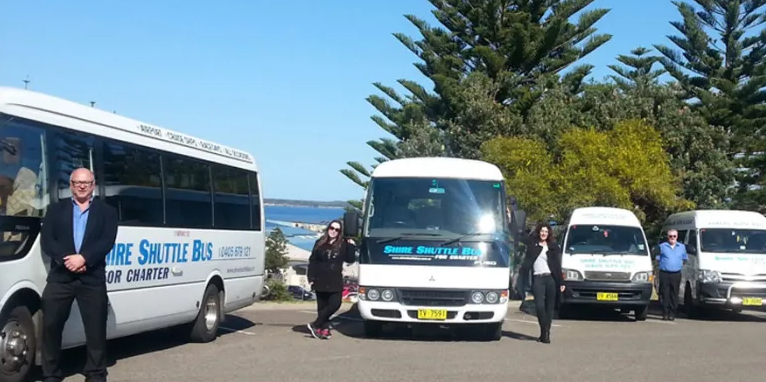
Shire Shuttle Bus - Sydney Shuttle Bus Transfers

Sydney Wide Shuttles
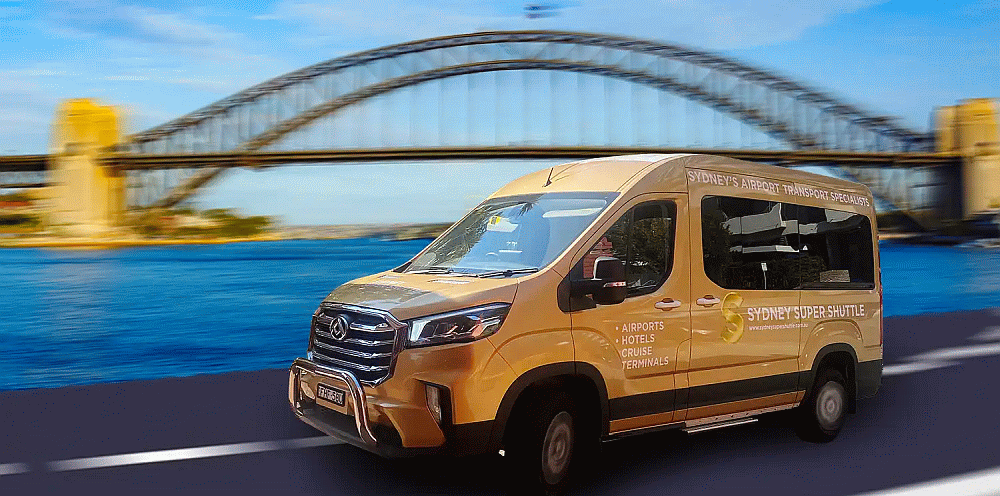
Sydney Super Shuttle
Canberra - Australian Capital Territory (ACT)

Canberra Day Tours

Canberra Elite 13cabs

Snowy Mountains Canberra Airport Shuttle

Capital Cabs
Victoria

Melbourne Airport Maxi Cab Transfers

SATS Transit Melbourne Airport Shuttle Service

888Cars Chauffeured Airport Transfer Service

Great Ocean Road Shuttle
South Australia

Galaxy Chauffeur Service Adelaide

MC Chauffeur Services Adelaide
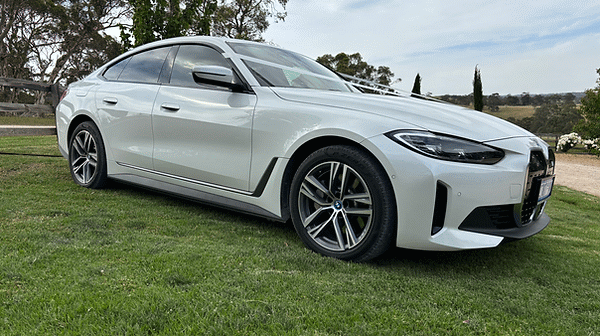
Adelaide Hills Chauffeur
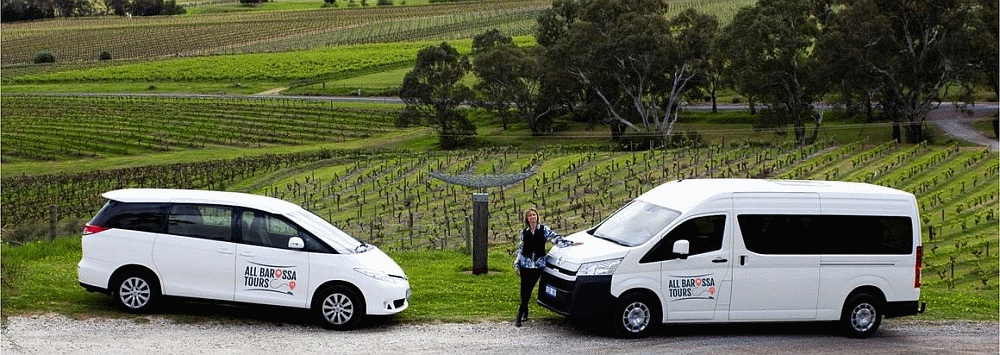
All Barossa Tours
Tasmania

Maria Island Shuttle
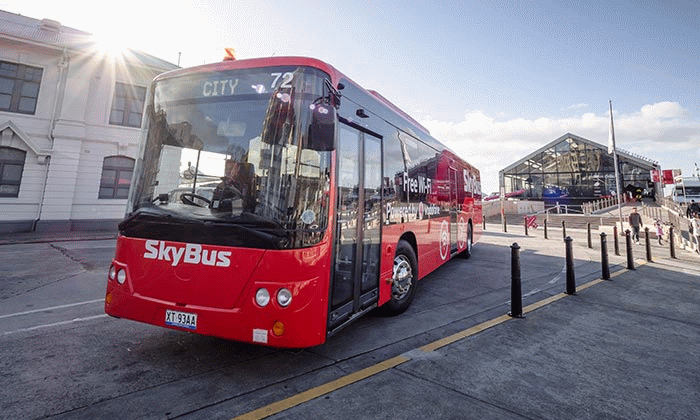
Skybus Hobart City Express

Evride Luxury Hobart Chauffeur Service

The Wine Hopper
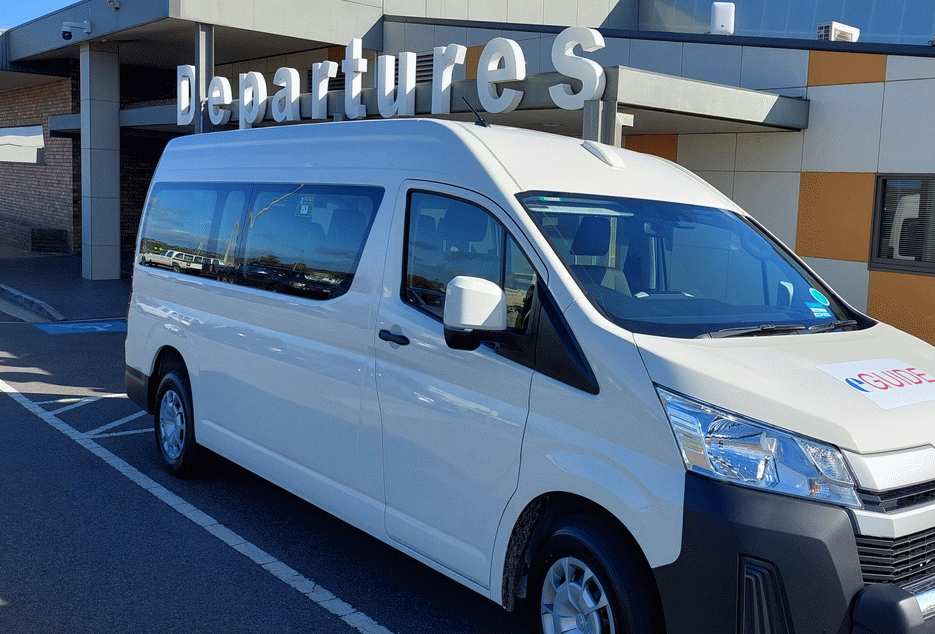
eGuide Devonport, Tasmania

Launceston Airport Shuttle
Western Australia

Perth Airport Shuttle

Perth VIP Transfers

Up Close & Local Tours
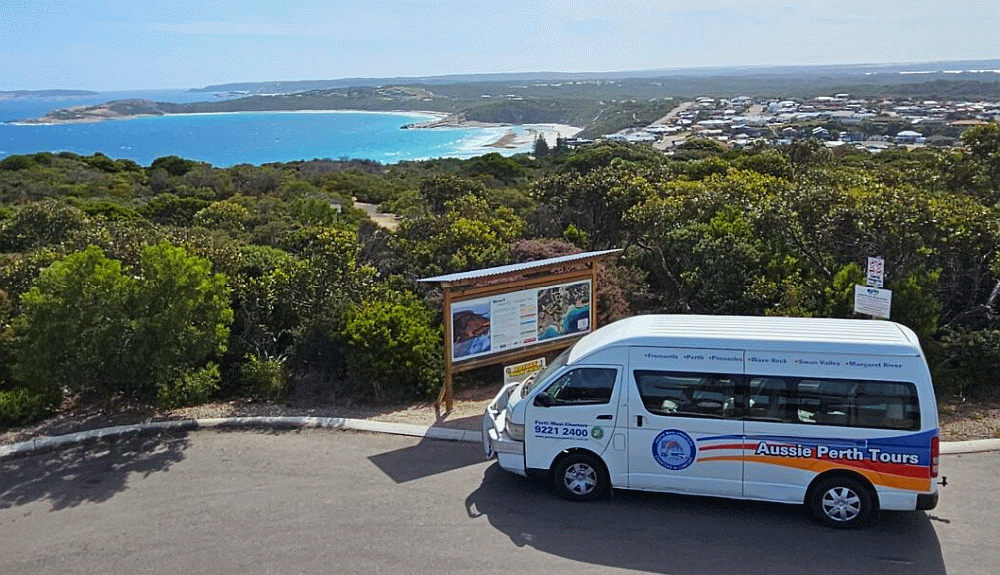
Aussie Perth Tours
Northern Territory

The Croc Bus

Darwin Limo Service

NT Driver Guide
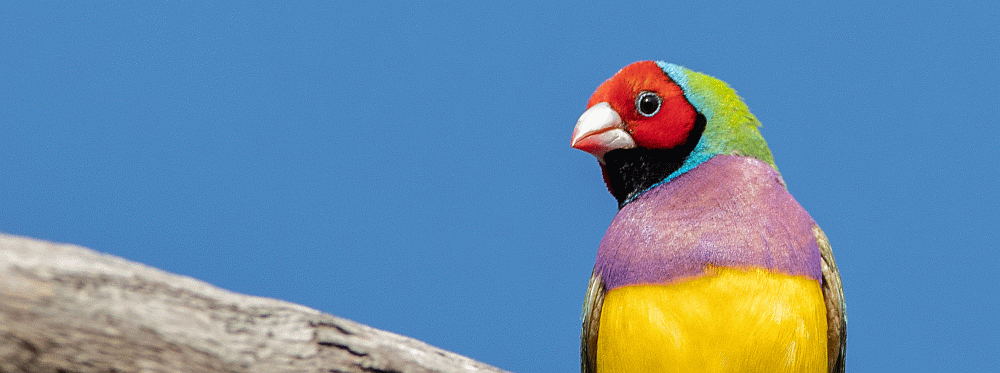
NT Bird Specialists
Popular Destinations, Tours, Airport Transfers and Shuttle Services, Australia Wide - Featured Plus:
-
![Welcome to Travel - Sydney]()
Welcome to Travel - Sydney
-
![Great Ocean Road Tours - 12 Apostles - Victoria Australia]()
Great Ocean Road Tours, Victoria
-
![Creative Tours, Mooloolaba]()
Food Tours, Sunshine Coast
-
![Sydney Private Tours]()
Blue Mountains Private Tour
-
![Autopia Tours]()
Small Group Tours across Australia
-
![riverboat - Swan River Cruise]()
Swan River cruise & wine tour
-
![Billy Tea Safaris, Cairns, Australia]()
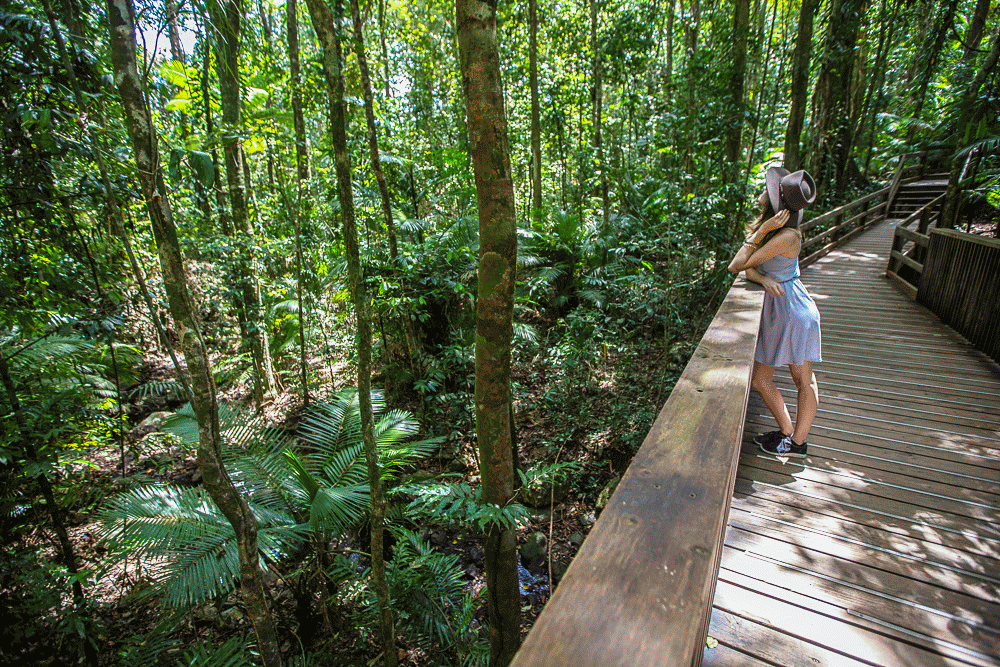
Explore the Daintree Rainforest






Getting Around Australia: Flights, Trains, Road Trips, Buses & Remote Travel
Australia is vast — continental in scale — and moving around it requires a different mindset than travelling in smaller countries.
From the urban sprawl of Sydney and Melbourne, to the tropical north around Cairns, across the Red Centre to Alice Springs, and west to Perth, your transport choices will shape your trip more than you might expect.
This guide explains how to get around Australia — by flight, train, long-distance bus, car hire, campervan, taxi, private transfer or regional air service — with realistic travel times, costs and practical context.
Transport in Australia at a Glance
Most travellers combine several transport options:
Domestic flights for long distances
Car hire or campervans for regional and coastal routes
Long-distance trains for scenic journeys
Coaches (long-distance buses) for budget travel
Taxis and rideshare in cities
4WD vehicles or small aircraft for remote regions
Where you are — city, coast, Outback, or tropical north — makes a major difference.
Distances are real here. Sydney to Perth is roughly 4,000 km.
Domestic Flights in Australia
Flying is often the most practical way to cover long distances.
Typical flight times:
Sydney → Melbourne: ~1.5 hours
Sydney → Cairns: ~3 hours
Melbourne → Perth: ~4 hours
Sydney → Alice Springs: ~3 hours
Typical costs (one way, booked in advance):
Major city routes: AU$80–250
Cross-country routes: AU$200–500
Flights are frequent between major cities, but less frequent in regional and remote areas. Always allow time for airport transfers — some airports are 30–60 minutes from city centres.
Flights are essential for reaching places like:
Darwin
The Kimberley
Remote communities in northern Australia
Long-Distance Trains (Scenic & Iconic Routes)
Australia’s train network is limited compared to Europe, but a few routes are iconic experiences in their own right.
The Ghan
The Ghan
Route: Adelaide ↔ Alice Springs ↔ Darwin
Duration: 2–3 days
Indian Pacific
Indian Pacific
Route: Sydney ↔ Perth
Duration: 3–4 days
These are premium long-haul journeys rather than practical commuter trains. Expect prices from AU$1,500+ for multi-day packages including meals and excursions.
For shorter regional rail:
Sydney ↔ Blue Mountains
Melbourne ↔ regional Victoria
Brisbane ↔ Gold Coast
Regional trains are comfortable but slower than flying.
Driving in Australia (Car Hire & Road Trips)
For flexibility, especially along the coast or in regional areas, hiring a car is often the best choice.
Popular driving routes:
Great Ocean Road
Pacific Coast Way
Great Barrier Reef Drive (Cairns to Port Douglas)
The Red Centre Way near Uluru
Typical costs:
Standard car: AU$50–120 per day
4WD for remote areas: AU$150–300 per day
Campervans: AU$90–250 per day depending on season
Fuel distances can be long in rural Australia — always check ahead in Outback regions.
Campervans & Motorhomes
Australia is one of the world’s best countries for campervan travel.
Why people choose them:
Flexibility
Access to remote beaches and national parks
Integrated accommodation
Campgrounds range from basic bush sites to fully serviced holiday parks. Free camping is regulated — check local council rules.
Long-Distance Coaches (Buses)
Coaches connect major cities and regional towns and are generally the most budget-friendly option.
Typical travel times:
Sydney → Melbourne: 11–12 hours
Brisbane → Cairns: 24+ hours
Melbourne → Adelaide: ~10 hours
Typical costs:
AU$60–180 depending on route and season
Coaches are comfortable but long. For multi-day distances, flying usually makes more sense unless you’re on a strict budget.
Taxis & Rideshare (Cities)
In major cities like Sydney, Melbourne, Brisbane and Perth:
Taxis are metered
Rideshare services are widely available
Contactless payment is standard
Typical fares:
Airport → city centre: AU$25–70 depending on city
Short urban rides: AU$15–30
In smaller towns, availability may be limited — pre-book if arriving late.
Private Transfers & Regional Drivers
Private drivers are common for:
Airport pickups
Wine regions (e.g. Hunter Valley, Barossa Valley)
Remote lodge transfers
Great Ocean Road or Blue Mountains day trips
Typical costs:
Airport transfers: AU$80–150
Full-day private hire: AU$500+ depending on region
In remote Queensland and the Northern Territory, private transfers may require advance coordination.
Remote & Outback Travel
Travel in the Outback requires planning.
Key considerations:
Long distances between fuel stops
Limited phone reception
Extreme heat in summer
Road conditions (sealed vs unsealed roads)
Access to areas like:
Kakadu National Park
The Kimberley
Cape York Peninsula
may require a 4WD vehicle.
In some very remote regions, small charter flights are the only realistic option.
Island & Reef Transport
To reach reef and island destinations:
Ferries operate to places like Magnetic Island
Day boats depart from Cairns and Port Douglas to the Great Barrier Reef
Flights connect to Lord Howe Island
Weather can affect marine transport, especially in cyclone season (November–April in northern Australia).
Seasonal & Climate Considerations
Australia’s seasons are reversed compared to the Northern Hemisphere.
Summer (Dec–Feb): Extreme heat in the Outback
Wet season (Nov–Apr): Tropical north flooding possible
Winter (Jun–Aug): Best time for northern travel
Distances that look manageable on a map can become exhausting if driven in high heat or during storms.
Safety & Practical Notes
Carry water on long drives
Avoid driving at dusk/dawn in rural areas (wildlife on roads)
Check road closures in northern Australia during wet season
Book flights and campervans early during school holidays
Australia rewards planning — but also rewards slowing down.
Final Thoughts
Getting around Australia isn’t difficult — it’s expansive.
You’ll likely combine flights, road trips, trains, ferries and city transport. The country is built for big distances and open horizons.
Plan realistically. Allow time between destinations. Embrace the scale.
In Australia, the journey isn’t just how you get somewhere — it’s often the highlight itself.
N.B. Prices shown are indicative and reflect typical costs in Australia as at March 2026.

The Cassowary of Tropical North Queensland
Ancient. Elusive. Unmistakable.
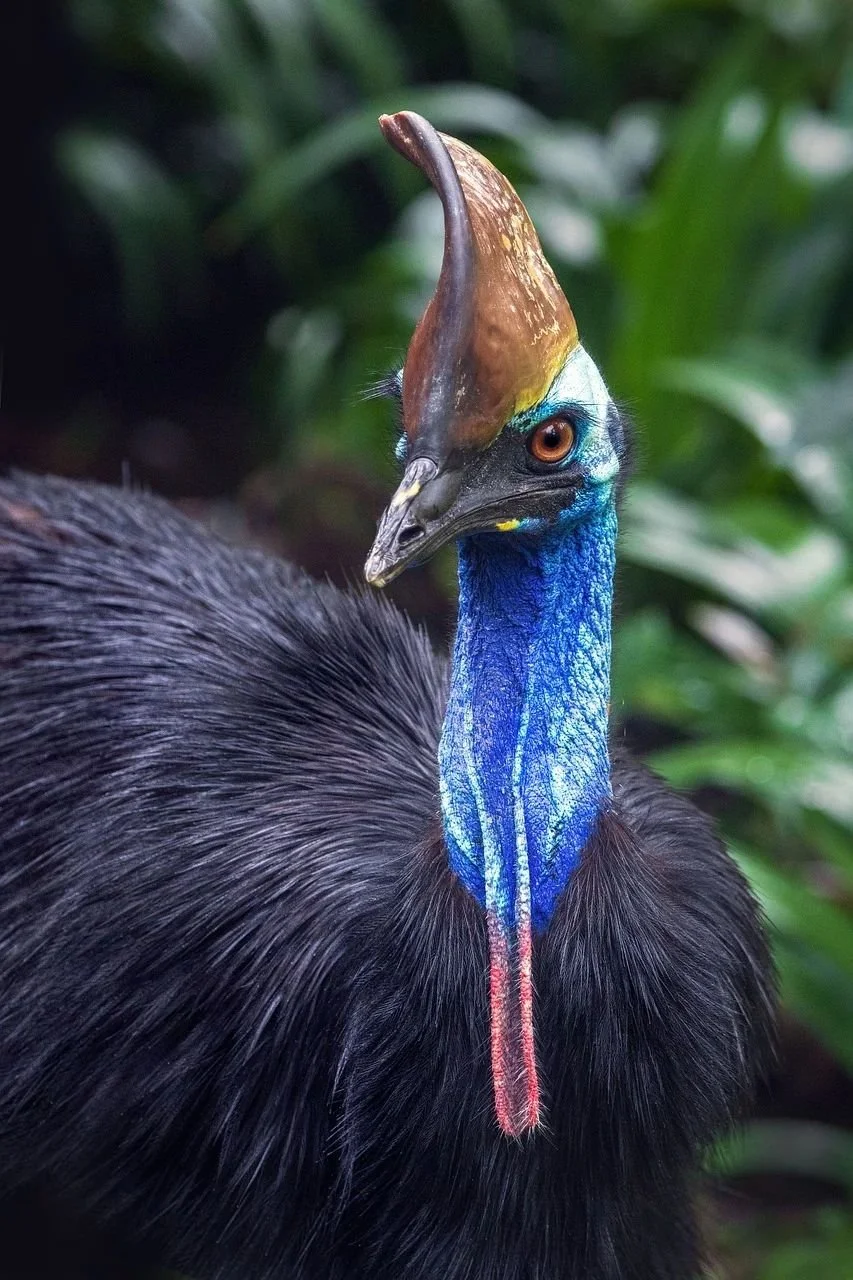
In the lush rainforests of Tropical North Queensland lives one of Australia’s most extraordinary birds — the Southern Cassowary. Towering up to two metres tall, crowned with a helmet-like casque, and dressed in glossy black feathers with a vivid blue neck and red wattles, the cassowary looks like a relic from the age of dinosaurs.
But beyond its dramatic appearance, this bird plays a quiet and essential role in the survival of Australia’s oldest rainforests.
What Makes the Cassowary So Unique?
A Living Dinosaur
The cassowary’s lineage stretches back millions of years. Its heavy build, powerful legs, dagger-like inner claw, and casque give it an almost prehistoric presence. Encounters in the wild often leave people speechless — not because the bird is aggressive, but because it feels ancient and powerful.
The Rainforest Gardener
Cassowaries are often called the “gardeners of the rainforest.” They consume large quantities of fruit — sometimes several kilograms a day — and disperse seeds across vast areas through their droppings.
More than 200 rainforest plant species rely on cassowaries to spread their seeds. Some large-seeded trees depend almost entirely on them. Without cassowaries, parts of the rainforest would slowly change in composition and diversity.
The Mysterious Casque
The helmet-like casque on top of the cassowary’s head is still partly a mystery. Scientists believe it may:
Help push through dense rainforest undergrowth
Amplify or detect low-frequency sounds
Signal age and dominance
Whatever its purpose, it adds to the bird’s striking profile.
Habitat and Where They Live
In Australia, the southern cassowary is found only in Tropical North Queensland, from the region around Cooktown south through the Wet Tropics to areas near Townsville.
Key locations include:
Daintree Rainforest
Mission Beach
Atherton Tablelands
These areas form part of the Wet Tropics of Queensland, one of the oldest continuously surviving tropical rainforests on Earth.
Cassowaries inhabit dense rainforest, but they also move through swamp forests, mangroves, and sometimes woodland edges. They are solitary and secretive, and many locals live for years before glimpsing one in the wild.
Raising the Next Generation
One of the most fascinating aspects of cassowary life is their parenting.
The breeding season generally runs from June to October.
The female lays 3–5 large olive-green eggs in a shallow nest on the forest floor.
After laying, she leaves.
The male takes over completely.
He incubates the eggs for around 50 days, then raises the striped chicks alone for up to 18 months. During this time, he fiercely protects them and teaches them how to forage.
Young cassowaries hatch with brown and cream stripes for camouflage. Over time, they lose the stripes and develop their iconic dark plumage and vibrant neck colouring.
Male-only parental care is rare among birds, and it adds another layer to the cassowary’s uniqueness.
Why People Feel an Affinity with Cassowaries
In Far North Queensland, the cassowary is more than wildlife — it is part of local identity.
Awe and Rarity
Seeing a cassowary in the wild is often described as a once-in-a-lifetime moment. The bird moves quietly, almost silently, through the forest. A sudden sighting — especially with chicks — feels intimate and profound.
Cultural Significance
For Aboriginal peoples of the Wet Tropics, the cassowary holds deep spiritual and cultural meaning. It features in creation stories, dance, song, and traditional ecological knowledge. In some Dreaming stories, ancestral beings transform into cassowaries, linking the bird directly to the land and its origins.
A Symbol of the Rainforest
The cassowary has become an emblem of conservation in Tropical North Queensland. Its image appears on signage, murals, sculptures, and community campaigns. It represents both the beauty and fragility of the rainforest ecosystem.
Cassowaries in Art
The cassowary’s dramatic form makes it a compelling artistic subject.
Local art trails feature life-sized painted cassowary sculptures.
Indigenous artists incorporate cassowary imagery into paintings and carvings.
Contemporary artists use the bird as a symbol of wilderness and environmental protection.
Its striking colours and prehistoric silhouette translate powerfully into visual art.
Myths and Misunderstandings
Cassowaries are sometimes labelled “the world’s most dangerous bird.” While they possess powerful legs and sharp claws, serious incidents are extremely rare.
Cassowaries are naturally shy and avoid people. Problems arise when they are fed or habituated to human food. Feeding is illegal and dangerous because it removes their natural fear and can lead to aggressive behaviour.
In reality, they are not villains — they are wild animals responding to perceived threats.
Conservation: Protecting an Ancient Species
The southern cassowary is listed as endangered in Australia.
Major threats include:
Habitat loss and fragmentation
Vehicle strikes
Dog attacks
Human feeding
Climate impacts on fruiting cycles
Conservation efforts focus on:
Protecting rainforest habitat
Restoring wildlife corridors
Installing wildlife crossings
Community education programs
Indigenous-led land management initiatives
Locals are encouraged to drive slowly in cassowary zones, secure dogs, and never feed the birds.
A Bird That Connects People to Place
Perhaps what makes the cassowary so special is the way it anchors people to the rainforest. It is large enough to command respect, rare enough to inspire wonder, and essential enough to matter deeply.
In a world where many wild species are disappearing quietly, the cassowary stands as a visible reminder that ancient ecosystems still survive in Tropical North Queensland — but only if they are protected.
The cassowary is not just a bird.
It is a guardian of the rainforest, a cultural symbol, and a living link to a much older Earth.
Southern Cassowary