
Essential Guide to Spain Shuttles, Transfers, and Tours:
Navigate Your Journey with Confidence and Style
On This Page
Spain — explore shuttles, airport transfers, private drivers, ferries, tours & sightseeing - Featured partners:
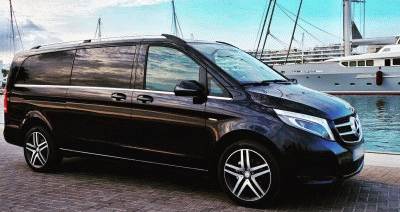
Barcelona in Motion

The Moon Pickups - Barcelona

Barcelona Airport Transfers

89transfers - Palma Airport, Mallorca

Transfers Valencia
Transfer Almería
Transfer Alandalus Service, Granada

Sevilla Transfer Inside
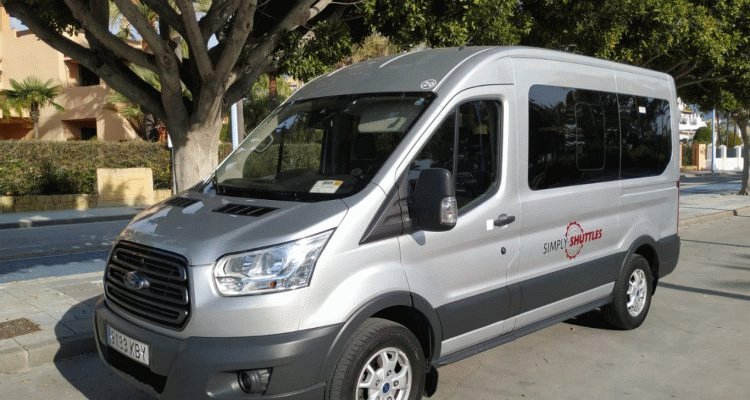
Simply Shuttles, Marbella, Costa del Sol
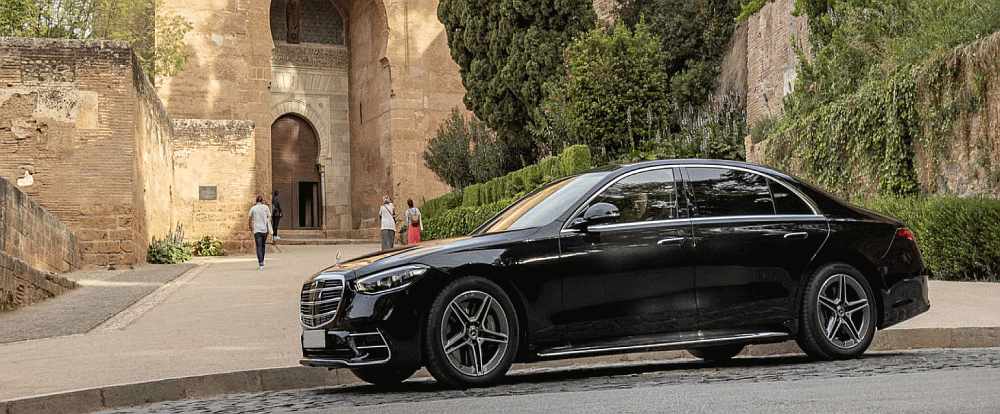
Transfer Generalife - Andalucia
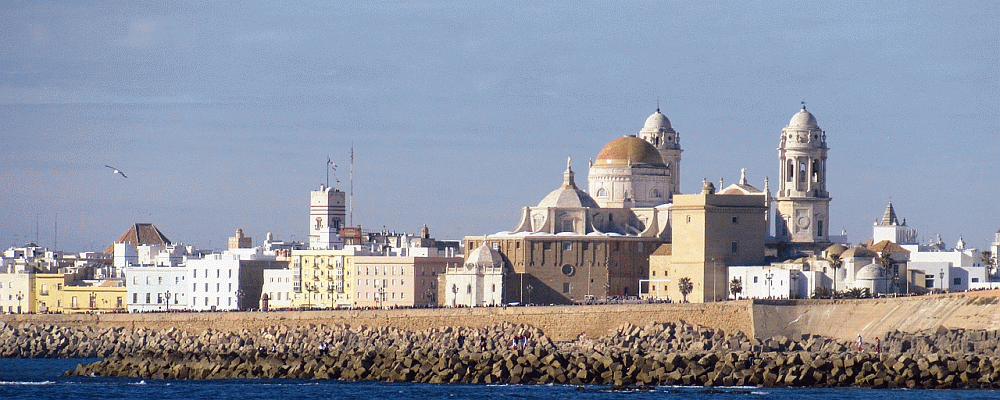
Taxi Cádiz 24h
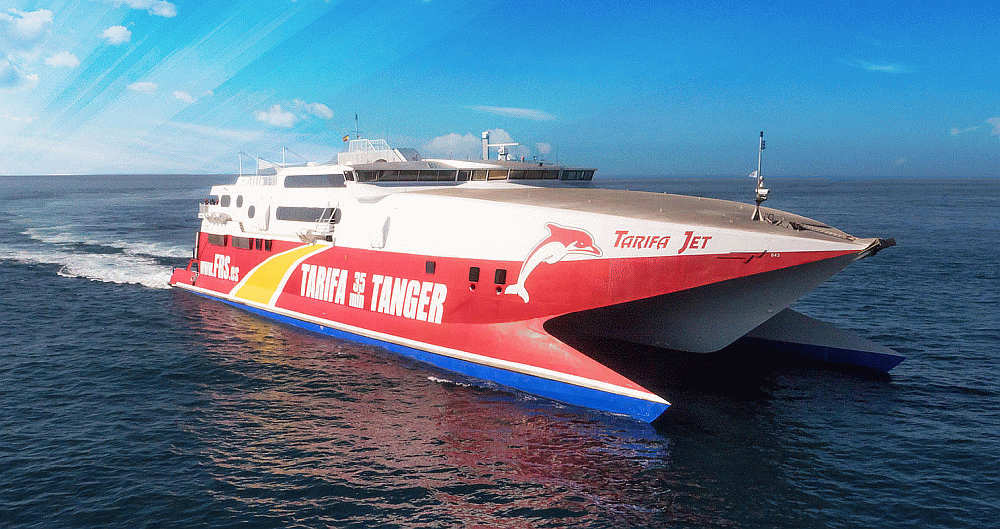
Morocco Ferry Tickets - Spain to Morocco by ferry
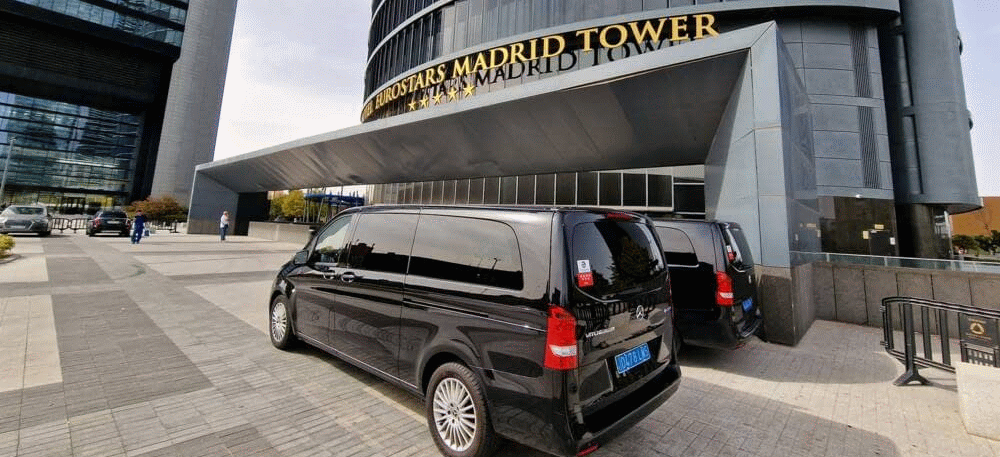
Shuttle Vans Madrid

MadShuttle Madrid

Garmendia Premium - San Sebastián – Donostia
Getting Around Spain
Transport, Trains, Flights, and Practical Travel Tips
Spain is one of Europe’s easiest countries to travel around. High-speed trains link major cities, domestic flights connect distant regions, and a wide network of buses, metros, and regional railways makes both urban and rural travel straightforward.
In a single journey across Spain, travellers can move from the grand boulevards of Madrid to the Mediterranean energy of Barcelona, the Moorish palaces of Granada, the vineyards of La Rioja, and the Atlantic elegance of San Sebastián.
This guide explains how transport works in Spain — high-speed trains, buses, domestic flights, car hire, airport transfers, and regional transport — with realistic travel times, costs, and practical context for exploring both Spain’s great cities and its quieter pueblos and landscapes.
Transport Options in Spain
High-Speed Trains (AVE – Alta Velocidad Española)
Spain has one of Europe’s largest high-speed rail networks.
Operated mainly by Renfe, the AVE (Alta Velocidad Española) trains are fast, comfortable, and punctual.
Major routes include:
• Madrid ↔ Barcelona
• Madrid ↔ Seville
• Madrid ↔ Valencia
• Madrid ↔ Málaga
• Barcelona ↔ Zaragoza ↔ Madrid
Typical cost:
€30–120 depending on route and booking time.
Travel times:
• Madrid → Barcelona: ~2.5–3 hours
• Madrid → Seville: ~2.5 hours
• Madrid → Valencia: ~1 hour 50 minutes
High-speed trains are usually the fastest and most convenient way to travel between Spain’s main cities.
Regional & Intercity Trains
Beyond the AVE network, Spain’s rail system connects smaller cities, historic towns, and rural regions.
These include:
• Intercity trains
• Regional Express services
• Scenic regional routes
Typical cost:
€10–60 depending on distance.
Regional rail is useful for routes such as:
• Barcelona → Girona
• Madrid → Toledo
• Seville → Cádiz
While slower than AVE trains, they provide access to some of Spain’s most historic destinations and smaller pueblos.
Buses
Spain has an extensive and reliable long-distance bus network, often reaching places not served by train.
Major operators include:
• ALSA
• Avanza
• Socibus
Typical cost:
€10–50 depending on distance.
Examples:
• Madrid → Granada
• Seville → Ronda
• Bilbao → San Sebastián
Buses are usually modern, air-conditioned, and surprisingly comfortable for longer journeys.
Domestic Flights
For long distances — or for reaching the islands — flying can save significant time.
Spain’s main airlines include:
• Iberia
• Vueling
• Air Europa
Popular domestic routes:
• Barcelona ↔ Seville
• Madrid ↔ Palma de Mallorca
• Barcelona ↔ Málaga
Typical flight time:
1–1.5 hours
Typical cost:
€40–150 depending on season.
Flights are especially useful for reaching the Balearic Islands or the Canary Islands.
Car Hire
Hiring a car allows travellers to explore Spain’s countryside, vineyards, mountain villages, and coastal regions.
Driving is ideal in areas such as:
• Andalusia’s Pueblos Blancos (White Villages) — including the dramatic landscapes of Las Alpujarras
• Rioja wine country
• Northern coastal regions
• The plains of Castilla-La Mancha
Typical cost:
€30–70 per day.
Spain’s highways (autovías and autopistas) are excellent, though some major routes have tolls.
In large cities, however, driving is usually unnecessary due to strong public transport.
Urban Transport (Metro, Trams & Buses)
Spain’s major cities have efficient and easy-to-use public transport systems.
The Madrid Metro and Barcelona Metro are among Europe’s best.
Typical metro ticket cost:
€1.50–3
Cities with strong public transport include:
• Madrid
• Barcelona
• Valencia
• Bilbao
Taxis and rideshare services are widely available, especially in larger cities.
Getting Around Spain’s Main Areas
Madrid (Central Spain)
Spain’s capital sits at the centre of the country’s transport network.
• Major AVE hub
• Extensive metro system
• Easy access to historic towns
Adolfo Suárez Madrid–Barajas Airport → city centre:
20–30 minutes | €25–35 by taxi
Nearby highlights:
• Toledo – medieval streets and El Greco heritage (~35 minutes by train)
• Segovia – Roman aqueduct and fairy-tale castle (~30 minutes by AVE)
• Ávila – famous for its intact medieval walls
Barcelona (Catalonia – Catalunya)
A cosmopolitan Mediterranean city with strong Catalan identity.
• High-speed rail hub
• International airport
• Excellent metro and tram network
Barcelona–El Prat Airport → city centre:
25–35 minutes | ~€30 taxi
Nearby highlights:
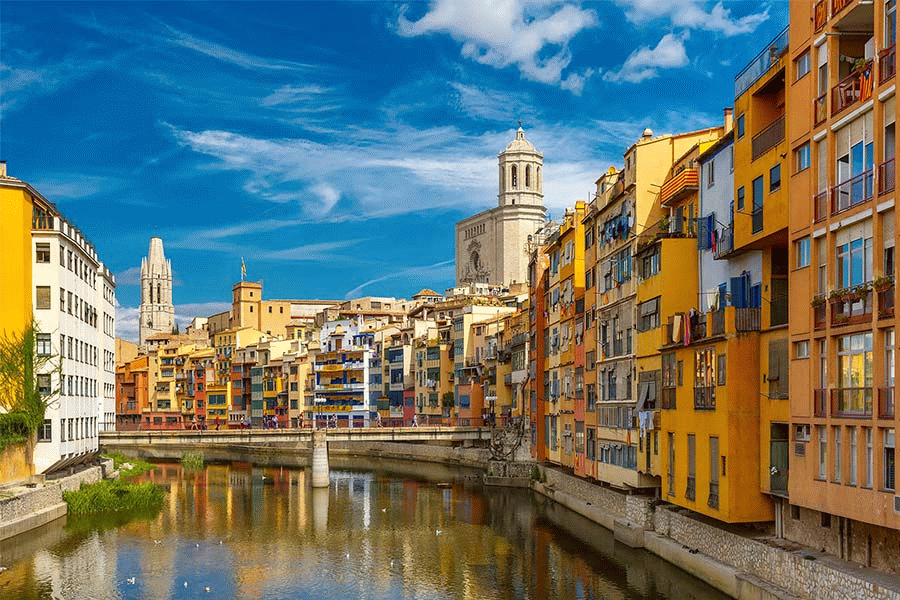
• Girona – medieval streets and city walls
• Costa Brava – rugged Mediterranean coastline
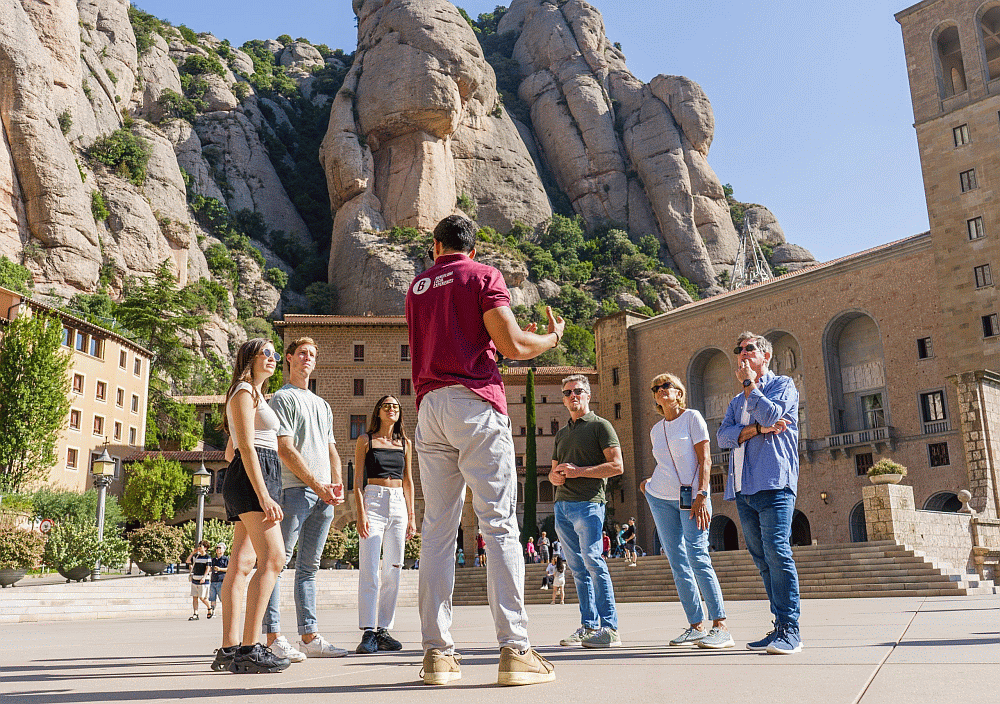
• Montserrat – sacred mountain monastery
Andalusia (Southern Spain)
Historic cities and dramatic landscapes.
Key cities include:
• Seville
• Granada
• Córdoba
• Málaga
High-speed trains connect Madrid with Seville, Córdoba, and Málaga.
Granada is reached by rail or bus.
Driving is ideal for exploring villages such as:
• Ronda
• Pueblos Blancos
Northern Spain
A greener, cooler region along the Atlantic.
Key destinations include:
• Bilbao
• San Sebastián
• Santander
Train and bus services connect these cities, though travel times are longer than in central Spain.
Driving offers the most flexibility along the coast.
Balearic Islands
Spain’s Mediterranean island group includes:
• Mallorca
• Ibiza
• Menorca
Reached by:
• Flights from Madrid and Barcelona
• Ferries from Barcelona, Valencia, and Denia
Car hire is recommended for exploring beyond the main towns.
Canary Islands
Spain’s volcanic Atlantic islands off the coast of Africa.
The most visited include:
• Tenerife
• Gran Canaria
• Lanzarote
• Fuerteventura
Flights connect the islands to mainland Spain.
Inter-island flights and ferries allow travel between them.
Popular Routes: Travel Times & Costs
Madrid → Barcelona
• AVE train: ~2.5–3 hours
• Flight: ~1 hour 15 minutes
• Train cost: €40–120
Madrid → Seville
• AVE train: ~2.5 hours
• Flight: ~1 hour
Barcelona → Valencia
• Train: ~3 hours
• Bus: ~4 hours
Seville → Granada
• Train: ~2.5 hours
• Bus: ~3 hours
Madrid → Bilbao
• Train: ~4.5–5 hours
• Flight: ~1 hour
Top Places to Visit in Spain
• Madrid – Museums, royal history, vibrant food culture
• Barcelona – Architecture, beaches, Catalan culture
• Seville – Flamenco and Moorish heritage
• Granada – The Alhambra and Sierra Nevada views
• Valencia – Paella, beaches, futuristic architecture
• San Sebastián – Renowned gastronomy and coastal beauty
• Mallorca – Mediterranean island landscapes
Practical Notes for Travellers
• Spain’s high-speed rail network makes intercity travel easy
• Summer (July–August) is peak tourist season
• Spring and autumn offer the best weather for travel
• English is widely spoken in major tourist areas
• Book high-speed trains early for lower fares
Spain is a large and diverse country, but with its efficient trains, well-maintained highways, regional flights, and reliable buses, travelling between cities, coastlines, and countryside is remarkably simple.
N.B. Prices shown are indicative and reflect typical costs in Spain as at March 2026.
Popular Destinations, Tours and Shuttle Services - Spain
-
![Girona, Spain - Barcelona Lands]()
Barcelona Lands
-
![Barcelona Local Experiences]()
Barcelona Tours
-
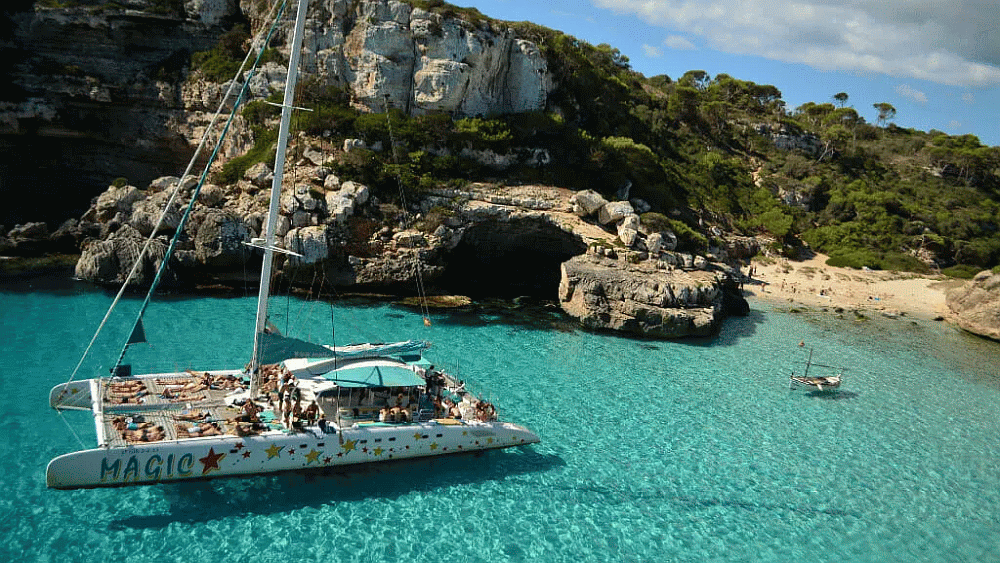
![Excursions La Mallorca]()
excursions in Mallorca
-
![Mallorca Travel Tours]()
Experience Mallorca
-
![nattivus.com]()
Enjoy the best tours & day trips in Spain
-
![The Best of Basque - Bilbao Food Tour]()
Bilbao Food Tour
-
![Guggenheim Museum - toursbybasques.com]()
Guggenheim Museum and the Old Quarter of Bilbao
-
![yfirstpaella.es]()
Valencian Paella Cooking Class
-
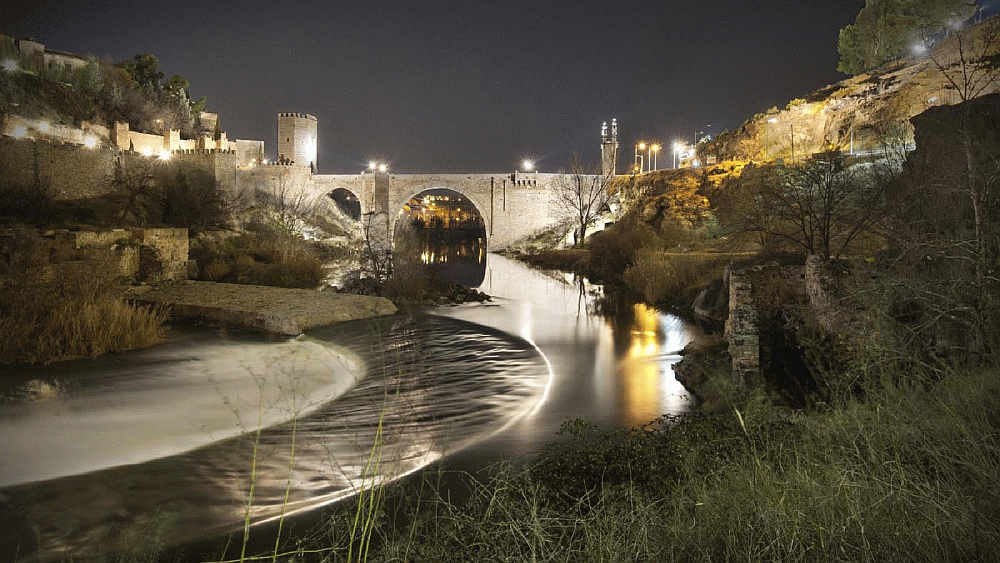
![Best Toledo Tours]()
Essence of Toledo
-
![Servitaxi Santiago]()
Santiago de Compostela taxi
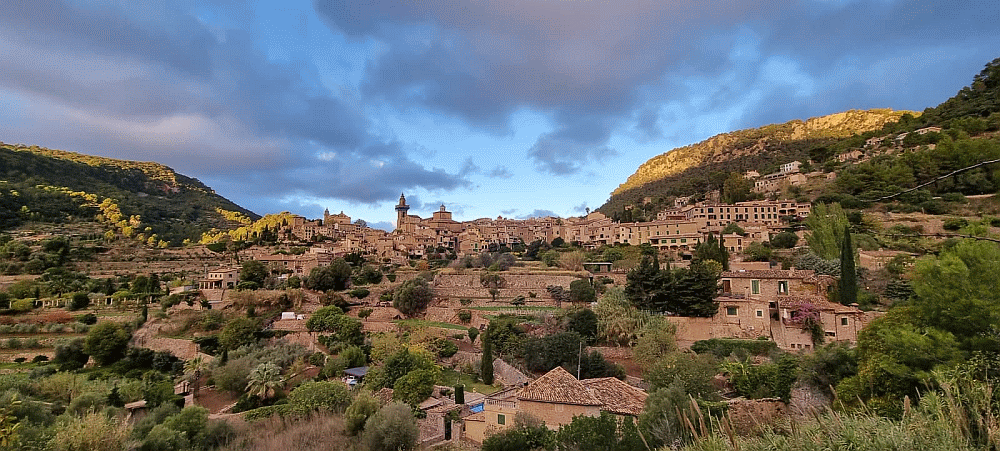

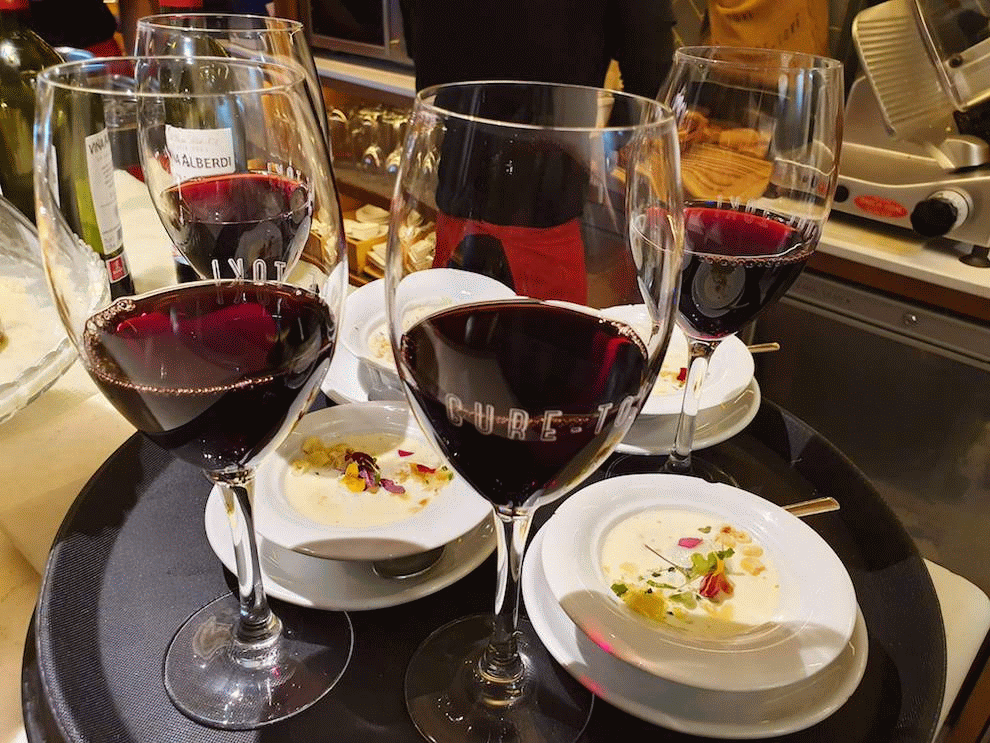
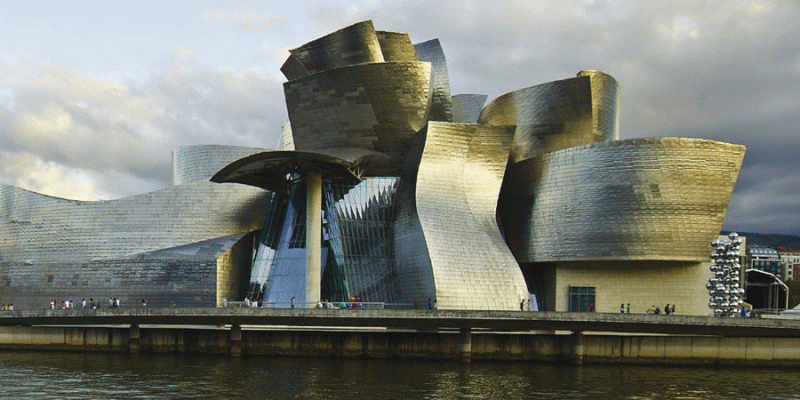
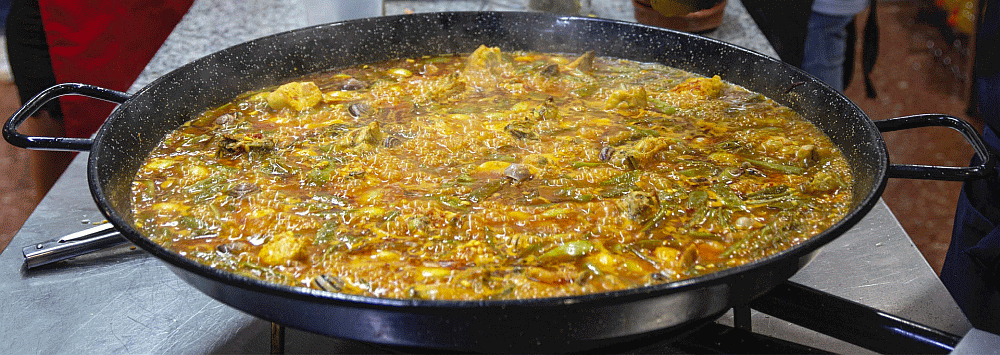
Top Visitor Destinations and Attractions in Spain
Spain offers an extraordinary range of visitor destinations, from world-famous museums and Moorish palaces to lively plazas, coastal towns, and historic cities.
Here are some of the top visitor destinations and attractions in Spain, representing different regions and experiences.
Historic Landmarks & Cultural Icons
Alhambra
A breathtaking Moorish palace and fortress complex overlooking Granada. Famous for intricate Islamic architecture, tranquil courtyards, and the beautiful Generalife gardens.Sagrada Família
The extraordinary basilica designed by Antoni Gaudí, still under construction after more than a century. Its towers and stained glass create one of the most distinctive interiors in the world.Mezquita-Catedral de Córdoba
A remarkable mosque-cathedral known for its forest of red-and-white arches — one of the most fascinating examples of Islamic architecture in Europe.Royal Palace of Madrid
The largest royal palace in Western Europe, used for ceremonial occasions by the Spanish monarchy.
World-Class Museums
Museo del Prado
One of the world’s great art museums, home to masterpieces by Diego Velázquez, Francisco Goya, and El Greco.Dalí Theatre-Museum
The surreal and theatrical museum dedicated to Salvador Dalí, designed by the artist himself.Guggenheim Museum Bilbao
A striking titanium-clad museum designed by Frank Gehry, often credited with transforming Bilbao into a major cultural destination.
Famous City Districts & Streets
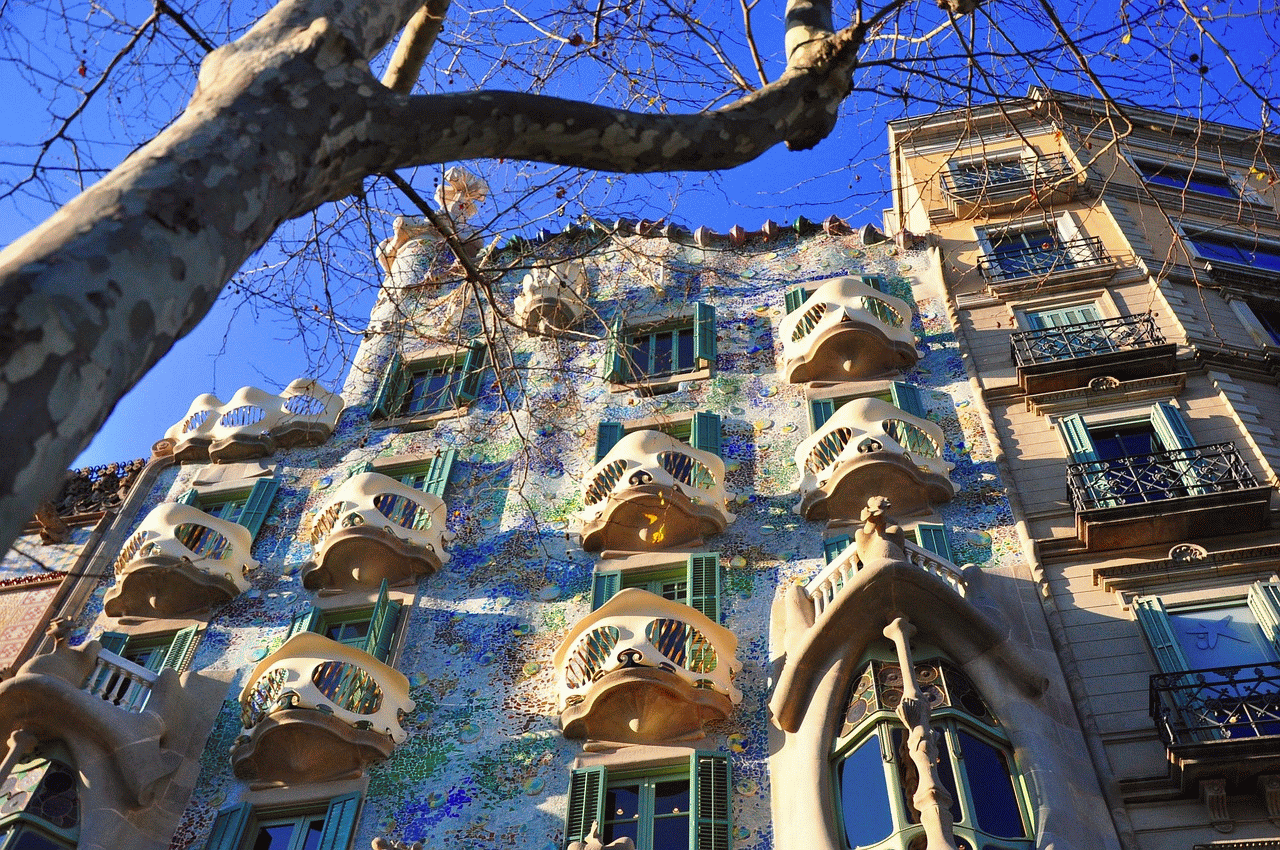
La Rambla
Barcelona’s iconic boulevard filled with street performers, cafés, and markets such as La Boqueria Market.Plaza Mayor
A grand historic square surrounded by arcades, restaurants, and centuries of Spanish history.Park Güell
Another imaginative creation by Antoni Gaudí, famous for colourful mosaics and sweeping views of Barcelona.
Regions & Landscapes
Andalusia
Southern Spain’s most evocative region, known for flamenco, Moorish architecture, white villages (Pueblos Blancos), and cities such as Seville, Granada, and Córdoba.Costa del Sol
A famous stretch of Mediterranean coastline with beach towns like Marbella and Málaga.Balearic Islands
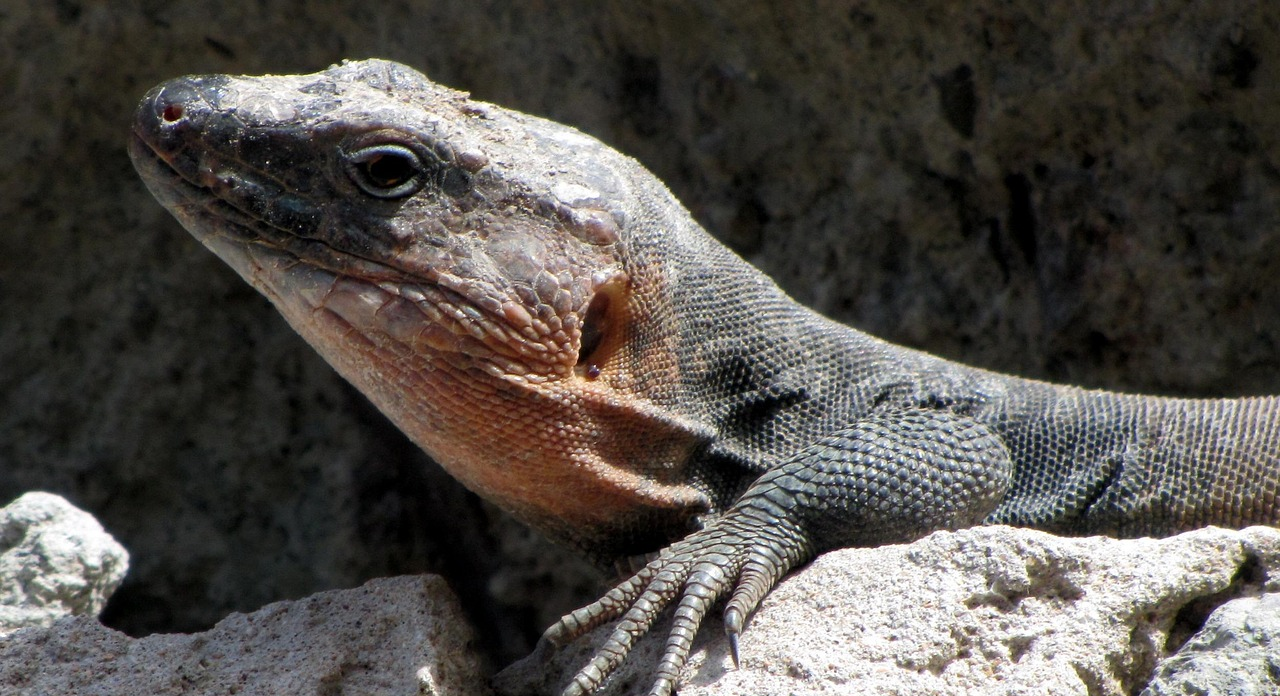
Mediterranean islands including Mallorca, Ibiza, and Menorca.Canary Islands (Las Islas Canarias)
Atlantic islands known for volcanic landscapes and year-round sunshine, including Tenerife and Gran Canaria.
Other Must-See Attractions
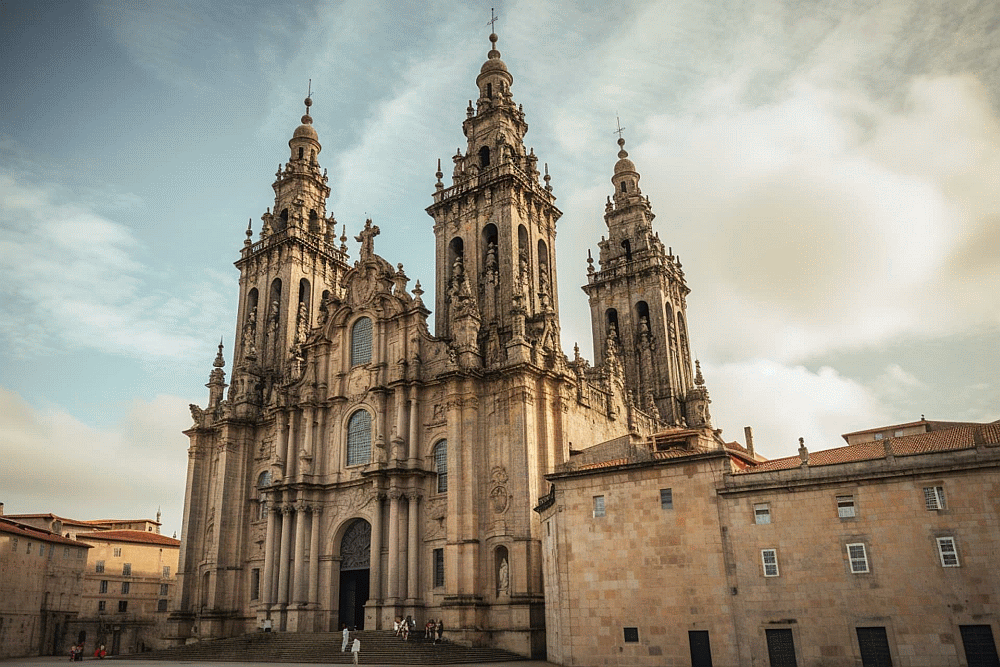
Santiago de Compostela Cathedral
The final destination of the famous pilgrimage route Camino de Santiago.Roman Theatre of Mérida
One of the best preserved Roman theatres in the world.City of Arts and Sciences
A futuristic cultural complex designed by Santiago Calatrava.
In summary, Spain’s most visited attractions combine Moorish history, world-class art, distinctive architecture, and vibrant city life — from the palaces of Granada and museums of Madrid to the boulevards of Barcelona and the sunlit Mediterranean coast.
Explore Las Islas Canarias with ShuttlesA2B

Mint Tea: The Heart of Moroccan Hospitality (ShuttlesA2B)
Wandering Through the Pintxos Bars of San Sebastián
In the Basque Country, the evening rarely begins with a destination. It begins with a bar.
In San Sebastián — or Donostia, as it is known in the Basque language — one of the great pleasures of the city is simply wandering from one bar to another, sampling small bites known as pintxos along the way.
The old quarter, Parte Vieja, is a maze of narrow streets where nearly every doorway seems to open into a lively bar. Inside, the counters are lined with small culinary creations: slices of bread topped with seafood, cured ham, roasted peppers, anchovies, tortilla, or combinations that look almost too elaborate to be considered a snack.
Unlike tapas elsewhere in Spain, pintxos are often carefully assembled and traditionally held together with a small wooden stick — the pincho that gave them their name.
There is no fixed plan to the evening. The custom is to try one pintxo and a drink, then move on to the next bar. Locals drift through the streets in small groups, pausing wherever a counter looks especially tempting.
A glass of Txakoli might accompany the first stop — a lightly sparkling white wine poured from a height so that it aerates in the glass. At another bar, perhaps a small plate of grilled prawns or a slice of tortilla appears.
In this way the meal unfolds gradually across the neighbourhood.
What makes the experience distinctive is not just the food, but the atmosphere. The bars are lively but unpretentious, filled with conversation, laughter, and the gentle rhythm of people arriving, eating, and moving on again.
By the end of the evening you may have visited five or six different places without ever feeling that you have sat down to dinner.
In Basque Country, food is rarely just about eating. It is about movement, company, and the pleasure of discovery — one bar, one pintxo, and one conversation at a time.
Spanish Translation
Deambulando por los bares de pintxos de San Sebastián
En el País Vasco, la noche rara vez empieza con un destino. Empieza con un bar.
En San Sebastián — o Donostia, como se la conoce en euskera — uno de los grandes placeres de la ciudad es simplemente pasear de un bar a otro, probando pequeños bocados conocidos como pintxos por el camino.
El casco antiguo, Parte Vieja, es un laberinto de calles estrechas donde casi cada puerta parece abrirse a un animado bar. En el interior, las barras están llenas de pequeñas creaciones culinarias: rebanadas de pan cubiertas con marisco, jamón curado, pimientos asados, anchoas, tortilla u otras combinaciones que a veces parecen demasiado elaboradas para considerarse un simple aperitivo.
A diferencia de las tapas en otras partes de España, los pintxos suelen estar cuidadosamente montados y tradicionalmente sujetos con un pequeño palillo de madera — el pincho que les dio su nombre.
No hay un plan fijo para la noche. La costumbre es probar un pintxo y una bebida, y luego pasar al siguiente bar. Los locales recorren las calles en pequeños grupos, deteniéndose donde la barra parece especialmente tentadora.
Una copa de Txakoli puede acompañar la primera parada — un vino blanco ligeramente espumoso que se sirve desde cierta altura para que se airee en la copa. En otro bar, quizá aparezcan unas gambas a la plancha o una porción de tortilla.
De esta manera, la comida se va desarrollando poco a poco por todo el barrio.
Lo que hace que la experiencia sea especial no es solo la comida, sino el ambiente. Los bares son animados pero sencillos, llenos de conversación, risas y el suave ritmo de gente que llega, come y continúa su camino.
Al final de la noche puede que hayas visitado cinco o seis lugares diferentes sin haber tenido la sensación de sentarte realmente a cenar.
En Basque Country, la comida rara vez es solo comida. Es movimiento, compañía y el placer de descubrir — un bar, un pintxo y una conversación cada vez.
Basque (Euskara) Translation
Donostiako pintxo tabernetan barrena ibiltzen
Euskal Herrian, gaua gutxitan hasten da helmuga batekin. Taberna batekin hasten da.
San Sebastián — edo Donostia, euskaraz esaten zaion bezala — hiriko plazer handienetako bat da tabernaz taberna ibiltzea, bidean pintxo izenez ezagutzen diren mokadu txikiak dastatuz.
Alde Zaharra, Parte Vieja, kale estu eta bihurgunetsuen labirintoa da, eta ia ate bakoitzak taberna bizia dirudien leku batera eramaten du. Barruan, barrak sormen gastronomikoz beteta egoten dira: ogi xerrek itsaskiak, urdaiazpiko ondua, piper erreak, antxoak, tortilla edo askotariko beste konbinazio batzuk dituzte gainean.
Espainiako beste leku batzuetako tapasak ez bezala, pintxoak sarritan arreta handiz prestatzen dira eta tradizionalki egurrezko zotz txiki batez eusten dira — hortik dator pincho izena.
Ez dago gaueko plan zehatzik. Ohitura da pintxo bat eta edari bat hartzea, eta gero hurrengo tabernara joatea. Tokiko jendea kaleetan barrena ibiltzen da talde txikitan, barra bereziki erakargarri bat aurkitzen duen bakoitzean geldituz.
Lehen geldialdian Txakoli kopa bat har daiteke — ardo zuri arin eta apur bat aparduna, altueratik zerbitzatzen dena edalontzian aireztatzeko. Beste taberna batean, agian ganba plantxan edo tortilla zati bat agertuko da.
Horrela, otordua poliki-poliki zabaltzen da auzo osoan zehar.
Esperientzia berezi egiten duena ez da janaria bakarrik, giroa baizik. Tabernak biziak baina xumeak dira, solasaldiz, barrez eta etengabe sartzen eta irteten den jendearen erritmo lasai batez beteta.
Gauaren amaieran, agian bost edo sei taberna bisitatu dituzu, baina inoiz ez duzu benetan afaltzera eseri zaren sentsazioa izan.
Basque Country-n, janaria gutxitan da janaria bakarrik. Mugimendua da, konpainia, eta aurkikuntzaren plazera — taberna bat, pintxo bat eta elkarrizketa bat aldi bakoitzean.